
The short answer
Andalusia has two very different seas. The Atlantic coast, in the west, has long beaches of golden sand, wind and real tides. The Mediterranean coast, in the east, has calmer, warmer water, with more resorts and many beaches of grey sand or pebbles.
Our picks:
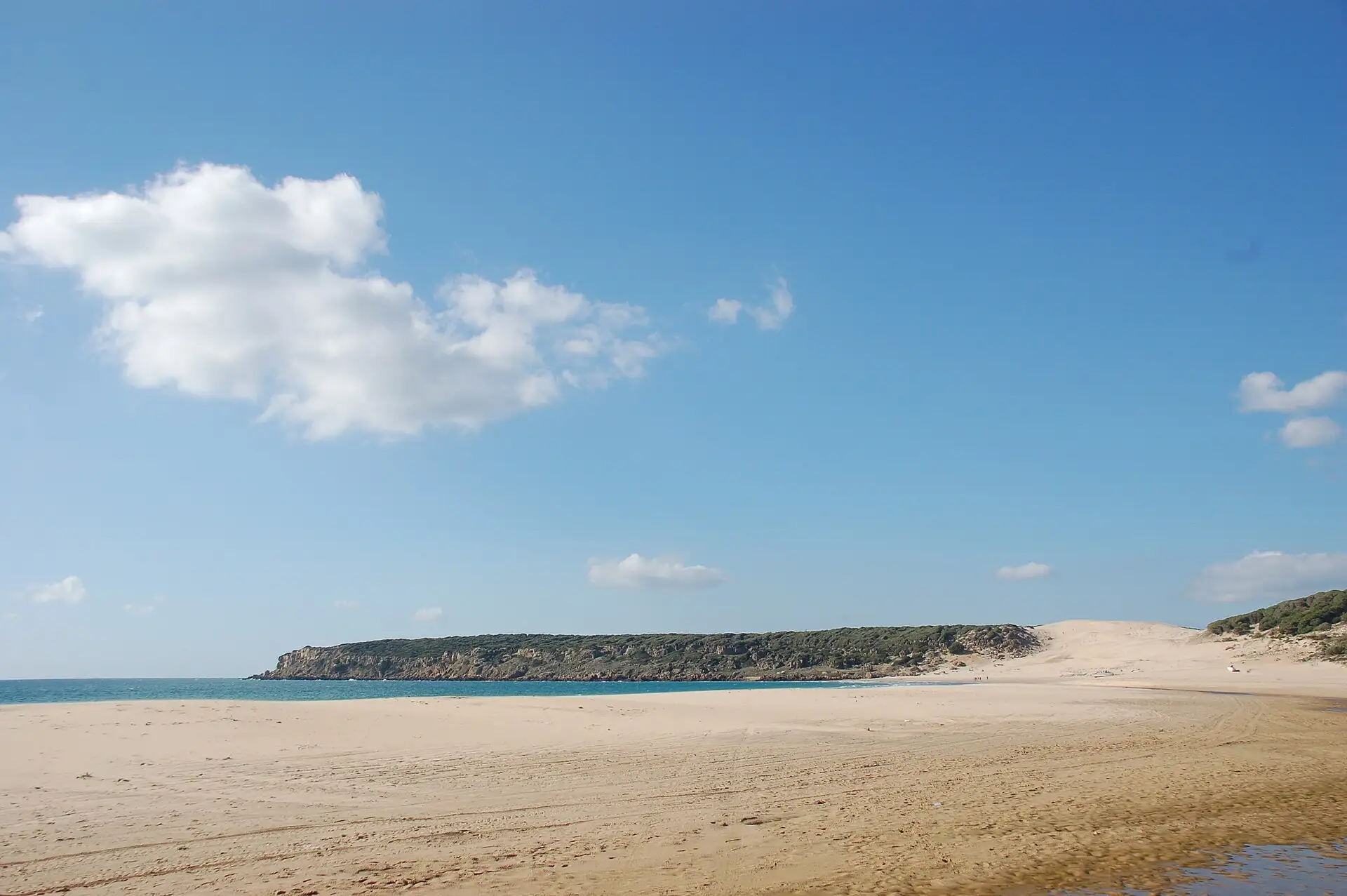
- Most beautiful bay: Bolonia, near Tarifa
- Wildest: Mónsul and Genoveses, in Cabo de Gata
- Best for families: La Barrosa, in Chiclana
- Best for surfing: El Palmar
- Best for kitesurfing: Valdevaqueros, near Tarifa
- Best for snorkelling and clear water: Maro and Cantarriján, near Nerja
- Best in a city: La Caleta, in Cádiz
These are our own choices, so they will not suit everyone. As an independent measure, Andalusia had 143 beaches with a Blue Flag in 2026. Press reports give Málaga 45, Almería 38, Cádiz 32, Granada 14 and Huelva 12, plus one inland beach each in Córdoba and Jaén.
The best beaches compared
| Beach | Coast | Sand and sea | Best for | Getting there |
|---|---|---|---|---|
| Bolonia | Atlantic, Cádiz | Golden sand, clear water, dune | Scenery | Car |
| Valdevaqueros | Atlantic, Cádiz | Huge sandy beach and dune | Kitesurfing | Car |
| Zahara de los Atunes | Atlantic, Cádiz | Long and open | Space, tuna restaurants | Car |
| Los Caños de Meca | Atlantic, Cádiz | Coves under cliffs | Bohemian feel | Car |
| El Palmar | Atlantic, Cádiz | About 8 km, straight | Surfing, sunsets | Car |
| La Barrosa | Atlantic, Cádiz | About 8 km of fine sand | Families | Car or bus |
| La Caleta | Atlantic, Cádiz | Small city cove | Sunset | On foot in Cádiz |
| Matalascañas | Atlantic, Huelva | Long, by Doñana | Empty sand beyond town | Car |
| Mazagón | Atlantic, Huelva | Long, below sandy cliffs and pines | A quiet village | Car |
| Cabopino | Mediterranean, Málaga | Backed by dunes | Space near Marbella | Car |
| Maro | Mediterranean, Málaga | Clear water, cliffs | Snorkelling | Car from Nerja |
| Cantarriján | Mediterranean, Granada | Gravel cove, clear water | Clear water, partly naturist | Car |
| Genoveses | Mediterranean, Almería | Wide golden sand, shallow | Families, wild scenery | Dirt road or summer shuttle |
| Mónsul | Mediterranean, Almería | Sand, dune and volcanic rocks | The classic view | Dirt road or summer shuttle |
The Atlantic: the Costa de la Luz
This is where we’d go for big, natural beaches. The sea is cooler than the Mediterranean, and the levante wind can blow for days, above all around Tarifa. See our Costa de la Luz guide.
Bolonia
A wide bay about 25 minutes west of Tarifa, with clear water, a handful of houses and restaurants, and no hotels of any size. At its western end is a dune more than 30 metres high, and behind the beach are the Roman ruins of Baelo Claudia. The car parks fill up in summer, so we’d go early.
Valdevaqueros and Los Lances
Huge beaches north-west of Tarifa, and the kitesurfing centre of Europe, with schools and beach bars. They are great for wind sports, but very windy on levante days.
Zahara de los Atunes
A small fishing village with a long, open beach, the coves of Atlanterra to the south and some of the best tuna restaurants in Spain. See Zahara.
Los Caños de Meca and El Palmar
Los Caños is a scattered, bohemian village with coves under the cliffs, and a beach by the Trafalgar lighthouse. El Palmar is a long, straight beach of about 8 km with surf schools and famous sunsets. Its waves are at their best from autumn to spring. Stay in Conil or Vejer.
La Barrosa and La Caleta
La Barrosa, in Chiclana, has about 8 km of fine sand that shelves gently, and every service, so it is our choice for children. La Caleta, in the old town of Cádiz, is a small cove between two castles. See all the beaches of Cádiz.
The Huelva coast
North-west of the Guadalquivir, Huelva province has more than 120 km of long beaches backed by dunes and pine woods. South of Matalascañas, the beach of Doñana stretches away for kilometres, with no services once you leave town. Mazagón is quieter, with a long beach below sandy cliffs. The wind is much calmer here than in the Strait.
The Mediterranean: from Estepona to Almería
The water is warmer and calmer here, and the resorts have more to offer outside the summer. Most beaches are public and free, with promenades and beach restaurants.
Costa del Sol
The Costa del Sol is about convenience rather than wild beauty, with grey-brown sand in many places. Cabopino, about 15 km east of Marbella, is backed by dunes, with more space and a small marina. See also the beaches of Málaga, and Estepona.
Nerja and Maro
East of Nerja, the Maro-Cerro Gordo cliffs protect coves with some of the clearest water on the coast, and Maro is a good place to start. Nerja itself has Burriana, a popular beach with restaurants.
The Costa Tropical
The Costa Tropical, in Granada province, has steep mountains behind it and sheltered bays. Cantarriján is a cove of gravel and clear water on the border with Málaga province. It is partly naturist. See also Almuñécar and Salobreña.
Cabo de Gata and Mojácar
The driest and wildest part of the coast. In Cabo de Gata, the bays of Genoveses and Mónsul lie at the end of a dirt road from San José, in a natural park with no buildings behind them. In summer, car access is capped, so we’d arrive before about 9:00 or take the shuttle bus. Further north, Mojácar has long beaches below its white village.
How to choose
- With children: La Barrosa or the Mediterranean, where the water is usually calmer and warmer.
- Without a car: La Caleta in Cádiz, the beaches of Málaga, or Torremolinos by train.
- For wild scenery: Bolonia or Cabo de Gata.
- For wind sports: Tarifa for kitesurfing, El Palmar for surfing.
- As a base for a week: see where to base yourself in Andalusia.
When to go
The beach season runs from June to September, and the sea is warmest in August and September. July and August are the busiest months, so book early and arrive at popular beaches early. See the best time to visit Andalusia.
Tips
- Check the wind on the Atlantic. A strong levante can make the open beaches around Tarifa unpleasant. We’d check a forecast the evening before, and head north towards Cádiz if needed.
- Check the tide. Atlantic coves shrink or disappear at high tide.
- Swim near the lifeguards on beaches with waves.
- Bring water and shade to natural beaches such as Mónsul, which have few or no services.
- Hire a car to reach the best natural beaches. See car hire in Andalusia.
FAQ
What is the most beautiful beach in Andalusia?
We think Bolonia, near Tarifa, is the most beautiful, for its clear water, giant dune and Roman ruins. Mónsul and Genoveses, in Cabo de Gata, are close behind.
Which coast is better in Andalusia, the Atlantic or the Mediterranean?
The Atlantic has bigger, more natural beaches, with more wind and cooler water. The Mediterranean has calmer, warmer water and more resorts. Families often prefer the second, and surfers the first.
Does Andalusia have white sand beaches?
The Atlantic beaches of Cádiz have fine golden sand. Many Mediterranean beaches near Málaga have grey-brown sand or pebbles.
When is the sea warm enough to swim in Andalusia?
Most people swim from June to September, and the sea is warmest in August and September.
Do you need a car to reach the best beaches?
For most of them, yes, above all Bolonia, Zahara and Cabo de Gata. Cádiz, Málaga and Torremolinos have good beaches you can reach without one.