Some links on this page are affiliate links. If you book through them we may earn a commission, at no extra cost to you.
Why visit, and how many days you need
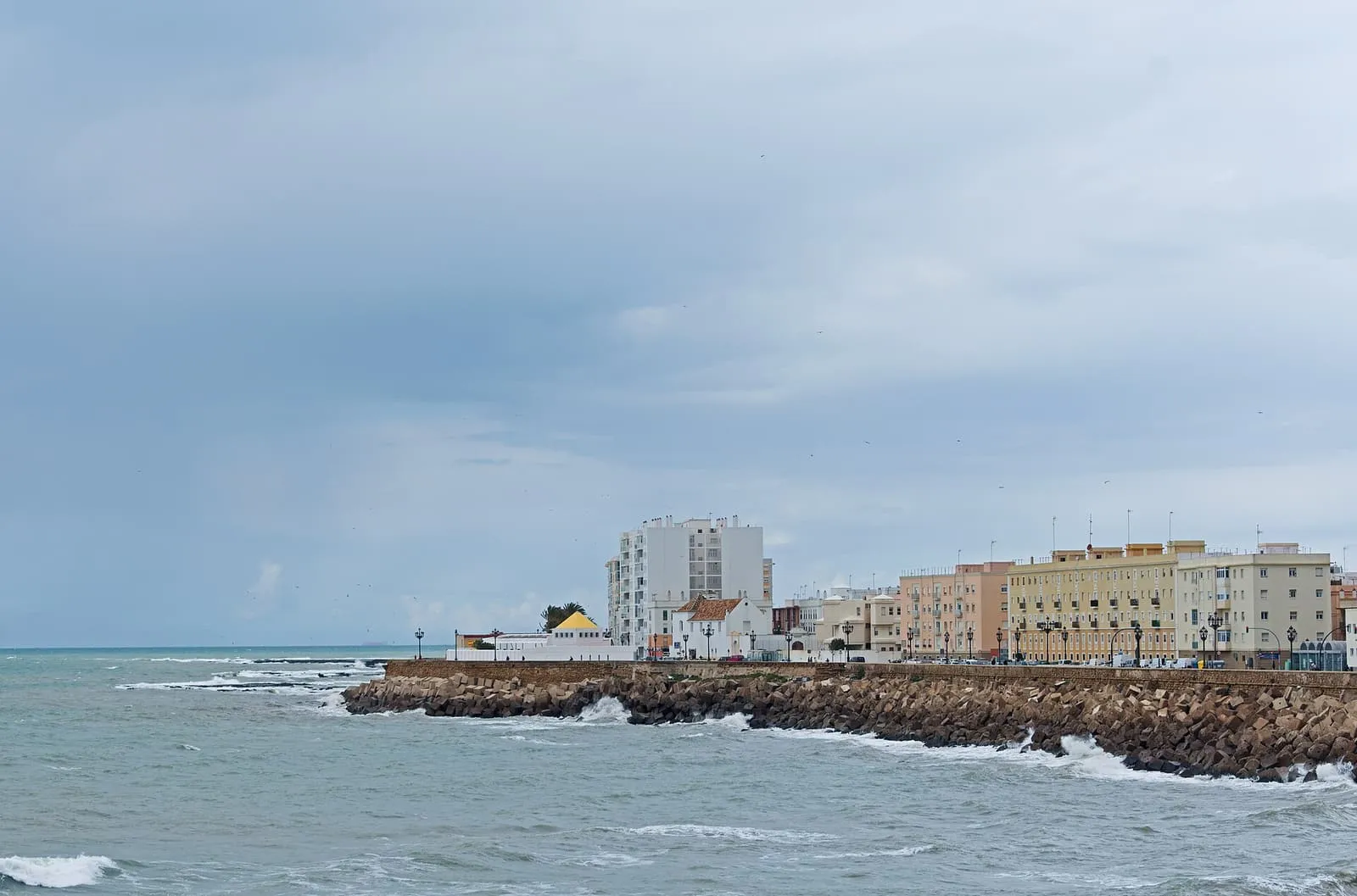
Cádiz is one of the oldest cities in Western Europe. The Phoenicians founded it as Gadir around 3,000 years ago, and it grew rich again in the 18th century on the trade with the Americas. Its old town sits at the tip of a long, narrow peninsula, almost surrounded by the Atlantic: a grid of tall houses, watchtowers and small squares, with a gold-domed cathedral on the seafront.
The city is compact and easy-going. You can walk from the cathedral to a beach in five minutes, eat some of the best fried fish in Spain, and watch the sun set into the ocean at La Caleta. In February it holds the most famous Carnival in Spain, and it is the gateway to the Costa de la Luz, the long Atlantic beaches that run south to Tarifa.
Plan one or two days for the city. One day covers the cathedral, Torre Tavira, the market, the Barrio de la Viña and La Caleta; two let you add the beach at Playa de la Victoria, the museums and a slow evening. With three or four days, use Cádiz as a base for Jerez, Sanlúcar, Vejer and the beaches. Many visitors come on a day trip from Seville, about 1 hour 45 minutes by train.
Where to stay
- The old town (casco antiguo) to walk everywhere, with the cathedral, the market and the bars on your doorstep. Most hotels are small, in converted houses. Hotels in Cádiz old town.
- Near La Caleta and the Barrio de la Viña, on the west side of the old town, for sunsets over the sea, fish restaurants and a more local feel. Also part of the old town.
- Playa de la Victoria, in the modern part of the city, for a beach holiday: bigger hotels and apartments along the long sandy beach, about 10 minutes by bus or taxi from the old town. Hotels by Playa de la Victoria.
A few hotels to start with:
- Parador de Cádiz: a modern parador by the Parque Genovés, with sea views and a pool, at the edge of the old town.
- Hotel Argantonio: a small hotel in a restored 19th-century house in the old town.
- Hotel Playa Victoria: a large beachfront hotel on Playa de la Victoria.
Top sights
- The cathedral: the gold-tiled dome, the crypt with the tomb of the composer Manuel de Falla, and the Torre de Poniente for the view. About €7–8.
- Torre Tavira: an 18th-century watchtower with a camera obscura that projects a live image of the city.
- The Mercado Central: fish stalls in the morning and food stands around the edge.
- La Caleta: a small beach between two castles, with fishing boats and the best sunset in town.
- The Barrio de la Viña: the old fishermen’s quarter and the heart of Carnival, full of fried-fish bars.
- El Pópulo and the Roman theatre: the medieval quarter behind the cathedral.
- The seafront: the Campo del Sur sea wall, the Parque Genovés and the Alameda Apodaca.
Full list: things to do in Cádiz.
Neighbourhoods at a glance
| Neighbourhood | What it’s like |
|---|---|
| El Pópulo | The oldest quarter, behind the cathedral: medieval arches and the Roman theatre |
| Santa María | Old streets east of the cathedral, the cradle of flamenco in Cádiz |
| Around the Mercado Central | Busy squares, the flower stalls of the Plaza de las Flores, tapas bars |
| La Viña and La Caleta | The fishermen’s quarter by the beach: fried fish, Carnival, sunsets |
| Plaza de San Antonio and Mina | Elegant squares, the Museo de Cádiz, the Parque Genovés nearby |
| Playa de la Victoria | The modern town along a long Atlantic beach |
When to go
May, June, September and October are the best months: warm, sunny and good for the beach, without the peak crowds. Cádiz is cooler than Seville or Córdoba in summer, thanks to the sea, which makes it a good escape in July and August, though beaches, trains and hotels are busy with Spanish holidaymakers. The strong east wind, the Levante, can blow for days in summer and makes some beaches unpleasant.
Winter is mild and quiet, rarely cold. February is Carnival: the city fills with costumes and satirical songs, and hotels sell out months ahead. See the best time to visit Andalusia.
Carnival
The Carnaval de Cádiz is famous for its humour. Groups called chirigotas and comparsas write satirical songs about the year’s news and perform them in a contest at the Gran Teatro Falla in the weeks before, then in the streets and squares during Carnival itself. The main days fall around Ash Wednesday, which is on 10 February in 2027; the official dates will be confirmed by the city. Book accommodation very early, or stay in Jerez or Seville and come by train.
Getting there and around
- By train: direct regional trains from Seville Santa Justa take about 1 h 45, stopping at Jerez (about 40 minutes from Cádiz). There are also a few direct trains a day from Madrid, taking about 4–4.5 hours. See Seville to Cádiz and compare times on Omio. The station is at the edge of the old town, 10 minutes’ walk from the cathedral.
- By plane: Jerez airport is the closest, about 40 minutes away, and has its own stop on the Seville–Cádiz train line. Most of its flights are domestic, with some seasonal routes from other countries. Seville airport, about 1 h 30 by car, has far more flights.
- By car: about 1 h 30 from Seville on the AP-4. Leave the car in an underground car park at the entrance to the old town; its streets are narrow and many are closed to traffic. A car is useful for the Costa de la Luz and the white villages. See car hire in Andalusia.
- By boat: a catamaran crosses the bay to El Puerto de Santa María in about 30 minutes.
- In the city: walk. The old town is flat and small, about 20 minutes from end to end. Local buses run along the peninsula to Playa de la Victoria.
The Costa de la Luz and white villages nearby
Cádiz is a good base for the south-west of Andalusia. Jerez (sherry and horses) is 40 minutes away by train, and Sanlúcar de Barrameda (manzanilla and prawns) about an hour by road. To the south, the Costa de la Luz has some of the best beaches in Spain: Conil, Zahara de los Atunes, Bolonia with its Roman ruins, and Tarifa, the windsurfing capital of Europe. Above the coast, Vejer de la Frontera is one of the most beautiful of the white villages, about 50 minutes from Cádiz by car.
See where to base yourself in Andalusia, our Andalusia road trip and all day trips from Seville.
FAQ
Is Cádiz worth visiting?
Yes. It is one of the oldest cities in Europe, with a beautiful old town surrounded by the sea, city beaches, excellent seafood and a relaxed, friendly atmosphere.
How many days do you need in Cádiz?
One day for the main sights, two to enjoy the beaches and the evenings. Add more if you want to visit Jerez, Vejer and the Costa de la Luz from Cádiz.
How do you get to Cádiz?
By direct train from Seville (about 1 h 45) or Madrid (about 4–4.5 hours), or fly to Jerez airport, which has a train stop on the line to Cádiz.
When is the Cádiz Carnival?
In February. The main days fall around Ash Wednesday, which is on 10 February in 2027. The official programme is confirmed each year by the city.
Is Cádiz good for a beach holiday?
Yes. La Caleta is in the old town, and Playa de la Victoria is a long, wide Atlantic beach in the new town. For quieter beaches, head south to Conil, Zahara or Bolonia.