
Some links on this page are affiliate links. If you book through them we may earn a commission, at no extra cost to you.
The short answer
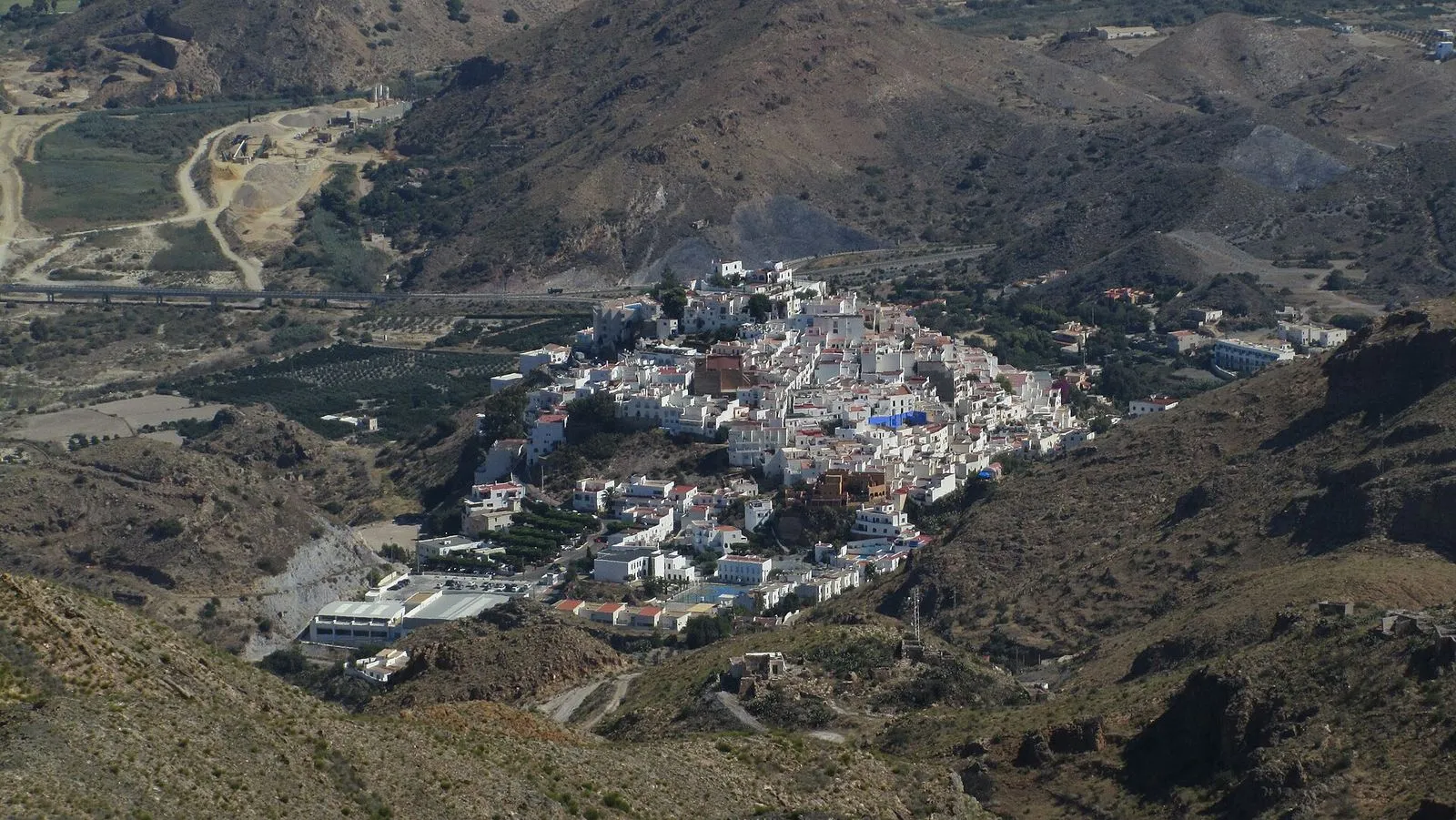
Mojácar is two places in one, in the far east of Almería province. Mojácar Pueblo is a white village piled on a hill about 2 km inland, one of the best-looking hill towns in Andalusia and a member of the “Most Beautiful Villages in Spain” association. Below it, Mojácar Playa is a strip of hotels, apartments and beach bars along about 17 km of coast.
- Why go: a pretty village with sea views, long sandy beaches, quiet coves to the south and the volcanic coast of Cabo de Gata within reach.
- Who it suits: beach holidays with a bit of culture, couples, families, and road-trippers exploring eastern Andalusia.
- Time needed: 2–3 hours for the village; 3–7 nights as a beach base.
- Do you need a car? Realistically, yes. A local bus links the village and the beach, but the coves, Cabo de Gata and the desert need a car.
- Is it seasonal? Very. It is lively from Easter to October and quiet in winter, when some restaurants and hotels close.
Mojácar Pueblo or Mojácar Playa?
| Mojácar Pueblo (village) | Mojácar Playa (beach) | |
|---|---|---|
| Feel | Steep white lanes, squares, viewpoints | Seafront road, hotels, beach bars |
| Best for | Couples, evenings out, character | Families, swimming, walking to the sand |
| Beach | 5–10 minutes’ drive or the local bus | On your doorstep |
| Parking | Limited, car parks at the edge | Easy, except in August |
| Evenings | Bars and restaurants in the old lanes | Chiringuitos and hotel terraces |
If you want to wake up to views over the rooftops, we’d stay in the village. If the point of the trip is the sea, we’d stay on the beach and go up to the village for dinner.
What to see in Mojácar Pueblo
The old village is small, and most visitors simply wander. The lanes are steep and stepped, so we’d wear comfortable shoes and avoid the middle of the day in summer.
Plaza Nueva and its viewpoint
The Plaza Nueva is the heart of the village and a good place to start. From its mirador you look out over the valley of the Río Aguas, the Sierra Cabrera and neighbouring towns such as Turre, Vera and Garrucha. It is also a classic sunset spot. The small Ermita de los Dolores on the square dates from the 16th century and is privately owned.
The Mirador del Castillo
At the top of the village, about 175 metres above sea level, the Mirador del Castillo stands on the site of the old castle, which kept watch over the coast. The walls were destroyed by an earthquake in 1518. Today we think it is the best view in Mojácar, straight down to the beaches and the sea. The building on the site is a private house, but the viewpoint is the reason to climb.
Iglesia de Santa María
The parish church was built around 1560, probably on the site of a mosque. It served as a fortress as well as a church, which explains its thick stone walls and plain, solid look. The interior is simple. Next to it, the Plaza del Parterre was once the Muslim cemetery.
The Puerta de la Ciudad
The Puerta de la Ciudad was the main entrance to the walled town. The arch you see was rebuilt in the 16th century on top of the Moorish gate, and carries the town’s coat of arms with the double-headed Habsburg eagle and the motto calling Mojácar the “key and shelter of the Kingdom of Granada”. The lanes around it, with painted doors and bougainvillea, are the most photographed in the village.
La Fuente (the Moorish fountain)
Walk down from the village to La Fuente, a fountain with twelve spouts that has been the village’s water source since Moorish times. In 1488 it was the scene of the meeting at which Mojácar agreed to surrender peacefully to the Catholic Monarchs, and a plaque tells the story. The fountain was rebuilt in the 1980s, so what you see is modern in style. Allow for the climb back up.
The Indalo
You will see the Indalo, a stick figure holding an arc over its head, on walls, car stickers and every souvenir. It comes from a prehistoric cave painting in the Cueva de los Letreros at Vélez-Blanco, in the north of Almería province, and was taken up as a symbol by Almería artists in the 1940s. In Mojácar, people traditionally painted a similar figure on their houses for protection. Today it is the emblem of the whole province.
Casa Museo La Canana
A small house museum on Calle Esteve, furnished as a village home from the first half of the 20th century. It is a quick visit; check the opening hours with the tourist office.
Beaches
Mojácar’s coast runs for about 17 km. The beaches are mostly sand and fine gravel, with clear water and, in summer, plenty of chiringuitos (beach bars) and sunbeds.
- Mojácar Playa (the main strip): a string of beaches from Marina de la Torre in the north to the centre of the resort, all along the seafront road. Easy access, services and lifeguards in season.
- Playa de Macenas: at the southern end of the resort, a quieter beach named after the Castillo de Macenas, a round coastal watchtower built in 1774 to guard against pirates.
- Torre del Perulico: from the Castillo de Macenas a dirt track continues south to this older watchtower (1526), perched on a rock with a natural arch at its foot.
- The southern coves: beyond Macenas, the coast road towards Carboneras passes small beaches such as Cala del Sombrerico, Cala de Bordonares and Cala de la Granatilla. They have few or no services, so bring water and shade. Parking is by the roadside and fills up in August.
Beyond Mojácar’s southern boundary, the road reaches El Algarrobico beach, known in Spain for the unfinished hotel that has been the subject of a long legal battle, and then Carboneras.
Day trips from Mojácar
- Cabo de Gata-Níjar Natural Park: volcanic coast, cliffs and, we think, the best wild beaches in Andalusia. Agua Amarga is about 40 minutes away; San José, Genoveses and Mónsul about 1 h 15. See our Cabo de Gata guide for the beaches and the summer access rules, or take a boat trip along Cabo de Gata.
- Níjar: a white hill town about 45 minutes away, known for its glazed pottery and jarapas (colourful rag rugs).
- Sorbas: about 30 minutes inland, with houses hanging over a gorge and guided visits to the gypsum caves.
- Tabernas desert and Fort Bravo: about 1 hour west, the desert where Sergio Leone shot his westerns, with film-set theme parks such as Fort Bravo and Oasys MiniHollywood. See Tabernas desert tours.
- Garrucha: a fishing port about 10 minutes north, the place to eat the local red prawns.
- Almería city: about 1 hour, for the Alcazaba and tapas.
Where to stay in Mojácar
The hotels below all score 8.5 or more on Booking.com.
- Boutique Hotel El Olivar: a small, family-run guest house in the village, with a homemade breakfast, a sun terrace and private parking. Rated 9.3.
- Jardines de la Mata Boutique Beach: an adults-only hotel at the northern end of the beach, a few minutes’ walk from the sand, with a seasonal pool and a restaurant. Rated 9.1.
- Hotel Puntazo II: a family-friendly beachfront hotel on the seafront road, with a seasonal pool and a buffet restaurant. Rated 8.9.
- More options: hotels in Mojácar. Much of the accommodation is in holiday apartments, which suit longer stays.
Food
In our view Mojácar Pueblo has the more characterful restaurants, many with terraces and views; Mojácar Playa has beach bars serving grilled fish and paella. Look for Almería dishes such as gurullos (a small pasta cooked in a stew, often with rabbit), ajo colorao (a potato and pepper dish) and migas, and for the red prawns of Garrucha. As in the rest of Almería, many bars serve a tapa with each drink. In winter, we’d check opening days before you go up to the village for dinner.
When to go
- We think May, June, September and October are the best months: hot but not scorching, a warm sea from June and fewer people.
- July and August are busy and hot, with the highest prices and hard parking in the village.
- Winter is mild, sunny and dry, popular with long-stay visitors, but quiet, and too cool for most swimmers.
- Moros y Cristianos, the Moors and Christians festival, is held around the weekend nearest 12 June, with parades and mock battles in the village. In 2026 it ran from 11 to 14 June.
For the month-by-month picture, see the best time to visit Andalusia.
Getting to Mojácar
Mojácar has no train station. The nearest railway is in Almería.
| From | Car | Bus |
|---|---|---|
| Almería airport | about 55 min | via Almería city |
| Almería city | about 1 h | about 1 h 10–1 h 30 (ALSA), several a day |
| Murcia airport | about 1 h 30 | not practical |
| Granada | about 2 h 30 | ALSA, a few a day |
| Málaga | about 3 h 15 | long, change in Almería |
- By plane: Almería airport is the closest. Murcia (Corvera) and Alicante airports, about 1 h 30 and 2 h 30 away, often have more flights from the UK and the rest of Europe.
- By car: leave the A-7 motorway at the Los Gallardos, Garrucha and Mojácar exit. We’d hire a car at the airport: car hire at Almería airport, and see our car hire guide.
- By bus: ALSA runs buses from Almería, Granada, Madrid and Alicante. Compare times on Almería to Mojácar by bus.
- Getting around: municipal buses link the village and the beach roughly hourly, with a longer timetable in summer. The fare is about €1.20, paid in cash. In the village, we’d park in the car parks at the edge: the lanes at the top are narrow and steep.
Mojácar fits well at the end of an Andalusia road trip that heads east from Granada. For other ideas, see the best places in Andalusia and our list of white villages.
Sights at a glance
| Sight | Price | Time needed |
|---|---|---|
| Old village, Plaza Nueva and viewpoints | Free | 2–3 h |
| Iglesia de Santa María | Free, when open | 15 min |
| La Fuente | Free | 30 min with the walk |
| Castillo de Macenas and Torre del Perulico | Free | 1–2 h with the walk |
| Southern coves | Free | Half a day |
FAQ
Is Mojácar worth visiting?
We think so, especially if you combine the village with the beaches. The white village is one of the prettiest in Andalusia, and the coast to the south and Cabo de Gata are among the least built-up in southern Spain.
What is the difference between Mojácar Pueblo and Mojácar Playa?
Mojácar Pueblo is the historic white village on the hill; Mojácar Playa is the resort along the coast below it, about 2 km away. A local bus links the two.
Do you need a car in Mojácar?
For the village and the main beach, you can manage with the local bus. For the southern coves, Cabo de Gata, Níjar and the Tabernas desert, you need a car.
What is the nearest airport to Mojácar?
Almería airport, about 55 minutes by car. Murcia and Alicante airports are further away but often have more international flights.
What does the Indalo symbol mean?
The Indalo is a prehistoric figure holding an arc over its head, copied from a cave painting in northern Almería. In Mojácar it was painted on houses to protect them, and today it is the symbol of the town and the province, sold as a good-luck charm.