Some links on this page are affiliate links. If you book through them we may earn a commission, at no extra cost to you.
The short answer
If you only do five things in Córdoba: see the Mezquita-Catedral (for free early in the morning, or with a ticket later), get lost in the Judería, walk through the gardens of the Alcázar de los Reyes Cristianos, cross the Roman bridge at sunset, and visit the patios of the Palacio de Viana. With a second day, add Medina Azahara. Only the Mezquita bell tower and, in May, the patios need planning ahead.
| # | What | Price (approx.) | Time | Book ahead? |
|---|---|---|---|---|
| 1 | Mezquita-Catedral | about €15; free early morning | 1.5 h | Recommended; bell tower yes |
| 2 | Alcázar de los Reyes Cristianos | about €5 | 1–1.5 h | No |
| 3 | Roman bridge and Calahorra tower | Bridge free; tower about €5 | 1 h | No |
| 4 | Judería and synagogue | Free or almost free | 1–2 h | No |
| 5 | Calleja de las Flores | Free | 10 min | No |
| 6 | Palacio de Viana | about €6–10 | 1–1.5 h | No |
| 7 | Festival de los Patios (May) | Free | An afternoon or evening | Hotels, yes |
| 8 | Medina Azahara | Free for EU citizens, small fee otherwise | Half a day | Transport, yes |
| 9 | Plaza de la Corredera | Free | 30 min | No |
| 10 | Baños del Alcázar Califal | about €3 | 30 min | No |
The list
1. The Mezquita-Catedral
Begun in 785 and enlarged three times by the emirs and caliphs, the Great Mosque of Córdoba became a cathedral after the Christian conquest in 1236. In the 16th century a Renaissance nave was built right in the middle of it. Walk through the forest of more than 850 columns and red-and-white arches to the mihrab, the prayer niche covered in gold mosaics, then into the cathedral with its carved choir stalls.
About €15, 1.5 hours. From Monday to Saturday you can enter free early in the morning (about 8:30–9:30, last entry about 9:20), individually and in silence: no groups, and not on days of special celebrations. The bell tower, built around the old minaret, has a separate timed ticket (about €4) that sells out first, so book it on the official website. The Patio de los Naranjos, the orange-tree courtyard, is free. A guided tour of the Mezquita explains the building’s layers of history. On many evenings the Mezquita also holds a night show, El Alma de Córdoba, with a separate ticket.
2. The Alcázar de los Reyes Cristianos
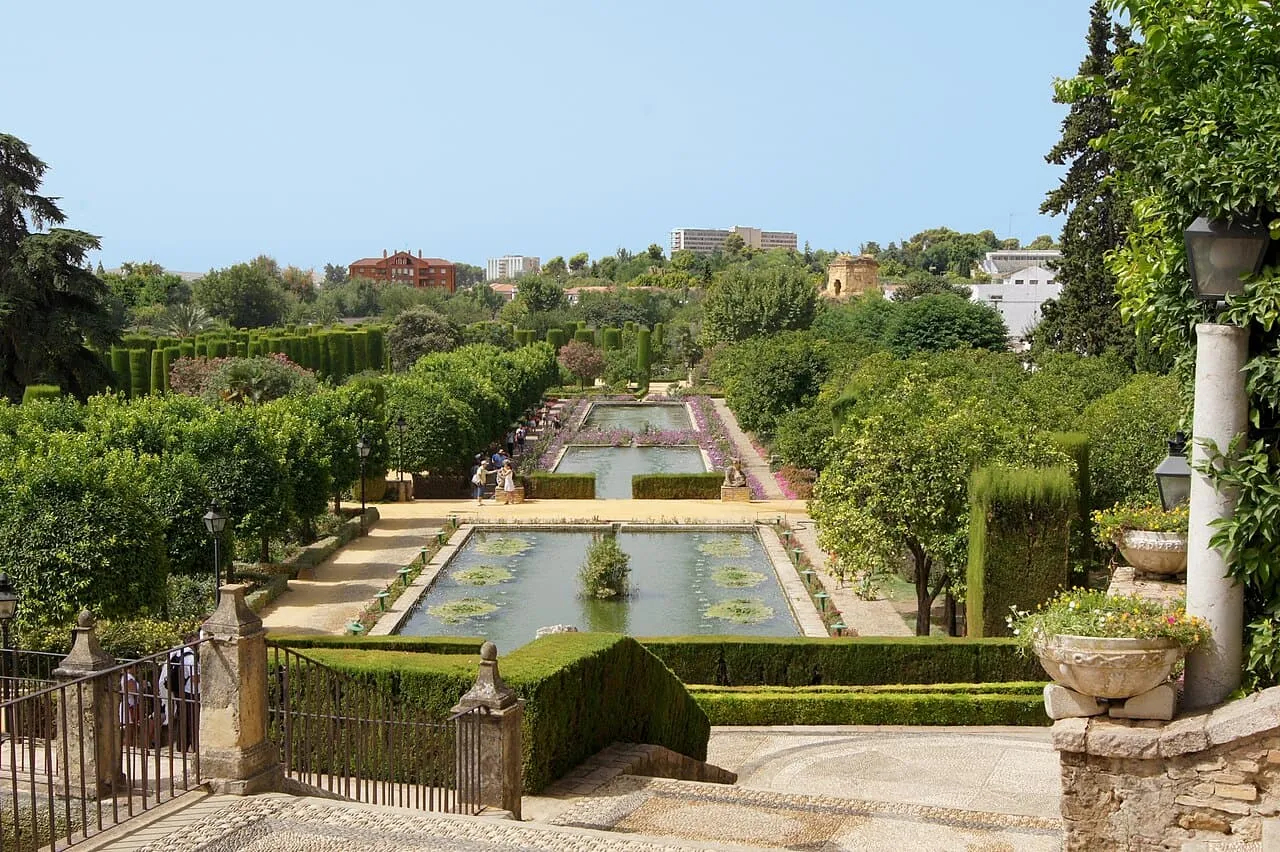
The fortress-palace of the Christian kings, next to the river. Ferdinand and Isabella lived here for years during the war against Granada and received Christopher Columbus before his first voyage. Inside are Roman mosaics and a Moorish-style courtyard, and you can climb the towers for a view of the Mezquita. The best part is outside: long terraced gardens with pools, fountains, orange trees and cypresses. About €5, 1–1.5 hours. Usually closed on Mondays, and open only in the morning in the height of summer.
3. The Roman bridge and the Calahorra tower
The Puente Romano has crossed the Guadalquivir since Roman times, although most of what you see was rebuilt in the Middle Ages. It is pedestrian only. Go at sunset, when the light turns the Mezquita gold, and look out for the old Albolafia water wheel by the bank. At the far end, the Calahorra tower holds a small museum on Córdoba in the time of al-Andalus, with a terrace looking back across the bridge. Bridge free; tower about €5, 45 minutes.
4. The Judería and the synagogue
The old Jewish quarter wraps around the Mezquita: narrow white lanes, wrought-iron windows, flowerpots and small squares. Look for the statue of the philosopher Maimonides, born in Córdoba in 1138, and the synagogue on Calle Judíos, built in 1315 and one of only three medieval synagogues left in Spain. It is a single small room with delicate plasterwork. Nearby, the Casa de Sefarad is a small museum on the city’s Sephardic Jewish history. Synagogue free for EU citizens, a token fee otherwise; 10–15 minutes. Walk the Judería early or after 18:00, when the tour groups have gone.
5. The Calleja de las Flores
A tiny dead-end lane off Calle Velázquez Bosco, lined with flowerpots on white walls. At the end, it opens onto a small square that frames the Mezquita’s bell tower, the most photographed view in Córdoba. It takes five minutes; go early to have it to yourself. Free.
6. The Palacio de Viana
A noble palace in the Santa Marina district, north of the centre, with 12 patios and a garden, each with its own character: orange trees, fountains, columns, climbing plants and pots. It is the best way to see Córdoba’s patios outside May. You can visit the patios alone or add a guided tour of the house, with its tapestries, tiles and leather. About €6–10, 1–1.5 hours. Usually closed on Mondays.
7. The Festival de los Patios (May)
For about two weeks in May, usually the first half of the month, residents open their private courtyards to visitors. Walls are covered in pots of geraniums and carnations, and the owners compete for prizes. The festival is on UNESCO’s list of intangible heritage. Entry to the patios is free; follow the official map through San Basilio, Santa Marina and San Lorenzo, and expect queues at the famous ones at weekends. Go in the evening, when it is cooler. A patios tour gets you round the best ones with the stories behind them. The festival falls between the Cruces de Mayo (flower crosses in the squares) and the Feria, so May is the busiest and most expensive month for hotels.
8. Medina Azahara
About 8 km west of the city lie the ruins of the palace city built in the 10th century by Abd al-Rahman III, the first caliph of Córdoba. It was sacked within a century and forgotten; today it is a UNESCO World Heritage site. The highlight is the restored reception hall with its carved stone decoration, and the terraces looking over the plain. Start at the visitor centre and museum, then take the shuttle bus up to the ruins. Free for EU citizens, a small fee otherwise, plus the shuttle; half a day in total. Usually closed on Mondays. Without a car, take the tourist bus from the centre or a Medina Azahara tour.
9. The Plaza de la Corredera
A large rectangular square with arcades and balconies on all four sides, built in the 17th century and once used for bullfights and markets. It is unusual in Andalusia and looks more like a plaza mayor of Castile. Today it is lined with bar terraces, and a covered market stands on one side. A good stop for breakfast or a drink. Free.
10. The Baños del Alcázar Califal
The remains of the 10th-century baths of the caliphs’ palace, next to the Alcázar. You walk above the excavated rooms on walkways, under vaults with star-shaped skylights, and a short audiovisual explains how the baths worked. Small, so 30 minutes is enough. About €3. Usually closed on Mondays.
11. The Templo Romano
The tall white columns of a 1st-century Roman temple stand beside the town hall on Calle Claudio Marcelo, re-erected after excavations in the 20th century. Córdoba was the capital of a Roman province, and this is its most visible monument after the bridge. You see it from the street in a few minutes. Free.
12. The Fernandine churches
After Ferdinand III took Córdoba in 1236, a dozen parish churches were built across the city, often on the site of mosques. These iglesias fernandinas mix Gothic, Romanesque and Mudéjar styles. The best known are San Lorenzo, with its rose window, Santa Marina and San Pablo. Combine them with the Palacio de Viana and the patios of the northern districts. Free or a small fee, depending on the church and the hours. The Mezquita ticket also includes the route of the Fernandine churches.
13. The Museo Arqueológico
The city’s archaeological museum is in a Renaissance mansion between the Mezquita and the Plaza del Potro. It covers Roman, Visigothic and Moorish Córdoba, and in the basement you walk through the excavated remains of the Roman theatre. Free for EU citizens, a small fee otherwise; 1 hour. Usually closed on Mondays.
14. The Plaza del Potro and the Posada del Potro
A small square named after the colt on its 16th-century fountain. The Posada del Potro, an old inn for traders and travellers, is mentioned by Cervantes in Don Quixote; today it houses the Centro Flamenco Fosforito, a small flamenco museum. Across the square, a former hospital holds the Museo de Bellas Artes and the Museo Julio Romero de Torres, the painter of Córdoba’s dark-eyed women. Square free; small fees for the museums.
15. A flamenco show
Córdoba has a few tablaos in the old town, and shows are smaller and less touristy than in Seville. The best known is Tablao El Cardenal, a short walk from the Mezquita. Shows usually last about an hour and a half and start in the evening. About €25–30 with a drink. Flamenco shows in Córdoba. For the art form and the best venues in the capital, see flamenco in Seville.
16. Salmorejo, flamenquín and a tapas crawl
Córdoba has its own dishes. Salmorejo is a thick, cold tomato and bread cream topped with egg and cured ham, lovely on a hot day. Flamenquín is a roll of ham (and often pork loin) coated in breadcrumbs and fried. Add berenjenas con miel (fried aubergine with cane honey), rabo de toro (oxtail stew) and a glass of Montilla-Moriles, the local wine. Classic addresses include Bodegas Campos, an old wine cellar with many rooms and patios, and Taberna Salinas. For a modern food hall, try the Mercado Victoria in the gardens west of the centre.
17. The Mezquita at sunset and after dark
End the day on the riverbank or the Roman bridge as the lights come on around the Mezquita and the Calahorra tower, then walk back through the empty lanes of the Judería. If you have time for only one evening, this is the moment that makes staying the night worthwhile.
If you only have one day
Morning: the Mezquita (free entry early, or with a ticket from 10:00) and the bell tower. Then the Judería, the synagogue and the Calleja de las Flores. Lunch: salmorejo and flamenquín. Afternoon: the Alcázar and its gardens (in summer, go in the morning instead), then the Baños del Alcázar Califal. Evening: the Roman bridge and the Calahorra tower at sunset, and dinner or a flamenco show in the old town. With a second day, add Medina Azahara in the morning and the Palacio de Viana and the Fernandine churches in the afternoon. Coming from Seville? See our Córdoba day trip guide.
Free things to do
The Mezquita’s early-morning entry, the Patio de los Naranjos, the Judería and the Calleja de las Flores, the Roman bridge, the Templo Romano, the Plaza de la Corredera and the Plaza del Potro, the riverside walk, and the patios during the May festival. EU citizens also enter the synagogue, Medina Azahara and the Museo Arqueológico free.
Where to stay nearby
The Judería and the streets around the Mezquita put you within a few minutes of most of this list; San Basilio is quieter and next to the Alcázar; the centre around Plaza de las Tendillas is handier for the station. Try Hospes Palacio del Bailío or NH Collection Amistad Córdoba, or browse hotels in Córdoba’s old town. More in our Córdoba guide.
FAQ
What is the number one thing to do in Córdoba?
The Mezquita-Catedral. Go early for the free entry, or buy a ticket and a bell tower slot on the official website.
Is the Mezquita free?
Yes, early in the morning from Monday to Saturday (about 8:30–9:30, last entry about 9:20), for individual visitors in silence, with no groups and not on days of special celebrations. At other times it costs about €15.
How many days do you need in Córdoba?
One full day covers the Mezquita, the Judería, the Alcázar and the Roman bridge. Two days lets you add Medina Azahara and the Palacio de Viana. See our Córdoba guide.
When are the Córdoba patios open?
The festival is usually held in the first half of May, when dozens of private patios open free. The Palacio de Viana shows its 12 patios all year.
Is Córdoba worth a day trip from Seville?
Yes. The high-speed train takes about 45 minutes, and the main sights fit into one day. See all day trips from Seville.