The short answer: fastest, cheapest, easiest
Walk. Seville’s historic centre is compact and largely pedestrian: from the cathedral it is 10 minutes to the Setas, 15 to Plaza de España and 15–20 to Triana. Most visitors never take public transport except to and from the airport or the train station.
For longer trips:
- City buses (TUSSAM): the best network, about €1.40 per ride, contactless payment on board
- Tram (Metrocentro): a short line through the centre, handy from Plaza Nueva to San Bernardo
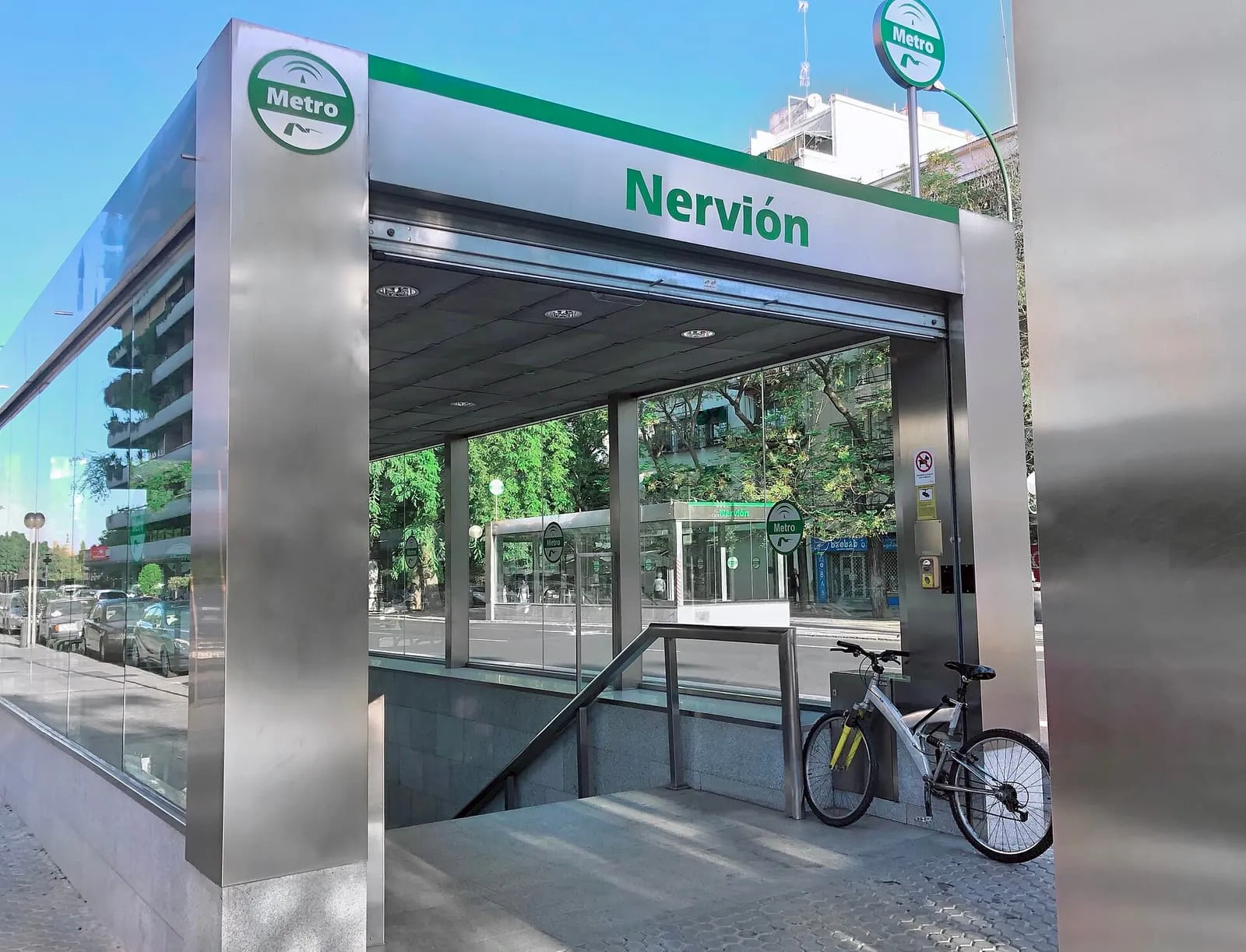
- Metro: one line, useful for San Bernardo station and the suburbs
- Taxis: cheap by European standards, easy to hail
Comparison table
| Option | Price (approx.) | Best for |
|---|---|---|
| Walking | Free | Everything in the historic centre |
| TUSSAM bus | €1.40 single; tourist card for 1 or 3 days | Santa Justa station, Plaza de España, the Macarena, Isla Mágica |
| Tram (Metrocentro) | €1.40 | Plaza Nueva – Puerta de Jerez – Prado – San Bernardo |
| Metro (Line 1) | from about €1.35 | San Bernardo, Puerta de Jerez, the suburbs |
| Taxi | from about €4; €7–10 for most trips in town | Evenings, luggage, the station |
| Bike | Rental from about €15 a day | The river, the parks, Triana |
| Horse carriage | Official fixed fares, about €50–60 for 45–60 minutes | A slow tour of the sights |
Step by step for each option
Walking
Wear comfortable shoes: the streets are cobbled and uneven. In summer, walk on the shady side and plan routes through the parks and narrow lanes, which stay cooler.
TUSSAM city buses
- Pay on board with a contactless bank card (one tap per person) or cash.
- Tourist card: a 1-day or 3-day card with unlimited rides on buses and the tram, plus a refundable deposit. Worth it only if you plan several rides a day.
- Useful routes: the circular lines C1 to C4 go around the centre; the C1 and C2 reach the Cartuja and Isla Mágica. Routes 21, 32 and C1/C2 serve Santa Justa station.
- EA airport bus: see Seville airport to the city centre.
Tram (Metrocentro)
A short tram line from Plaza Nueva along Avenida de la Constitución, past the cathedral, to Puerta de Jerez, Prado de San Sebastián and San Bernardo, with a newer extension towards Nervión. Buy a ticket at the machines on the platforms, or pay by contactless card.
Metro
Seville has one metro line, from Ciudad Expo (west) to Olivar de Quintos (south-east), with useful stops at Puerta de Jerez, Prado de San Sebastián and San Bernardo. Fares depend on the zones you cross.
Taxis
White taxis with a yellow stripe. Hail them in the street (green light on) or wait at a rank. Most trips within the centre cost €7–10. Supplements apply at night, at weekends and during events. Uber, Cabify and Bolt also operate.
Bikes and scooters
Seville is flat and has a good network of bike lanes. The public bike system, Sevici, is designed for residents. Visitors are better off renting from a bike shop, or on a guided bike tour. Rentals of electric scooters are restricted in the city.
Horse carriages
You will see them at the cathedral, Plaza de España and the Torre del Oro. Fares are officially set by the city and displayed in each carriage. Agree the route and price before you get in.
Arriving at your hotel
Much of Santa Cruz and the Centro is closed to cars, and taxis stop at the nearest street they can reach. From Santa Justa train station, take a taxi (about €8–12) or bus C1/C2 or 21/32.
Driving in Seville: don’t, unless you are leaving the city. The historic centre has cameras that fine non-resident vehicles, and parking costs €20–30 a day. See car hire in Seville.
FAQ
Is Seville walkable?
Yes, very. All the main sights of the historic centre are within a 20-minute walk of each other.
Is there an Uber in Seville?
Yes. Uber, Cabify and Bolt all operate in Seville, alongside regular taxis.
Do I need a tourist travel card in Seville?
Usually not. Most visitors walk everywhere. A 1-day or 3-day card only pays off if you take several bus or tram rides a day.
How do I get from Santa Justa station to the centre?
By taxi (about €8–12), on foot (25–30 minutes to the cathedral), or by bus: the circular lines C1 and C2 or lines 21 and 32.