Some links on this page are affiliate links. If you book through them we may earn a commission, at no extra cost to you.
Why visit, and how many days you need
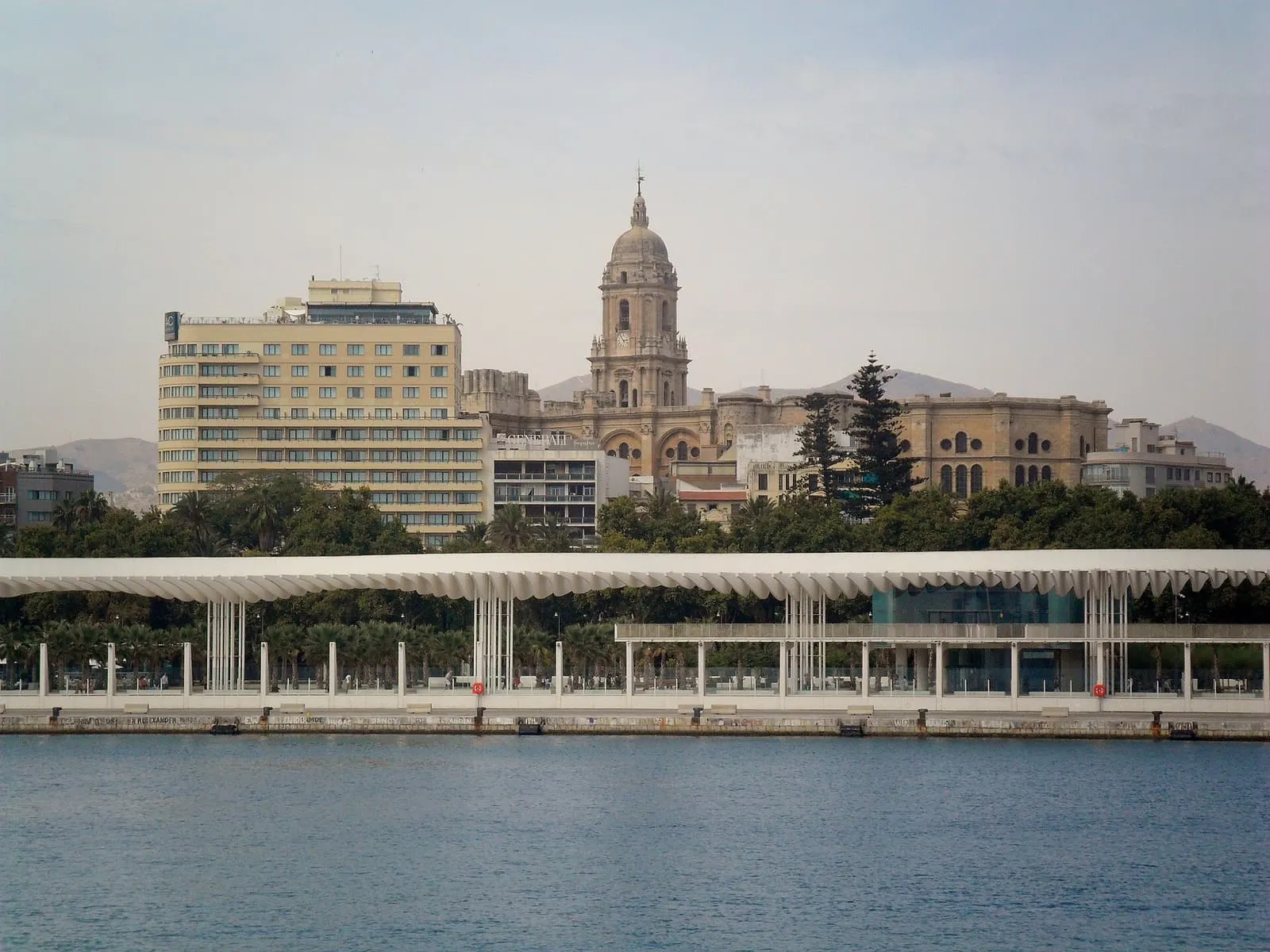
Málaga is the capital of the Costa del Sol and the easiest way into Andalusia: its airport has flights from all over Europe, and the city centre is a short train ride away. For years people landed and drove straight to the beach resorts. Today Málaga is a city break in its own right, with a compact old town, a Moorish fortress and a Roman theatre side by side, around 30 museums (the Picasso Museum is the best known), a city beach 15 minutes’ walk from the cathedral and a food scene built on fried fish, espetos and sweet Málaga wine.
It is also one of the mildest places in Europe in winter, with sunny days of around 17 °C from December to February. That makes it a year-round destination, not just a summer one.
Plan two to three days for the city. Two days cover the Alcazaba, Gibralfaro, the cathedral, the Picasso Museum and the port. A third day adds another museum, the beach at La Malagueta and dinner in Pedregalejo. With five days or more, use Málaga as a base for day trips to Ronda, Nerja, the Caminito del Rey, Antequera and Granada.
Where to stay
- Centro Histórico (the old town) for the sights, the tapas bars and walking everywhere
- Soho, between the old town and the port, for street art, cafés and slightly lower prices
- La Malagueta for the beach and the seafront, 10–15 minutes’ walk from the centre
- Pedregalejo and El Palo for a local seaside neighbourhood with fish restaurants
- Torremolinos or Benalmádena if the beach comes first and the city second
Full guide with hotels in every area: where to stay in Málaga. If you already know the area, go straight to the best hotels in Málaga.
Top sights
- The Alcazaba and the Roman theatre. An 11th-century Moorish palace-fortress climbing the hill, with a Roman theatre from the 1st century BC at its feet.
- Castillo de Gibralfaro. The castle on top of the hill, with the best view of the city, the port and the bullring.
- The cathedral. Nicknamed La Manquita, “the one-armed lady”, because its second tower was never finished. The rooftop tour is worth it.
- Picasso Museum and Picasso’s birthplace. Picasso was born in Málaga in 1881; the museum shows works from his whole life.
- Centre Pompidou Málaga. Modern art under the coloured glass cube on the port.
- Mercado de Atarazanas. The central market, behind a Moorish gate, with tapas bars among the fish stalls.
- Muelle Uno and La Malagueta. A walk along the port to the city beach.
- Espetos in Pedregalejo and El Palo. Sardines grilled on skewers over a wood fire, on the beach.
Full list with prices: things to do in Málaga.
Neighbourhoods at a glance
| Neighbourhood | What it’s like |
|---|---|
| Centro Histórico | Marble pedestrian streets, the cathedral, the museums and most tapas bars. Busy and central |
| Soho | Former warehouse streets between the old town and the port, with murals, galleries and cafés |
| La Malagueta | The seafront east of the port: the city beach, the bullring and apartment blocks |
| Pedregalejo and El Palo | Old fishing districts along the promenade, with beach bars and espetos |
| El Limonar | Villas and gardens on the hills east of La Malagueta, quiet and residential |
| El Perchel and Trinidad | Traditional neighbourhoods across the Guadalmedina riverbed, near the train station |
When to go
The best months are April to June and September to November. Days are warm, the sea is swimmable from June to October, and the city is less crowded than in August.
- Summer (July and August) is hot, often above 30 °C, and busiest on the beaches and in hotels. The dry terral wind from inland can push temperatures much higher for a few days.
- Winter (December to February) is mild and sunny, around 16–18 °C by day, with some rainy days. It is the best time for the city and for walking the Caminito del Rey without the heat.
- Big events: Semana Santa (Holy Week; 21–28 March 2027), with some of the largest processions in Spain; the Feria de Málaga, usually in the second half of August; and the Christmas lights on Calle Larios from late November.
For the whole region, see the best time to visit Andalusia.
Getting there and around
- By plane: Málaga airport (AGP) is about 8 km from the centre. The Cercanías C1 train leaves from a station next to the terminal and reaches the centre (María Zambrano, then Centro-Alameda) in about 12–15 minutes, for about €2. The airport bus (line A) takes 20–30 minutes; a taxi about 15–20 minutes.
- By train: high-speed trains run from Madrid to Málaga María Zambrano in about 2.5 to 3 hours, and there are direct trains to Córdoba (about 1 hour) and Seville (about 2 hours). See Málaga to Seville and compare trains on Omio.
- In the city: walk. The old town, Soho, the port and La Malagueta are all within 20 minutes on foot. City buses go along the seafront to Pedregalejo and El Palo.
- Along the coast: the same C1 train runs west to Torremolinos, Benalmádena and Fuengirola. Buses go to Marbella and Nerja.
- By car: you don’t need one in the city, where parking is expensive and the centre is largely pedestrian. For day trips and a road trip, pick one up at the airport: see car hire at Málaga airport or compare prices on DiscoverCars.
Day trips and the Costa del Sol
Málaga is the natural base for the centre and east of Andalusia. The easiest day trips:
| Day trip | How far (approx.) | Why go |
|---|---|---|
| Caminito del Rey | about 1 h by car | A walkway along the walls of a deep gorge. Book ahead |
| Nerja and Frigiliana | about 1 h by car or bus | Cliffs, beaches, the Nerja caves and a white village |
| Antequera | about 45 min by car | Prehistoric dolmens (UNESCO) and the El Torcal rock formations |
| Ronda | about 1 h 45 by car | The town on the gorge, with its famous bridge |
| Granada | about 1 h 30 by car or bus | The Alhambra. Book your ticket first |
You can also do most of them on an organised tour, for example a Caminito del Rey tour with transport from Málaga or a white villages day trip. See the white villages and Granada.
The Costa del Sol starts at the city limits. Torremolinos and Benalmádena are 20–30 minutes away by train, Marbella about an hour by bus. For a longer trip, Málaga is the usual start of our Andalusia road trip; see also where to base yourself in Andalusia and the best places to visit in Andalusia.
FAQ
Is Málaga worth visiting?
Yes. It has a walkable old town, a Moorish fortress, the Picasso Museum and many others, a city beach and excellent food, and it is the easiest gateway to the rest of Andalusia.
How many days do you need in Málaga?
Two days for the main sights, three to add the beach and a slower pace, and five or more if you want to use it as a base for day trips.
Is Málaga a beach city?
Yes. La Malagueta is 15 minutes’ walk from the cathedral, and the beaches continue east to Pedregalejo and El Palo. For long sandy resort beaches, Torremolinos and Benalmádena are a short train ride away.
How do I get from Málaga airport to the city centre?
Take the Cercanías C1 train from the station next to the terminal: about 12–15 minutes to the centre for about €2. The airport bus and taxis are the alternatives.
Is Málaga better than Seville?
They are different. Seville has the bigger monuments, flamenco and a grander old town; Málaga has the beach, milder winters, more museums for its size and better flight connections. Many trips include both: the direct train takes about 2 hours.