
Some links on this page are affiliate links. If you book through them we may earn a commission, at no extra cost to you.
The short answer
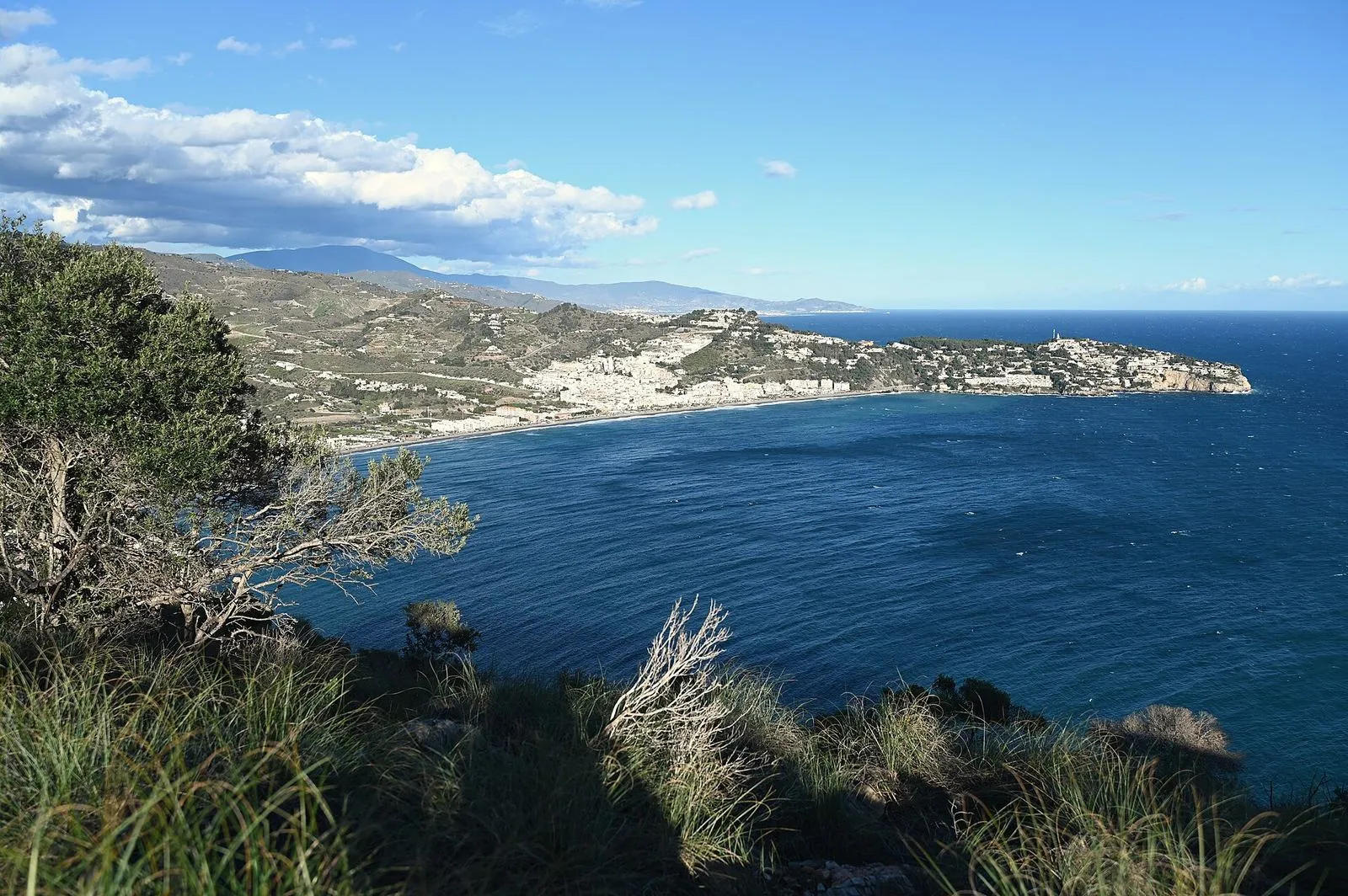
Almuñécar is the biggest resort on the Costa Tropical, the coast of Granada province, with about 27,000 inhabitants. It was the Phoenician and Roman town of Sexi, so it has a castle, a Roman cellar-museum, a fish-salting factory and an aqueduct, plus several beaches, a small bird park and a coast where subtropical fruit grows.
- Is it worth it? Yes, as a base or a day out. We think it has more to see than most beach towns on this coast.
- Time needed: half a day for the old town, castle and Roman sites. A full day if you add a beach.
- Cost: the castle and the Roman cellar share one ticket of about €4. The park of El Majuelo and the beaches are free.
- Getting there: about 1 h by car from Granada or Málaga, or by Alsa bus.
For the whole coast, read our Costa Tropical guide. The prettier but smaller town of Salobreña is about 9 km east.
The castle and the old town
The Castillo de San Miguel stands on the hill above the old town. It was a Nasrid fortress in the time of the Emirate of Granada, and was rebuilt after the Christian conquest. From the walls you see the old town, both bays and the sea.
- Ticket: about €4 for adults and about €2.50 for children, pensioners and youth card holders. The same ticket covers the Cueva de Siete Palacios.
- Hours: the castle is usually open Tuesday to Saturday in the morning and again in the evening, on Sunday in the morning only, and closed on Monday. Hours vary, so check them with the tourist office before you go.
- Free guided visits: the town has offered free guided visits on some days. Ask at the tourist office.
The old town is a short walk of steep lanes around the hill, with small squares and bars. We’d wear shoes with a grip.
The Roman sites
- Cueva de Siete Palacios: seven vaulted galleries under the castle hill, built by the Romans as foundations. It is now the archaeological museum, and the ticket is shared with the castle.
- Fish-salting factory (Factoría de Salazones): in the botanical park of El Majuelo, at the foot of the castle. It has Phoenician and Roman salting tanks used to make garum, the fermented fish sauce that the town exported around the Mediterranean. The park itself is free and, in our view, a good place to walk among tropical plants.
- Roman aqueduct: several stretches survive in and around the town. The best known are at Torrecuevas, on the edge of town, with a row of arches.
The Loro Sexi bird park
The Parque Ornitológico Loro Sexi lies on the slope below the castle, about 100 metres from the sea. It keeps hundreds of birds from many species, mostly parrots, in garden aviaries. Entry is about €4 for adults and about €2 for children and pensioners. It closes in the middle of the day, and the afternoon opening shifts with the season, so check the times. It takes about an hour, and we think it is an easy plan for families with children.
The beaches
The sand is dark grey, mixed with pebbles, and the water gets deep quickly. All of these are close to the centre.
- San Cristóbal: the main town beach, west of the rock of the Peñón del Santo, with a promenade, restaurants and sunbeds.
- Puerta del Mar: the beach in the middle of town, close to the shops and the old quarter.
- Velilla: a long beach to the east, with a wide promenade and more room.
- La Herradura: a separate village in a horseshoe bay about 7 km west, with a long beach, a marina and a quieter, family feel. See the Costa Tropical guide for how it compares.
- Cantarriján: a cove of pebbles and rocks in the Maro-Cerro Gordo protected area, further west towards Nerja. Part of it is a naturist beach. It is reached by a track, and in summer access by car can be limited, so check before you go.
Diving and tropical fruit
Diving: the sea off La Herradura and the cliffs of Cerro Gordo form a protected marine area with reefs, caves and sea grass. Dive centres in La Herradura run courses and trips, and Cantarriján is described as a good site for beginners. We’d book ahead in summer.
Tropical fruit: the mild climate lets farmers grow subtropical fruit on the plain and terraces. The best known are chirimoya (custard apple), mango and avocado. The harvests fall mostly in autumn and winter, so that is the time to find them fresh at the markets and on menus.
Where to stay
We’d stay near San Cristóbal beach for the sea, or in the old town for the sights. We chose hotels rated 8.5 or higher on Booking.com.
- Hotel Helios Costa Tropical: on San Cristóbal beach, with a pool and a sea-view bar. Rated about 9.3.
- Hotel Casablanca: a smaller hotel on the same beach, about 10 minutes’ walk from the old town. Rated about 8.6.
- More options: hotels and apartments in Almuñécar.
Getting to Almuñécar
| From | Car | Bus (Alsa) |
|---|---|---|
| Granada | about 1 h (A-44 and A-7) | about 1 h 15, several a day |
| Málaga | about 1 h (A-7) | about 1 h 15–1 h 30, frequent |
| Nerja | about 20–25 min | about 30 min |
- By bus: the Almuñécar bus station has Alsa services to Granada, Málaga and Nerja. Compare times from Granada to Almuñécar and Málaga to Almuñécar.
- By car: the A-7 runs along the coast and is toll-free here. A car helps for La Herradura and the coves. Hire in Granada or at Málaga airport, and read our car hire guide.
- By train: there is no railway on the Costa Tropical.
Nearby
- Salobreña (about 9 km east): a white town on a rock with an Arab castle.
- Nerja (about 20–25 min west): the caves and the Balcón de Europa, with the village of Frigiliana above it.
- Granada: the Alhambra is about an hour away. See our day trips from Granada.
When to go
Spring and autumn suit sightseeing. July and August are hot and busy, but the sea is warm. Winters are mild and quiet. See when to visit Andalusia, and the best places to visit in Andalusia for more ideas.
FAQ
Is Almuñécar worth visiting?
Yes, we think so. It combines a castle, Roman remains, a bird park and several beaches in one town, and it is easy to reach from Granada, Málaga and Nerja.
How do I get from Granada to Almuñécar?
By Alsa bus in about 1 h 15, with several departures a day, or by car in about an hour on the A-44 and A-7.
How much does the Almuñécar castle cost?
About €4 for adults, and the same ticket includes the Cueva de Siete Palacios museum. Hours change with the season and the castle is closed on Mondays, so check before you go.
Which is the best beach in Almuñécar?
San Cristóbal for services and a promenade, Velilla for more space, and Cantarriján for a wilder cove outside town.
Should I stay in Almuñécar or Salobreña?
We’d choose Almuñécar for more restaurants, sights and bus connections, and Salobreña for a smaller, prettier white town. They are only about 9 km apart, so you can see both.