
Some links on this page are affiliate links. If you book through them we may earn a commission, at no extra cost to you.
The short answer
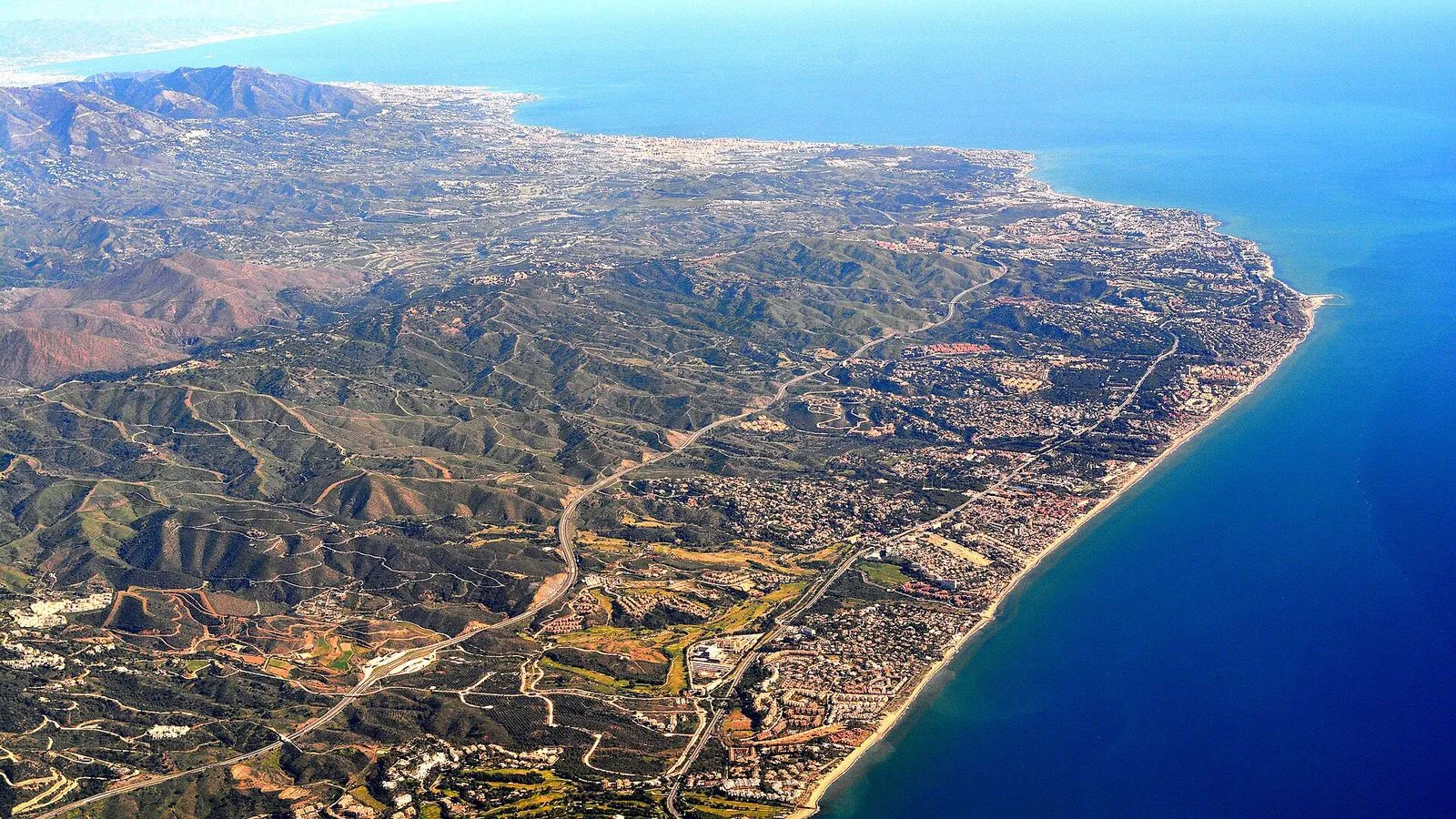
The Costa del Sol is the coast of Málaga province: about 150 km of beaches and resort towns from Nerja in the east to Manilva in the west, with Málaga airport in the middle. The towns are very different, so in our view choosing the right one matters more than choosing a hotel.
- Best for a first visit and culture: Málaga city, a real city with museums and city beaches.
- Best for an easy beach holiday without a car: Torremolinos, Benalmádena or Fuengirola, all on the airport train line.
- Best for families: Fuengirola and Benalmádena, with long flat beaches, promenades and the zoo and marina.
- Best for a smart holiday, golf and nightlife: Marbella and Puerto Banús.
- Best for a prettier, quieter town: Nerja in the east or Estepona in the west.
- Best for a white village with sea views: Mijas Pueblo, above Fuengirola.
The west, from Torremolinos to Estepona, is the busy, built-up coast most people picture. The east, beyond Málaga, is lower-rise and more Spanish. For wilder Atlantic beaches, compare the Costa de la Luz, west of Tarifa.
The towns compared
| Town | Vibe | Beach | Best for | From Málaga airport |
|---|---|---|---|---|
| Nerja | Pretty small town, cliffs | Coves and Burriana beach | Couples, walkers | About 1 h by car |
| Torre del Mar | Spanish seaside town | Long, grey sand | Value, Spanish feel | About 40 min by car |
| Rincón de la Victoria | Local, residential | Long, grey sand | Quiet stays near Málaga | 20–25 min by car |
| Málaga city | Real city | City beaches | Culture, food, a first visit | 12 min by train |
| Torremolinos | Lively resort | Wide and sandy | Nightlife, LGBTQ+ travellers, budget | 10 min by train |
| Benalmádena | Resort with a marina | Sandy, split by the marina | Families, groups | About 18 min by train |
| Fuengirola | Busy, British-friendly | Long and sandy | Families, long stays | About 34 min by train |
| Mijas Pueblo | White village in the hills | None (20 min to the sea) | Views, a quieter base | About 30 min by car |
| Marbella and Puerto Banús | Smart, glamorous in parts | Coarse, grey-brown sand | Golf, beach clubs, hotels | About 45–50 min by car |
| Estepona | Flower-filled old town | Long town beach | Couples, a calmer west | About 1 h by car |
The towns, east to west
1. Nerja
In our view the most attractive town on the coast, at the foot of the mountains near the border with Granada province. The Balcón de Europa promenade, the Nerja caves and the coves below the cliffs of Maro make it a good base for two or three nights, with the white village of Frigiliana 10–15 minutes away. There is no train: buses from Málaga take about 45 minutes to 1 h 30. See the full Nerja guide.
2. Torre del Mar
A seaside town in the municipality of Vélez-Málaga, with a long promenade, a wide grey-sand beach and many Spanish families in summer. It is cheaper and less international than the western resorts, and a practical base for the Axarquía villages inland. ALSA buses from Málaga take about 50 minutes. Further east, Torrox offers a similar quiet stay, with Blue Flag beaches and an old white village inland.
3. Rincón de la Victoria
Almost a suburb of Málaga, 10–15 km east of the centre, with a long beach and a palm-lined promenade. Its sight is the Cueva del Tesoro, a cave formed by the sea and now above sea level, with a guided or audio-guided visit of about 45 minutes to an hour. Local buses from Málaga’s Muelle Heredia stop take about half an hour.
4. Málaga city
The capital of the Costa del Sol and, we think, the best base for a first visit: the Alcazaba, the Picasso Museum, a lively old town and good food, with city beaches 15 minutes’ walk from the cathedral. Trains run from here to Seville, Córdoba and Madrid. See the Málaga travel guide and Málaga’s beaches.
5. Torremolinos
The resort where Costa del Sol tourism began in the 1950s and 60s. Today it is lively and good value, with wide sandy beaches, the old fishing quarter of La Carihuela, known for fried fish, and the shopping street Calle San Miguel. It is one of the best-known LGBTQ+ destinations in Spain. The C1 train takes about 10 minutes from the airport. See the full Torremolinos guide.
6. Benalmádena
Three parts in one: Arroyo de la Miel (inland, with the train station), Benalmádena Costa with the marina, Puerto Marina, and the white hill village of Benalmádena Pueblo. The Teleférico cable car climbs to Monte Calamorro, at about 770 metres, for views along the coast. Popular with families and groups. See the full Benalmádena guide.
7. Fuengirola
A big, busy resort at the end of the train line, with about 7 km of sandy beach, a long promenade, the Moorish Castillo Sohail at the western end and Bioparc, a well-regarded zoo in the centre. It has a large British and Scandinavian community, and plenty of English is spoken. See the full Fuengirola guide.
8. Mijas Pueblo
A white village on the hillside about 20 minutes by bus above Fuengirola (line M-122), with a small bullring, a chapel in the rock and views down to the sea. Busy with coach tours at midday, calm in the evening. We’d stay here if you want village life and a car to reach the beach. See other white villages. See the full Mijas Pueblo guide.
9. Marbella and Puerto Banús
The famous name of the coast: a real whitewashed old town around the Plaza de los Naranjos, a long seafront promenade, the Golden Mile of luxury hotels and the marina of Puerto Banús, with yachts, designer shops and late nights. The beaches are coarse grey-brown sand. No train: buses run direct from the airport. See the full Marbella guide and the Puerto Banús guide.
10. Estepona
In our view the west’s best-kept town: a pretty old centre known as “the garden of the Costa del Sol” for the flowerpots on its white streets, a route of more than 60 large murals, a long town beach and a smaller marina. Calmer and more local than Marbella, about 30 minutes further west. Direct Avanza buses from the airport take about 1 h 15. See the full Estepona guide. Beyond it, at the very western end of the coast, lies the golf and polo resort of Sotogrande.
Getting around the Costa del Sol
By train: the Cercanías C1
The C1 commuter line is the easiest way to move along the central coast. It runs from Málaga Centro-Alameda and María Zambrano via the airport to Torremolinos, Benalmádena (Arroyo de la Miel) and Fuengirola, roughly every 20 minutes from early morning to late evening. For every option from the airport, see Málaga airport transfers.
| From the airport to | Time |
|---|---|
| Málaga Centro-Alameda | about 12 min |
| Torremolinos | about 10 min |
| Benalmádena (Arroyo de la Miel) | about 18 min |
| Fuengirola | about 34 min |
The line ends at Fuengirola. Marbella, Estepona, Nerja, Torre del Mar and Rincón have no train.
By bus
- West: Avanza runs direct buses from the airport and from Málaga bus station to Marbella (about 45 minutes to 1 hour) and Estepona. Compare times on Málaga to Marbella by bus.
- East: ALSA runs from Málaga bus station and Muelle Heredia to Rincón, Torre del Mar and Nerja. See Málaga to Nerja by bus.
- Local: metropolitan buses link the towns, for example the M-122 from Fuengirola to Mijas Pueblo.
By car: A-7 or AP-7
We think a car is worth it for the villages, the cliffs east of Nerja and day trips inland. Two roads run along the coast:
- A-7 (free): the old coastal motorway, with many exits. It is slower and busy at peak times, especially around Fuengirola and Marbella.
- AP-7 (toll): a faster motorway inland from Fuengirola to beyond Estepona, with toll plazas at Calahonda, San Pedro de Alcántara and Manilva. Tolls are much higher in summer: in summer 2026 the Calahonda section, between Fuengirola and Marbella, cost about €9 for a car, with lower rates the rest of the year. Prices change every year, so check the operator’s current rates before you drive.
East of Málaga, the A-7 is toll-free all the way to Nerja. See car hire at Málaga airport or compare prices on DiscoverCars.
Beaches
Be realistic: most Costa del Sol beaches are grey or grey-brown sand, often topped up after winter storms and lined with sunbeds and chiringuitos (beach restaurants) grilling sardines on skewers (espetos). The sea is usually calm and safe for children.
- Widest sandy beaches: Torremolinos, Fuengirola and Benalmádena.
- Clearest water and coves: Nerja and the Maro-Cerro Gordo cliffs to the east.
- Dunes and space: Cabopino, east of Marbella.
- Beach clubs: Marbella and Puerto Banús.
For every beach near the city, see Málaga beaches.
When to go
| Season | Weather | Crowds |
|---|---|---|
| Spring (March–May) | 20–25 °C at midday, sea still cool | Busy at Easter |
| Summer (June–August) | 28–31 °C, sea about 22–24 °C in August | Very busy and expensive in August |
| Autumn (September–October) | 24–28 °C, the warmest sea | Pleasant, prices falling |
| Winter (November–February) | About 17 °C at midday | Quiet, popular with long-stay visitors |
- Best overall, in our view: late May, June, September and early October, warm enough to swim with fewer people.
- August: the peak month. Spanish families are on holiday, the Málaga Fair takes over the city in mid-August, and hotels and car hire cost the most. We’d book early.
- Semana Santa 2027 runs from 21 to 28 March. Processions fill Málaga’s streets and hotel prices rise along the coast.
- Winter is sunny and mild, the Costa del Sol’s big advantage over the rest of Europe, but too cold for most swimmers.
For the month-by-month detail, see Costa del Sol weather by month and the best time to visit Andalusia.
Where to stay on the Costa del Sol
We’d choose the town first, then a hotel within walking distance of the beach or the old centre.
- Nerja: Hotel Balcón de Europa next to the viewpoint.
- Torre del Mar: browse hotels in Torre del Mar, mostly simple seafront hotels and apartments.
- Málaga city: Gran Hotel Miramar, a grand 1920s hotel by La Malagueta beach. More in where to stay in Málaga.
- Torremolinos: Hotel Pez Espada, a 1950s landmark on the beach, or Meliá Costa del Sol on the promenade.
- Benalmádena: Holiday World, a large family resort with pools and activities.
- Fuengirola: Hotel IPV Palace & Spa, on the beach next to Castillo Sohail, with sea-facing rooms.
- Mijas Pueblo: TRH Mijas, a four-star hotel in the village with a pool and views to the sea.
- Marbella: Hotel El Fuerte Marbella, between the old town and the beach, or Puente Romano on the Golden Mile.
- Estepona: Elba Estepona Gran Hotel & Thalasso Spa, a five-star beachfront hotel just outside town, or browse hotels in Estepona’s old town.
Day trips inland
The mountains are close, and the best trips from the coast are inland:
- Ronda: the town on the gorge, about 1 hour from Marbella and 1 h 30–1 h 45 from Málaga. See the Ronda guide or a Ronda day trip from Málaga.
- Caminito del Rey: the walkway through the Gaitanes gorge, about an hour from Málaga. We’d book tickets well ahead. See the Caminito del Rey guide or a Caminito del Rey tour from Málaga.
- Frigiliana: a white village above Nerja, best in the late afternoon. See the Frigiliana guide or a Nerja and Frigiliana day trip.
- Antequera: the dolmens and El Torcal, about 45 minutes north of Málaga. See the Antequera guide or an Antequera and El Torcal day trip.
- Gibraltar: about an hour from Marbella to the border at La Línea. See the Gibraltar guide.
To see more of the region, combine the coast with Seville, Córdoba and Granada on an Andalusia road trip, or browse all day trips from Málaga.
For the figures behind this, with their sources, see our Andalusia tourism statistics.
Work out your own total with our Andalusia trip cost calculator.
FAQ
Which is the best town to stay in on the Costa del Sol?
It depends on the trip. Málaga for culture and food, Torremolinos or Fuengirola for an easy beach holiday on the train line, Marbella for smart hotels and golf, and Nerja or Estepona for a prettier, quieter town.
Do you need a car on the Costa del Sol?
Not if you stay between Málaga and Fuengirola: the C1 train links the airport and the main resorts, and buses reach Marbella, Estepona and Nerja. A car helps for white villages, remote beaches and day trips such as Ronda and the Caminito del Rey.
Is there a train from Málaga airport to Marbella?
No. The C1 train stops at Fuengirola. Take the direct Avanza bus from the airport to Marbella, which takes about 45 minutes to 1 hour.
Is the AP-7 toll road worth it?
Often, we think, in summer and at weekends, when the free A-7 is slow around Fuengirola and Marbella. It saves time rather than distance, and costs much more from June to September than in the rest of the year.
Is the Costa del Sol warm in winter?
Mild rather than hot: about 17 °C at midday in January, with plenty of sun. Good for walking, golf and sightseeing, but the sea is too cold for most people.
Which part of the Costa del Sol is least touristy?
The east. Torre del Mar, Rincón de la Victoria and Nerja are lower-rise and more Spanish than the resorts west of Málaga, and Estepona is the calmest of the big western towns.