Some links on this page are affiliate links. If you book through them we may earn a commission, at no extra cost to you.
The short answer
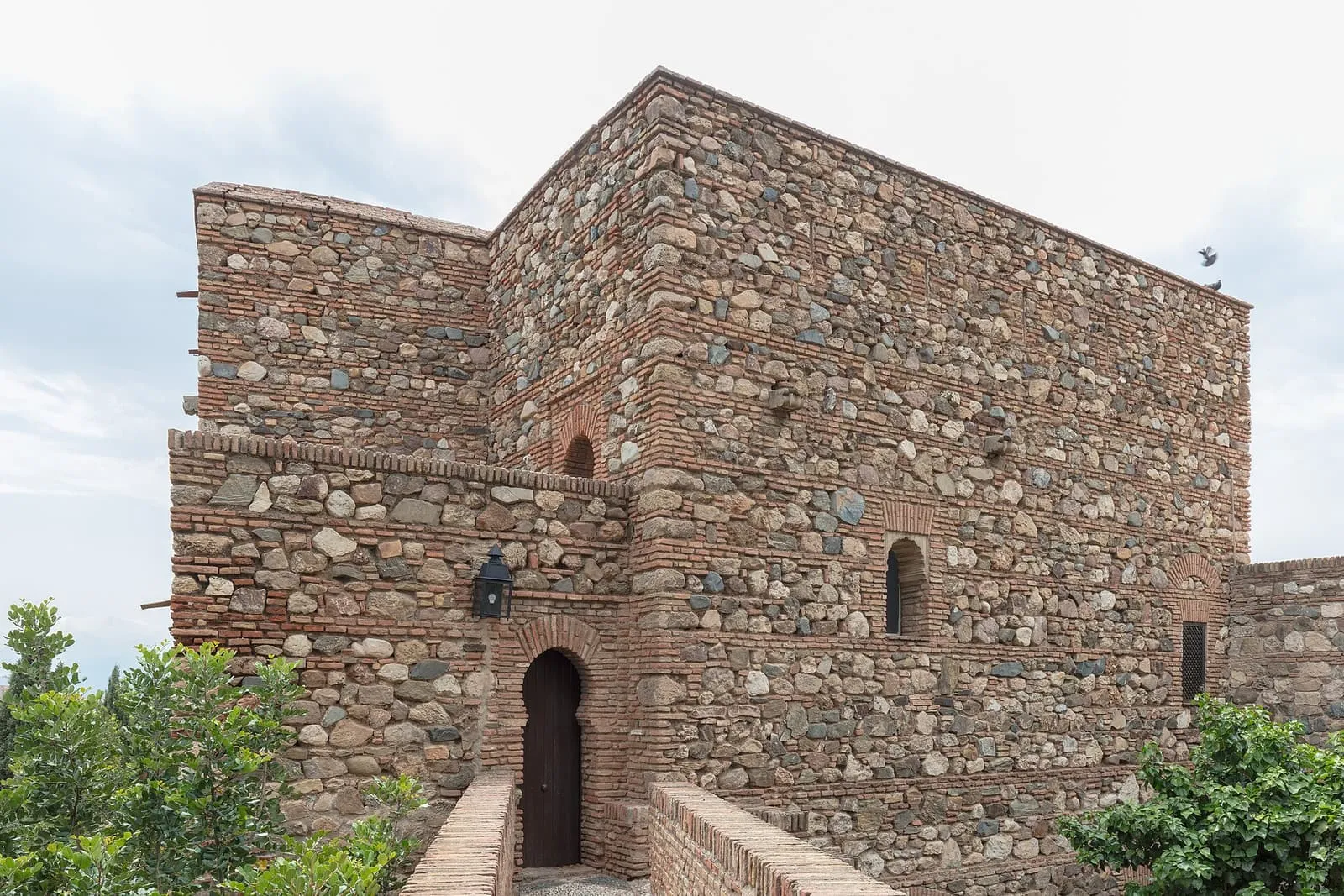
The Alcazaba is Málaga’s Moorish palace-fortress, built in the 11th century on the hill above the port. It climbs in layers of gates, walls and patios to a small palace with fountains and orange trees, and it sits right in the old town, next to a Roman theatre. Castillo de Gibralfaro, the castle at the top of the hill, is a separate visit with a shared ticket.
- Time needed: 1 to 1.5 hours for the Alcazaba, about 1 hour more for Gibralfaro plus the climb
- Price: about €7 for one monument, about €10 for the Alcazaba and Gibralfaro combined
- Free: every Sunday from 14:00, for both monuments
- Book ahead: no. There are no timed tickets; buy at the entrance
- Best time: at opening time (9:00), before the heat and the tour groups
- Where: Calle Alcazabilla, next to the Roman theatre, 5 minutes’ walk from the cathedral
What it is
The Alcazaba was built mainly in the 11th century, when Málaga belonged to the Muslim kingdom of Granada, and was extended by the Nasrid rulers in the 13th and 14th centuries. It was both a fortress and a palace: two rings of walls protect the residence of the city’s governors at the top. The Catholic Monarchs took Málaga in 1487 after a long siege, and the fortress slowly fell into ruin. What you see today was largely restored in the 20th century.
It is often compared to the Alhambra in Granada, which it predates. It is much smaller and simpler, but the setting, with the sea at the bottom of every view, is its own.
Opening hours and prices
| Alcazaba | Gibralfaro | |
|---|---|---|
| 1 April to 31 October | 9:00 to 20:00 | 9:00 to 20:00 |
| 1 November to 31 March | 9:00 to 18:00 | 9:00 to 18:00 |
| Last entry | 1 hour before closing | 1 hour before closing |
| General ticket | about €7 | about €7 |
| Combined ticket (both) | about €10 | (same ticket) |
| Reduced (students, over-65s, others) | about €3 | about €3 |
| Free | Sundays from 14:00; children under 6 | Sundays from 14:00; children under 6 |
Tickets are sold at each entrance, from the ticket office and machines. The combined ticket is the one to buy if you plan to see both: keep it and show it again at the second monument. Check the current prices and holiday closures on the official website, alcazabaygibralfaro.malaga.eu.
Free Sunday afternoons are popular with locals and tour groups, so expect a queue at 14:00 and busy patios. With a limited budget it is a good deal; otherwise a weekday morning is more pleasant.
Tickets: on your own or with a guide?
The Alcazaba is easy to visit on your own: the route is signposted, and the information panels explain the main spaces. A guide adds the story of the Muslim city and the 1487 siege, and saves you the logistics of the climb to Gibralfaro.
- On your own: the official ticket at the entrance, the cheapest option
- With a guide: a guided tour of the Alcazaba and Gibralfaro
The route through the Alcazaba
The visit climbs from the entrance on Calle Alcazabilla to the palace at the top, then comes back down the same way. Allow an hour, more if you linger in the patios.
- Puerta de la Bóveda. The first gate, with a bent entrance: attackers had to turn a corner under a vault, a classic defence of Islamic fortresses.
- Puerta de las Columnas. A gate built with Roman columns and capitals taken from the theatre below. Look closely at the mix of marble and brick.
- Arco de Cristo. A gate tower named after the image of Christ placed there after the Christian conquest. The path zigzags up through gardens, with the old town opening up below.
- Patio de los Naranjos. The first courtyard of the palace, with orange trees and small pools.
- The Nasrid palace and Patio de la Alberca. Courtyards around a long pool, horseshoe arches and rooms with carved plaster. Some rooms display pottery and objects found during excavations.
- The Barrio de Viviendas. The foundations of a quarter of Moorish houses, with their patios, latrines and drains still visible.
- The upper walls and the Torre del Homenaje. The keep at the top, and walls with views over the port, the cathedral roofs and the Paseo del Parque.
The lift for visitors who can’t climb
A lift in Calle Guillén Sotelo, on the port side of the hill next to the road tunnel under the Alcazaba, goes up to the palace area and skips the climb. It works during opening hours, and you need an Alcazaba ticket, sold at the machines by the tunnel entrance. It suits wheelchair users, pushchairs and anyone who struggles with steep paths. Some parts of the fortress still have steps and uneven paving.
Castillo de Gibralfaro: the castle above
Gibralfaro was built in the 14th century by the Nasrids to protect the Alcazaba, on a hilltop where the Phoenicians are said to have had a lighthouse (the name comes from the Arabic for “mountain of the lighthouse”). A walled corridor, the Coracha, links the two. Inside there is little left of the buildings, but you can walk much of the ramparts, and the views are the best in Málaga. A small interpretation centre covers the castle’s military history.
How to get up:
- On foot: a path starts on Paseo de Don Juan Temboury, next to the Alcazaba entrance, and climbs alongside the walls. It is about 20 minutes, steep and partly unshaded. Don’t do it in the middle of a summer day.
- By bus: EMT line 35 goes from the centre to the castle, about every 30 minutes.
- By taxi: about 10 minutes from the centre.
A good plan: take bus 35 or a taxi up, see Gibralfaro, then walk down the path to the Alcazaba. You get the views on the way down and save your legs.
The Roman theatre at the foot
Right by the Alcazaba entrance is a Roman theatre from the 1st century BC, rediscovered only in the 1950s. You can see it from the street, or walk in, sit on the tiers and visit the small interpretation centre, which shows finds from the excavations and explains how the theatre was used and rediscovered. Entry is free, and it is usually closed on Mondays. Allow 20 to 30 minutes. It is also where you see how the city grew in layers: Roman stone reused in a Moorish gate, just a few steps higher.
The best views
- Mirador de Gibralfaro. A viewpoint by the road just below the castle and the Parador, looking straight down on the bullring (La Malagueta), the port and the Paseo del Parque. It is free and open at all hours, and it is the classic photo of Málaga.
- The Gibralfaro ramparts. The whole bay, the cathedral and, on clear days, the coast stretching west.
- The upper walls of the Alcazaba. A lower, closer view of the port and the old town.
- From below: the terraces on Calle Alcazabilla, with the theatre and the lit walls after dark.
Tips for your visit
- Go early. The Alcazaba opens at 9:00; the first hour is cool and quiet.
- Summer heat: from June to September, avoid the climb between midday and 17:00. Bring water and a hat. There is little shade on the Gibralfaro path and ramparts.
- Shoes: the paths are paved with polished stone and cobbles, slippery and steep in places. Wear shoes with grip.
- The climb: the Alcazaba itself is a steady uphill walk. If you have trouble with stairs, use the lift, and take the bus or a taxi to Gibralfaro.
- Combined ticket: buy it at your first stop if you plan to see both.
- Free Sundays: arrive a little before 14:00, or come at 9:00 on a weekday instead.
Combine it with the Picasso Museum and the cathedral
The Alcazaba, the Roman theatre, the Picasso Museum and the cathedral are all within five minutes of each other. A classic day:
- Morning: the Alcazaba at 9:00, then Gibralfaro (by the path, or bus up and walk down).
- Midday: the Roman theatre on your way down, then lunch around Plaza de la Merced or Calle Alcazabilla.
- Afternoon: the Picasso Museum on Calle San Agustín, then the cathedral a few streets away.
The Museo de Málaga, in the Palacio de la Aduana at the foot of the Alcazaba, is also next door. For the full list, see things to do in Málaga.
Alcazaba or Alhambra?
If you are deciding how to spend your time in Andalusia, here is how they compare.
| Alcazaba of Málaga | Alhambra (Granada) | |
|---|---|---|
| Size | Small: a fortress with a palace at the top | A palace city with gardens, over a large hill |
| Time needed | 1–1.5 hours (2–3 with Gibralfaro) | 3–4 hours |
| Price | about €7, or €10 with Gibralfaro | about €19–21 |
| Booking | Not needed; no timed tickets | Weeks ahead; timed entry to the Nasrid Palaces |
| Crowds | Moderate | Very busy |
The Alcazaba does not replace the Alhambra, which is in a different league. But it is quick, cheap and easy to fit in, and it is a good introduction. Granada is about 1.5 hours from Málaga: see day trips from Málaga.
Where to stay nearby
The Centro Histórico puts the Alcazaba a few minutes’ walk from your door. Good options:
- Hotel del Pintor: a small, modern hotel near the Roman theatre and Plaza de la Merced
- Hotel Molina Lario: next to the cathedral, with a rooftop pool facing the cathedral and the Alcazaba
- Palacio Solecio: a restored 18th-century palace in the old town
- Parador de Málaga Gibralfaro: next to the castle at the top of the hill, with a pool and one of the best views of the city. Quiet, but you will need taxis to the centre
Or search hotels in the old town. See where to stay in Málaga, our pick of the best hotels in Málaga and the Málaga travel guide.
FAQ
How long do you need at the Alcazaba of Málaga?
About 1 to 1.5 hours for the Alcazaba alone. With Gibralfaro and the climb between them, allow 2.5 to 3 hours.
Is the Alcazaba free on Sundays?
Yes. Entry to the Alcazaba and Gibralfaro is free every Sunday from 14:00. Expect more people than on a weekday morning.
Do I need to book Alcazaba tickets in advance?
No. There are no timed tickets and queues are usually short. Buy the ticket at the entrance, or the combined ticket if you also want to see Gibralfaro.
Is it worth visiting both the Alcazaba and Gibralfaro?
Yes, if you have half a day. The Alcazaba has the palace and patios, Gibralfaro the ramparts and the views, and the combined ticket costs little more than one.
Is the Alcazaba accessible for wheelchairs?
Partly. The lift from Calle Guillén Sotelo takes you up to the palace area without the climb, but some paths and rooms have steps and uneven paving.