
Some links on this page are affiliate links. If you book through them we may earn a commission, at no extra cost to you.
The short answer
We’d eat tapas in the old town, fish by the sea and lunch at the market. Málaga’s food is simpler than Seville’s or Granada’s: fried fish, grilled sardines, cold soups and sweet wine, eaten standing at a bar or on a beach terrace.
- Best areas: the Centro Histórico (Calle Granada, the streets around the cathedral and Plaza de la Merced), the Mercado de Atarazanas at lunchtime, and Pedregalejo and El Palo for espetos
- Classic places: Bodega El Pimpi, Antigua Casa de Guardia, Casa Lola, El Tapeo de Cervantes, El Cabra, El Tintero
- Modern cooking: La Cosmo, Uvedoble, Base9; for a tasting menu, Kaleja
- Price: about €3–5 a tapa; a full tapas dinner costs €20–35 per person with drinks
- Times: lunch from 14:00, dinner from 21:00
What to order
| Dish | What it is |
|---|---|
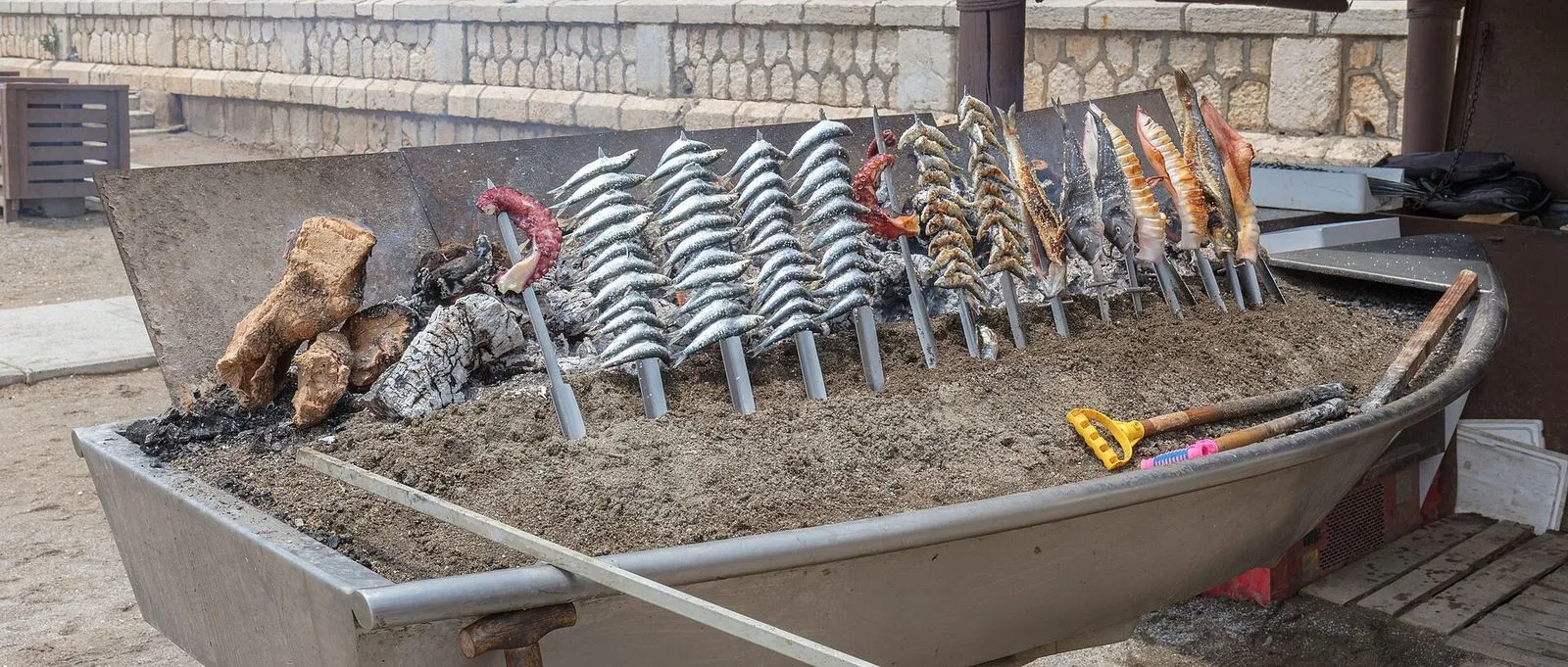
| Espetos | Sardines on a cane skewer, grilled over olive wood on the beach, best from May to August |
| Fritura malagueña | Mixed fried fish: anchovies, squid, small red mullet, cuttlefish |
| Boquerones | Fresh anchovies, fried (fritos) or marinated in vinegar (en vinagre) |
| Porra antequerana | A thick, cold tomato and bread cream from Antequera, topped with egg and ham or tuna |
| Ajoblanco | A cold white soup of almonds, garlic and olive oil, served with grapes |
| Ensalada malagueña | Potato, salt cod, orange and olives |
| Pitufo | A small soft bread roll, the local breakfast with olive oil, tomato or zurrapa (pork dripping) |
Drinks: Málaga wine is the local speciality: sweet wines made from Pedro Ximénez and Moscatel grapes, from the barrel. We’d try a glass of Pajarete, Moscatel or Pedro Ximénez at Antigua Casa de Guardia or El Pimpi. Otherwise, a caña (small draught beer), a local Victoria beer, or a glass of dry white vino de Ronda.
How to order coffee in Málaga
Málaga has its own coffee vocabulary, invented at Café Central on Plaza de la Constitución to stop customers asking for “a bit more milk, a bit less coffee”. Café Central closed in 2022, but the names are still used in bars all over the city. From the most milk to the least:
- Nube (“cloud”): a splash of coffee in a glass of milk
- Sombra (“shadow”): mostly milk
- Corto and entrecorto: about a third to less than half coffee
- Mitad: half coffee, half milk, the standard white coffee
- Semilargo and largo: mostly coffee with a little milk
- Solo: black
The best areas to eat
Centro Histórico: Calle Granada and around the cathedral
The old town has the highest density of tapas bars. Calle Granada, which runs from Plaza de la Constitución to Plaza de la Merced, is the main tapas street, and the lanes around the cathedral and Calle Císter are full of bars too.
- Bodega El Pimpi (Calle Granada 62): a huge bodega from 1971 in an 18th-century house, with several rooms, patios and a terrace facing the Alcazaba. Touristy but a Málaga institution; we’d come for a glass of sweet wine and a few tapas. The kitchen is open non-stop from 12:00.
- Casa Lola (Calle Granada 46): a busy, tiled tavern with a long list of tapas, pinchos and vermouth at fair prices. There are now several branches; this one was the first.
- El Tapeo de Cervantes (Calle Cárcer 8): a small bar near the Teatro Cervantes and Plaza de la Merced, with modern tapas, especially fish. Only about 28 seats, so we’d book.
- Uvedoble (Calle Císter 15): modern tapas near the cathedral and the Roman theatre, with good vegetarian and gluten-free options.
- La Cosmo (Calle Císter 11): chef Dani Carnero’s casual restaurant, recommended by the Michelin Guide, with local fish and market cooking. Lunch only, closed Sunday.
- Kaleja (Calle Marquesa de Moya 9): Carnero’s Michelin-starred restaurant in the old Jewish quarter, cooking over embers. Tasting menu; we recommend booking well ahead.
Near Plaza de la Merced, the Mercado de la Merced is a food hall with about 20 bars and counters, open all day until midnight: handy for groups who can’t agree.
Antigua Casa de Guardia
The oldest wine bar in Málaga, founded in 1840, on the Alameda Principal (number 18). There are no tables: you stand at the wooden counter, order Málaga wine straight from the barrels along the wall, and the barman chalks what you owe on the bar in front of you. They also serve shellfish, such as mussels and prawns. Open daily; Sunday until 15:00.
Mercado Central de Atarazanas
The central market, in a 19th-century iron hall behind a 14th-century Moorish gate, a few minutes’ walk from Calle Larios. Come in the morning for the fish, fruit and olive stalls, then eat at one of the bars inside the market: fried fish, grilled prawns, clams and a cold beer at the counter.
The market is open Monday to Saturday, about 8:00–15:00, and closed on Sunday. The bars are busiest from 12:00 to 14:00. More in things to do in Málaga.
Soho
The streets between the Alameda and the port have murals, speciality coffee, brunch places and international food, with the most vegetarian and vegan options in the centre.
Across the riverbed, in El Perchel near María Zambrano station, Base9 (Calle Salitre 9) is a small Bib Gourmand restaurant run by two young chefs, with modern tapas at low prices. It opens for dinner Wednesday to Friday and for lunch at weekends.
The port and Muelle Uno
The waterfront between the old town and La Malagueta has restaurants and bars with terraces overlooking the yachts, next to the Centre Pompidou. Fine for a drink at sunset or a meal with a view, but most places are pricier and less local than in the old town.
Pedregalejo and El Palo: espetos on the beach
The old fishing districts east of the centre are where Málaga goes for espetos and fried fish. The promenade is lined with beach restaurants that grill sardines in old boats filled with sand. See Málaga’s beaches for how to get there: EMT bus 11 from the centre, or about 15 minutes by taxi.
- El Cabra (Paseo Marítimo El Pedregal 17): a Pedregalejo classic founded in 1965, with espetos grilled over olive wood in front of the terrace, plus prawns, sea bream and shellfish.
- El Tintero (Avenida Salvador Allende 340, El Palo): a huge beach restaurant with no menu. Waiters walk out of the kitchen shouting the dish they carry, and whoever raises a hand first gets it. You pay by the number of empty plates. Open every day; no bookings.
We’d order a few espetos per person, a fritura to share and a tomato salad. Terraces fill up from 14:00 and again from 21:00, especially at weekends.
Places at a glance
| Place | Area | Type | Price | Best for |
|---|---|---|---|---|
| Bodega El Pimpi | Calle Granada | Historic bodega | €€ | Sweet wine, the setting |
| Antigua Casa de Guardia | Alameda Principal | Wine bar since 1840 | € | Wine from the barrel |
| Casa Lola | Calle Granada | Tapas tavern | € | Classic tapas, vermouth |
| El Tapeo de Cervantes | Near Plaza de la Merced | Modern tapas | €€ | Fish tapas, a small room |
| Uvedoble | Near the cathedral | Modern tapas | €€ | Vegetarian options |
| La Cosmo | Near the cathedral | Market cooking | €€ | Lunch, local fish |
| Kaleja | Old Jewish quarter | Michelin star | €€€ | A special dinner |
| Mercado de Atarazanas | Centro | Market bars | € | Fried fish at lunch |
| Mercado de la Merced | Plaza de la Merced | Food hall | €€ | Groups, late eating |
| Base9 | El Perchel | Bib Gourmand | € | Creative tapas, value |
| El Cabra | Pedregalejo | Beach restaurant | €€ | Espetos |
| El Tintero | El Palo | Beach restaurant | €€ | Fried fish, the show |
Tips
- Meal times: breakfast 8:00–11:00, lunch 14:00–16:00, dinner from 21:00. Between about 17:00 and 20:00 many kitchens are closed.
- Set menus: many restaurants offer a menú del día at lunch on weekdays, the cheapest way to eat a full meal.
- Tapas are not free. As in Seville, you order and pay for them; the free tapa with a drink is a Granada tradition.
- Tipping: not expected in bars. Round up, or leave 5–10% at a sit-down restaurant if the service was good.
- Avoid tourist traps: we’d skip places on and just off Calle Larios and Plaza de la Constitución with photo menus, paella at any hour and waiters calling you in. We’d walk two streets further.
- Vegetarians: ask for pimientos de padrón, berenjenas con miel (fried aubergine with cane honey), ajoblanco, salmorejo or tortilla. Soho and the modern tapas bars have the most choice.
- Something sweet: Casa Aranda, by the market on Calle Herrería del Rey, has served churros since 1932; Casa Mira on Calle Larios has made ice cream and turrón since 1890.
- Closing days: many bars close on Sunday or Monday. Check before crossing town.
A tapas tour
A food tour covers three or four bars with tastings and drinks, usually for about 3 hours and €60–90 per person; some start at the Atarazanas market. Book a Málaga tapas tour.
If you only have one day
We’d start with a breakfast of churros at Casa Aranda, then the market at Atarazanas. See the Alcazaba and the Picasso Museum, with lunch at La Cosmo or a menú del día. Walk the promenade to Pedregalejo for espetos at sunset, or stay in the centre for tapas on Calle Granada and a glass of sweet wine at Antigua Casa de Guardia.
Where to stay nearby
We’d stay in the Centro Histórico to walk to every tapas bar, or in Pedregalejo or El Palo to be next to the beach restaurants. See where to stay in Málaga, and for the whole city, our Málaga guide. Heading along the coast? See the Costa del Sol.
FAQ
What food is Málaga famous for?
Espetos (grilled sardines on skewers), fried fish, boquerones, ajoblanco, porra antequerana and sweet Málaga wine.
Where do locals eat in Málaga?
At the beach restaurants in Pedregalejo and El Palo, in the bars of the Atarazanas market at lunchtime, and in the old town away from Calle Larios.
Are tapas free in Málaga?
No. Tapas in Málaga are ordered and paid for, usually €3–5 each. For free tapas with a drink, go to Granada.
Where can I eat espetos in Málaga?
On the beaches of Pedregalejo and El Palo, 4–6 km east of the centre, and at the chiringuitos on La Malagueta. Sardines are at their best from May to August.
What is the oldest bar in Málaga?
Antigua Casa de Guardia on the Alameda Principal, founded in 1840, which still serves Málaga wine from the barrel.
For the other big Andalusian food city, see where to eat in Seville.