
Some links on this page are affiliate links. If you book through them we may earn a commission, at no extra cost to you.
The short answer: fastest, cheapest, easiest
Málaga to Nerja takes about 1 hour by car and about 45 minutes to 1 h 30 by ALSA bus, depending on the service. It is about 55 km east along the coast, an easy trip, and there is no train.
- Cheapest and simplest without a car: the ALSA bus, with many departures a day from Málaga bus station, from about €5 one way
- Fastest and most flexible: a car on the A-7, free of tolls the whole way, about 50 minutes to 1 hour
- From Málaga airport: there is very little direct public transport. Most people take a taxi or transfer, or go via Málaga bus station
- Easiest for a day trip: we’d pick a Nerja and Frigiliana tour from Málaga
- Train: none. Nerja has no railway station
Comparison table
| Option | Time (approx.) | Price (approx.) | Runs | Book |
|---|---|---|---|---|
| ALSA bus from Málaga bus station | 45 min–1 h 30 depending on the service (some up to 2 h) | from about €5 | Many a day, early morning to late evening | Omio or ALSA |
| ALSA bus from Málaga airport | about 1 h 15–1 h 45 | about €5–6 | Very few, check ALSA | ALSA |
| Car on the A-7 | 50 min–1 h | fuel and parking, no toll | Any time | DiscoverCars |
| Taxi from the airport | 50 min–1 h | about €70–110 per car | 24 h | Rank outside arrivals |
| Day tour with Frigiliana | Full day | check current prices | Most days | Day tour |
By bus from Málaga city
ALSA runs the Málaga to Nerja route, with more than 40 services a day in each direction. Buses leave from Málaga bus station (Paseo de los Tilos), next to María Zambrano train station and about 15–20 minutes’ walk from the old town. Some also leave from the port area.
- Choose the service. The direct ones take about an hour. Services that stop on the way take up to about 2 hours, so check the journey time when you book. The first bus leaves around 06:15–06:30 and the last in the evening.
- Buy a ticket. The usual fare is about €5 each way. Buy it online from ALSA, on Omio, or at the station.
- Arrive. ALSA buses stop at Nerja bus station on Avenida de Pescia, at the entrance to the town, about 10 minutes’ walk from the Balcón de Europa. Follow the main street towards the old town.
For the town itself, see our Nerja guide.
From Málaga airport
There is no regular direct service like the Marbella buses. As far as we know, ALSA runs a single direct bus a day from the airport, in the afternoon, so check alsa.com before you rely on it. Otherwise:
- Taxi or private transfer: the easiest option, about 50 minutes to 1 hour, about €70–110 depending on the time of day and the company. Fixed-price transfers are often at the lower end. Compare a private transfer from Málaga airport.
- Train and bus via Málaga: take the C1 or the airport bus to Málaga María Zambrano, walk to the bus station next door and take the ALSA bus. Allow about 2 h 15 to 3 hours in total.
- Hire car: you can be on the A-7 within 15 minutes. See car hire at Málaga airport and Málaga airport transfers.
Is there a train to Nerja?
No. The railway along the Costa del Sol stops at Fuengirola, west of Málaga, and nothing runs east. Nerja, in the Axarquía, has no train. The nearest stations are in Málaga, so the bus is the public transport option.
By car: A-7 and N-340
From Málaga, follow the signs to Almería and Motril along the A-7, the Mediterranean motorway. It is about 55 km from the city and about 65–70 km from the airport, and takes about 50 minutes to 1 hour.
- No tolls. The paid AP-7 runs west of Málaga towards Marbella, not east. Between Málaga and Nerja the A-7 is free. See Málaga to Marbella for the toll road to the west.
- Exit 292 is the one for Nerja, whether you come from Málaga or Motril. It joins the N-340, the old coast road that runs through the town.
- Traffic. The road is usually quiet, but it can back up on summer weekends and around the Málaga ring road.
- Hire a car at the airport: compare prices on DiscoverCars.
Parking in Nerja
Parking in the old town is limited and the centre is mostly pedestrian. Use a public car park on the edge of the old town, such as Carabeo, a large paid car park (about €1.80 an hour, with seasonal prices), or the paid car parks at Paseo Nuevo and El Chapiral. A large free car park lies at the end of Calle del Puente Viejo, visible from the N-340 and about five minutes’ walk from the centre. There is also free parking near El Playazo beach, further out. At the caves, there is a paid car park at the entrance.
By taxi or transfer
A taxi from Málaga city to Nerja costs roughly €80, and from the airport roughly €70–110 depending on the company. Night rates (22:00–06:00), weekends and public holidays are more expensive. Ask for a fixed price before you set off, or pre-book a transfer. We think a transfer is worth it for a group or with luggage; for one person, the bus is much cheaper.
Tours that combine Nerja and Frigiliana
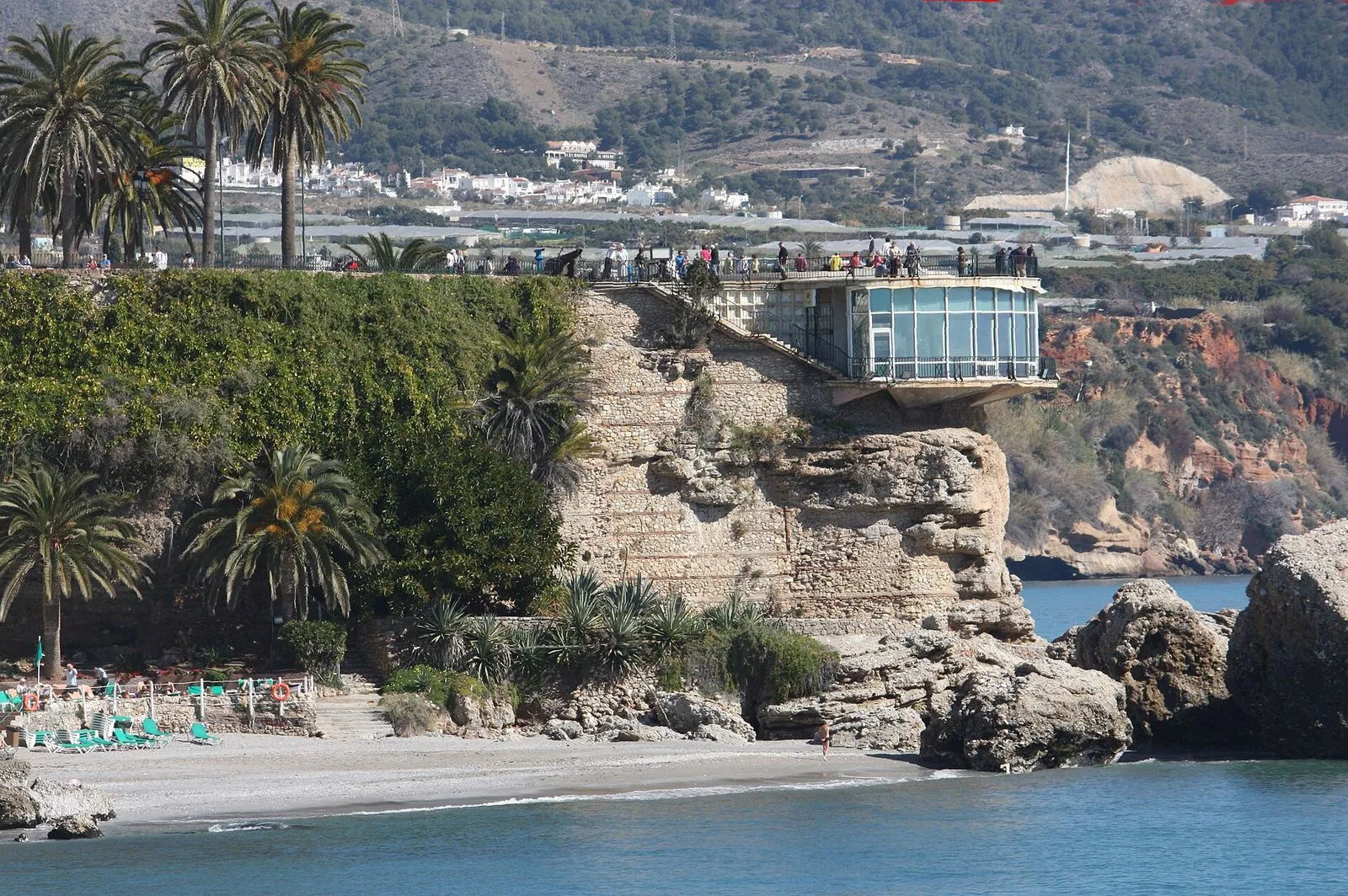
We think a guided day trip is the easiest way if you don’t drive. Most leave Málaga in the morning and combine the Balcón de Europa, free time in Nerja, often the Nerja caves (check whether the ticket is included) and Frigiliana, the white village about 6 km inland. Compare Nerja and Frigiliana tours from Málaga. In our view, a kayak tour along the Maro cliffs or a boat trip make good additions.
You don’t need a tour: a local bus runs from Nerja bus station to Frigiliana (about €1.15), and the ALSA Nerja–Maro bus runs about 20 times a day to the caves (stop Cruce de las Cuevas, about €1). We think a tour saves time if you want all three in one day without checking timetables.
The Nerja caves
The Cueva de Nerja are about 4 km east of the town, above the village of Maro. The visit takes about 50 minutes. Adult tickets are about €16 online and €18 at the ticket office in the normal period, and about €18 online and €20 at the desk in summer, around Christmas, on holiday weekends and at Easter. We recommend buying online at cuevadenerja.es, especially in summer. The caves are open every day except 1 and 6 January, 15 May and 25 December, with shorter hours in winter. See the Nerja guide for the full visit.
Day trip or overnight?
A day trip works well, we think. With an early bus or a car, you can see the Balcón de Europa, visit the caves, have lunch by the sea and add Frigiliana before an evening bus back. A car gives you more time.
We’d stay a night if you want the beaches and a slower pace. Nerja is pleasant in the evening, when the day-trippers have left, and it makes a good base for Maro, the Maro cliffs and Frigiliana. See hotels in Nerja old town or stays in Frigiliana. For other ideas, see day trips from Málaga.
Which option to choose
- Without a car, on a budget: the ALSA bus from Málaga bus station.
- Landing at the airport and going straight to Nerja: a taxi or pre-booked transfer, or a hire car.
- Nerja plus Frigiliana, with little planning: a guided day tour.
- Touring the coast and the white villages: a hire car. See also the white villages and the Costa del Sol guide.
Both directions
Nerja to Málaga works the same way in reverse. The ALSA bus runs from Nerja bus station to Málaga bus station, with the last departures in the evening. For a flight, allow at least 2 hours to reach the airport by bus and train, or leave 1 h 30 for a car or taxi. See our Málaga guide and the beaches near Málaga.
FAQ
How long does it take to get from Málaga to Nerja?
About 50 minutes to 1 hour by car on the A-7, and about 45 minutes to 1 h 30 by ALSA bus, depending on the service. Buses that stop on the way take up to about 2 hours.
How much is the bus from Málaga to Nerja?
About €5 each way with ALSA. Buy online, on Omio, or at Málaga bus station.
Is there a train from Málaga to Nerja?
No. The Costa del Sol line ends at Fuengirola and Nerja has no railway station. Take the ALSA bus or drive.
Is there a toll on the road from Málaga to Nerja?
No. The A-7 between Málaga and Nerja is free. The AP-7 toll road runs the other way, towards Marbella.
Can you do Nerja as a day trip from Málaga?
Yes. With an early bus or a car you have time for the Balcón de Europa, the caves and Frigiliana. A guided tour combines all three.