The short answer
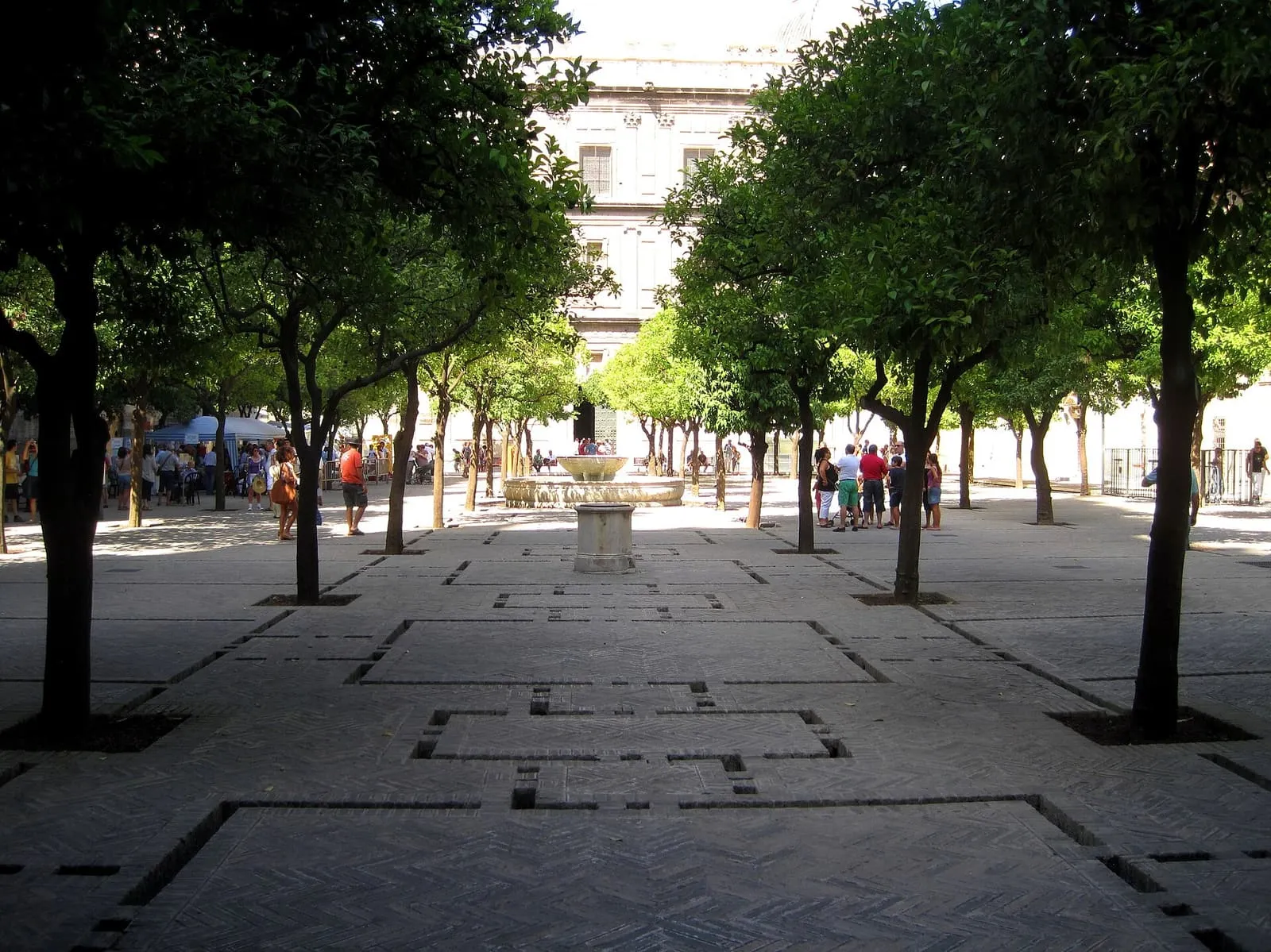
The best time to visit Seville is from mid-March to May, or from October to mid-November. Days are warm and sunny, evenings are perfect for terraces, and the orange blossom scents the whole city in March and April.
- Best weather: April, May and October
- Cheapest: July, August and January, February
- Most atmosphere: Semana Santa and the Feria de Abril, when prices double
- Avoid if you hate heat: July and August, when afternoons regularly pass 40 °C
Month by month
| Month | Avg. high / low | Rain days | Crowds | Hotel prices |
|---|---|---|---|---|
| January | 16 / 6 °C | 6 | Low | Low |
| February | 18 / 7 °C | 5 | Low | Low |
| March | 22 / 9 °C | 5 | Medium, high at Semana Santa | Medium, very high at Semana Santa |
| April | 24 / 11 °C | 6 | High | High, very high at the Feria |
| May | 28 / 14 °C | 3 | High | High |
| June | 33 / 18 °C | 1 | Medium | Medium |
| July | 36 / 20 °C | 0 | Low | Lowest |
| August | 36 / 20 °C | 0 | Low | Lowest |
| September | 32 / 18 °C | 2 | Medium | Medium |
| October | 26 / 14 °C | 5 | High | High |
| November | 20 / 10 °C | 6 | Medium | Medium |
| December | 17 / 7 °C | 7 | Medium at Christmas | Low to medium |
Averages for Seville; single days can be much hotter.
Spring (March to May)
The best season. Orange trees flower in March and April, the parks are green and it is warm enough to eat outside. It is also high season: book hotels and the Alcázar early. Semana Santa and the Feria fall in spring, and they transform the city (and hotel prices).
Summer (June to September)
Seville is one of the hottest cities in Europe. In July and August the thermometer often passes 40 °C in the afternoon. Locals leave, some bars close for August, and hotel prices drop. If you come, see the sights in the morning, rest in the afternoon, go out after 21:00, and choose a hotel with a pool. June and September are more manageable.
Autumn (October to November)
The second-best season: warm, sunny and less crowded than spring. The first rains usually arrive in late October or November.
Winter (December to February)
Mild and sunny, around 16–18 °C at midday, but cold at night, and many old buildings have little heating. The quietest and cheapest time to see the monuments. Christmas brings lights, nativity scenes and markets. See Christmas in Seville.
Events calendar
| When | Event |
|---|---|
| 5 January | Cabalgata de Reyes: the Three Kings parade |
| March or April | Semana Santa, Holy Week processions. 2027: 21–28 March |
| April or May | Feria de Abril, a week of casetas, horses and sevillanas, two to three weeks after Easter |
| May or June | Corpus Christi procession |
| Late June to September | Open-air cinemas and concerts, night visits at the Alcázar |
| September to October, even years | Bienal de Flamenco, the world’s biggest flamenco festival (next: 2028) |
| December | Christmas markets, lights and nativity scenes |
Best time by travel style
- Sightseeing and walking: April, May, October.
- Budget: January, February, July, August.
- Culture and festivals: Semana Santa, the Feria, the Bienal de Flamenco.
- Couples: late March and April for the orange blossom, or November for quiet evenings.
- Families: the school holidays around Easter and October half-term. Avoid July and August with small children.
FAQ
What is the best month to visit Seville?
April and May, closely followed by October. They have the best weather, but they are also the most expensive months.
Is Seville too hot in summer?
For many people, yes. July and August afternoons are often above 40 °C. It is manageable if you sightsee early and late and have a hotel with a pool, and it is the cheapest time of year.
When is the cheapest time to visit Seville?
July and August (because of the heat) and January and February, excluding holidays.
Does it rain a lot in Seville?
No. Seville gets most of its rain between October and April, usually in short spells. Summers are almost completely dry.