Dates this year
Semana Santa 2027 in Seville runs from Palm Sunday, 21 March, to Easter Sunday, 28 March 2027. The biggest night, the Madrugá, is the night of Holy Thursday into Good Friday (25–26 March).
| Year | Palm Sunday | Easter Sunday |
|---|---|---|
| 2027 | 21 March | 28 March |
| 2028 | 9 April | 16 April |
What it is
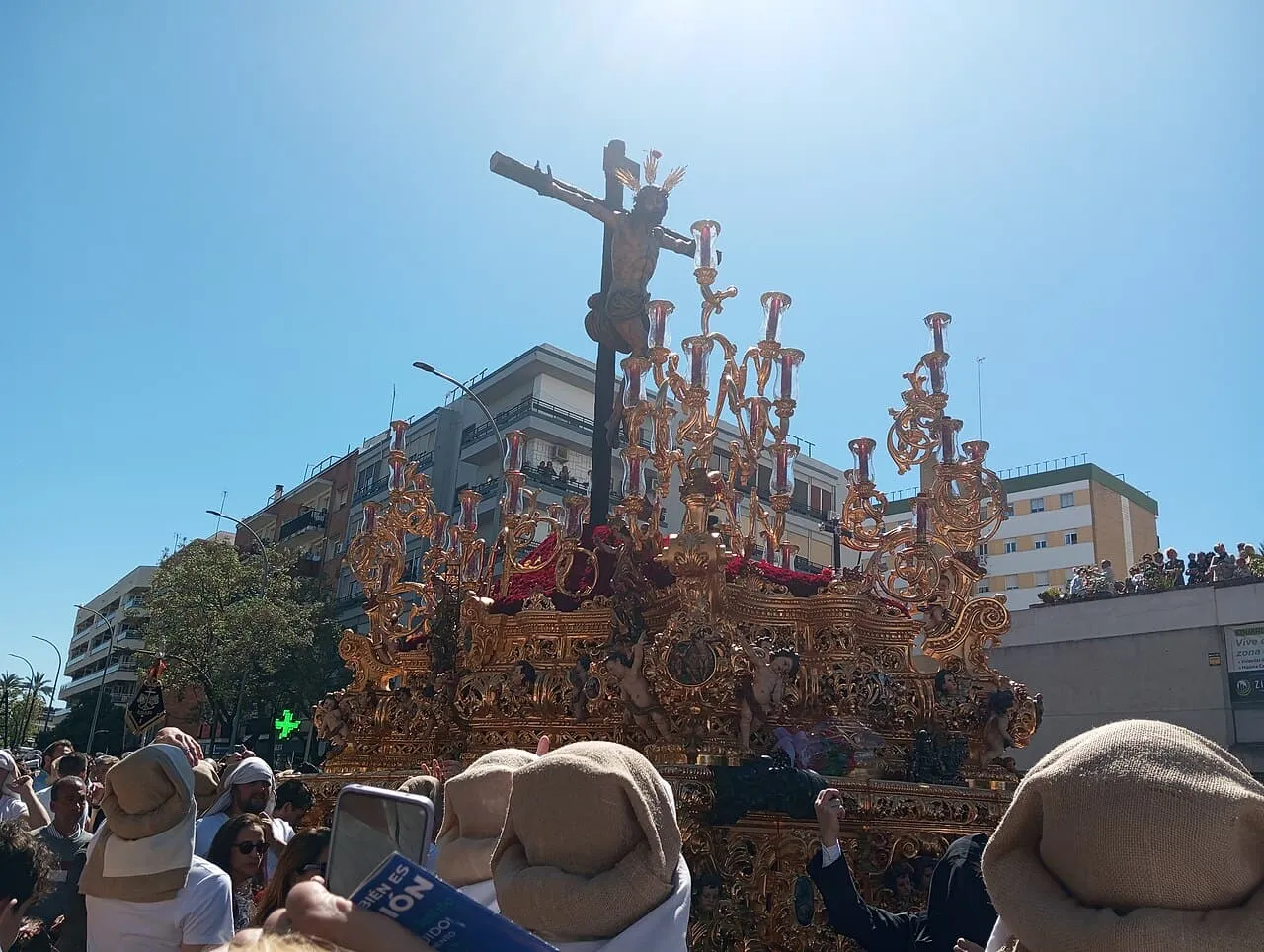
Semana Santa (Holy Week) is the week before Easter, and in Seville it is the most important event of the year. About 60 brotherhoods (hermandades) each walk in procession from their church to the cathedral and back, some for more than 12 hours. They carry pasos, huge wooden floats with sculptures of Christ and the Virgin Mary, some centuries old, carried on the necks of teams of costaleros hidden under the float.
Before each paso walk hundreds of nazarenos in robes and tall pointed hoods, carrying candles or crosses. The music of the bands, the smell of incense and orange blossom, and the silence when a paso stops are unforgettable, whether you are religious or not.
Schedule and key days
- Palm Sunday: the week starts, with children in the processions of La Borriquita.
- Monday to Wednesday: processions every afternoon and evening, easier to see than later in the week.
- Holy Thursday: the most elegant evening; many locals dress formally to visit the churches.
- The Madrugá (Thursday night to Friday morning): the most famous brotherhoods walk through the night, including the Macarena, the Esperanza de Triana, the Gran Poder and El Silencio. The streets are packed.
- Good Friday and Holy Saturday: afternoon and evening processions.
- Easter Sunday: one procession, the Resurrección, closes the week.
Where to watch
- The Carrera Oficial. Every brotherhood passes the official route from La Campana, down Calle Sierpes, through Plaza de San Francisco and Avenida de la Constitución, to the cathedral. The chairs and boxes along it are sold to locals, mostly year after year, so as a visitor you usually watch from the streets around it.
- Narrow streets. The most moving moments happen in the lanes near the churches, when the pasos leave (salida) or return (entrada), or squeeze around a tight corner.
- Triana and the bridges. Watch the Triana brotherhoods cross the Isabel II bridge, and the Esperanza de Triana return home around midday on Good Friday.
Plan with the official timetable. The Consejo de Cofradías publishes the times and routes of every procession, and apps and the local newspapers show where each paso is in real time.
Where to stay and when to book
Hotels in the centre often double or triple their prices and ask for minimum stays. Book as early as possible, ideally six to twelve months ahead. Staying in Santa Cruz, the Centro or the Arenal puts you in the middle of the processions, but crossing the centre can take a long time. Triana is a good alternative. See where to stay in Seville.
Etiquette and tips
- Don’t cross through a procession. Wait for a gap between sections, or go around.
- Respect the silence in the processions that ask for it, especially El Silencio and the Gran Poder during the Madrugá.
- Pickpockets work the crowds. Keep your bag in front of you.
- Dress respectfully, especially if you go into the churches.
- Monuments: the cathedral closes to visitors on some days, and opening times change all week. Book the Alcázar early.
- Try the sweets: torrijas (fried bread soaked in wine or milk and honey) are sold everywhere during Lent and Holy Week.
FAQ
When is Semana Santa in Seville in 2027?
From Palm Sunday, 21 March, to Easter Sunday, 28 March 2027.
What is the Madrugá?
The night from Holy Thursday to Good Friday, when the most famous brotherhoods of Seville walk in procession until the morning.
Is Seville good to visit during Semana Santa?
Yes, if you want to experience its most important tradition, and don’t mind crowds, road closures and high prices. If you want to see the monuments quietly, choose another week.
Can I get a seat for the processions?
The seats on the official route are sold to locals and renewed every year. Some tour companies and hotels offer places on balconies or seats; otherwise, you watch standing in the streets, as most people do.