
Some links on this page are affiliate links. If you book through them we may earn a commission, at no extra cost to you.
The short answer
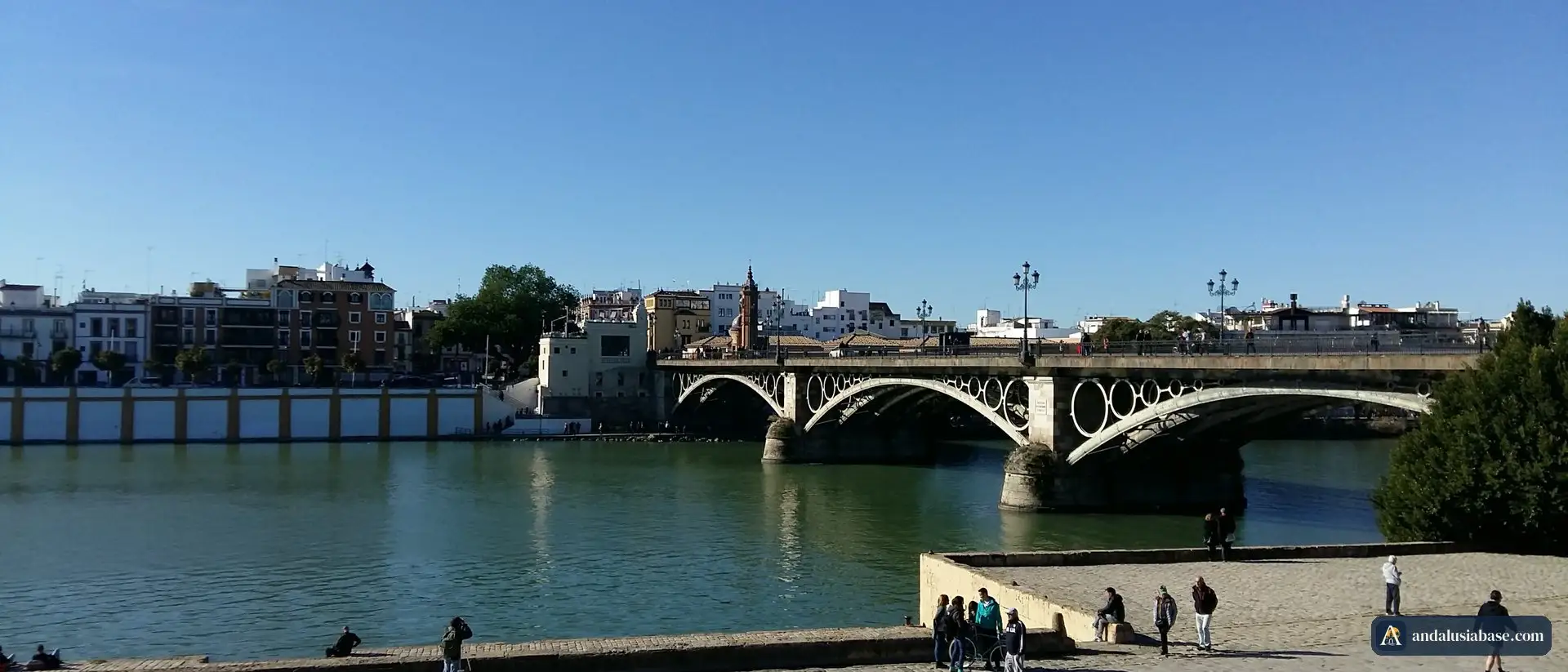
Triana is the neighbourhood across the Guadalquivir from the old town: the historic home of Seville’s potters, sailors and many of its greatest flamenco artists. It feels more local than the centre, has what we think are some of the city’s best tapas, and is a 10-minute walk from the cathedral across the Isabel II bridge.
- Time needed: half a day, or an evening for tapas and flamenco
- Best time: late morning for the market and ceramics shops, evening for Calle Betis and the bars
A short history
Triana grew up across the river from the walled city, and for centuries the two were joined only by a bridge of boats, until the iron Puente de Isabel II opened in 1852. Its people were potters, sailors and fishermen, and it sent many sailors on the voyages to the Americas. Its clay made it the home of Seville’s tiles and ceramics, and its Gypsy community made it one of the birthplaces of flamenco. Many locals still feel they are from Triana first, and Seville second.
What to see
-
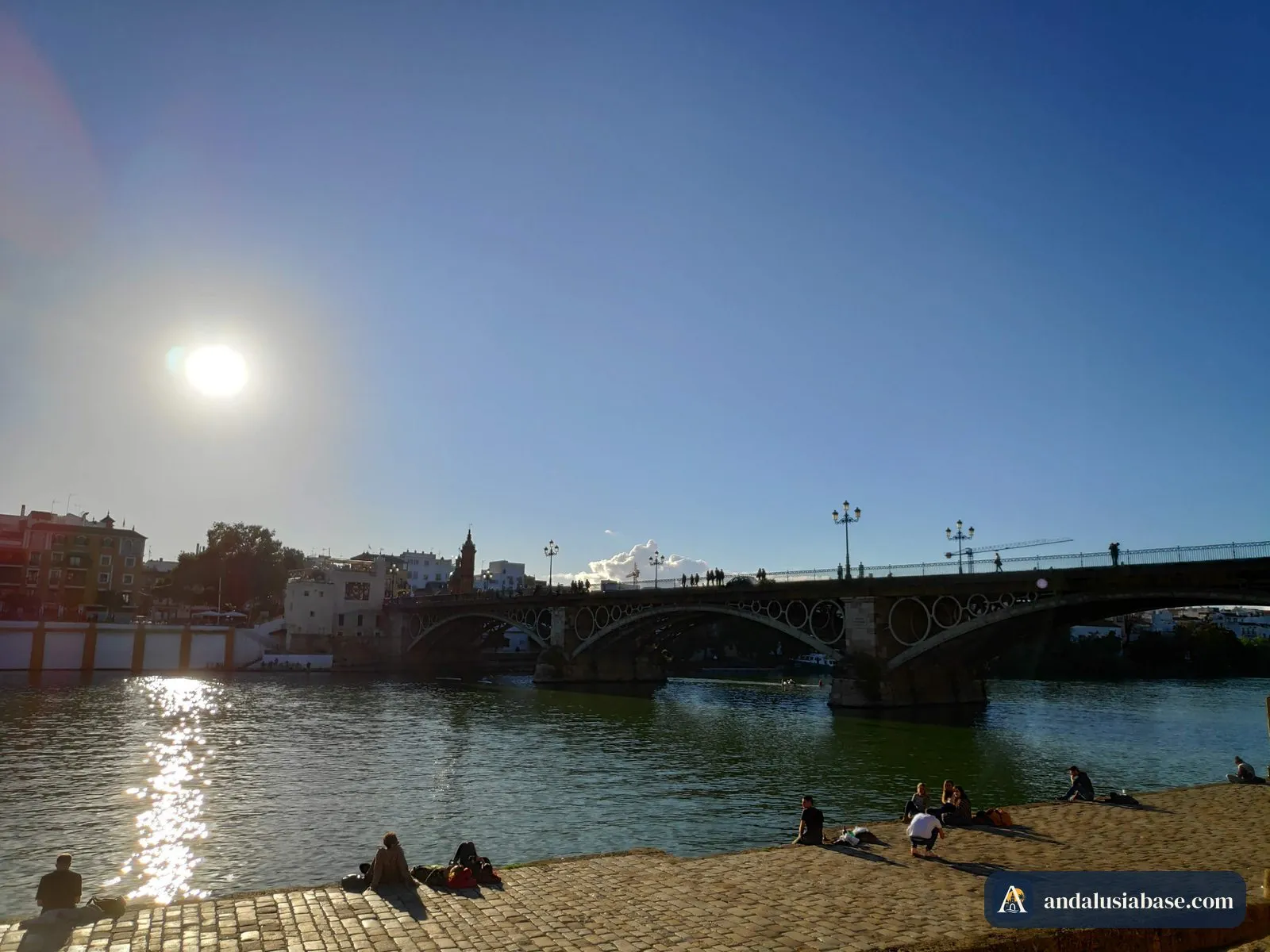
Puente de Isabel II (Triana bridge). The iron bridge from 1852, with the small Capillita del Carmen chapel at the Triana end.
-
Mercado de Triana. A covered market with food stalls, tapas bars and a cooking school, built over the ruins of the castle.
-
Castillo de San Jorge. The remains of the castle that was once the seat of the Inquisition, now a free exhibition space (Tuesday to Sunday 10:00–17:00).
-
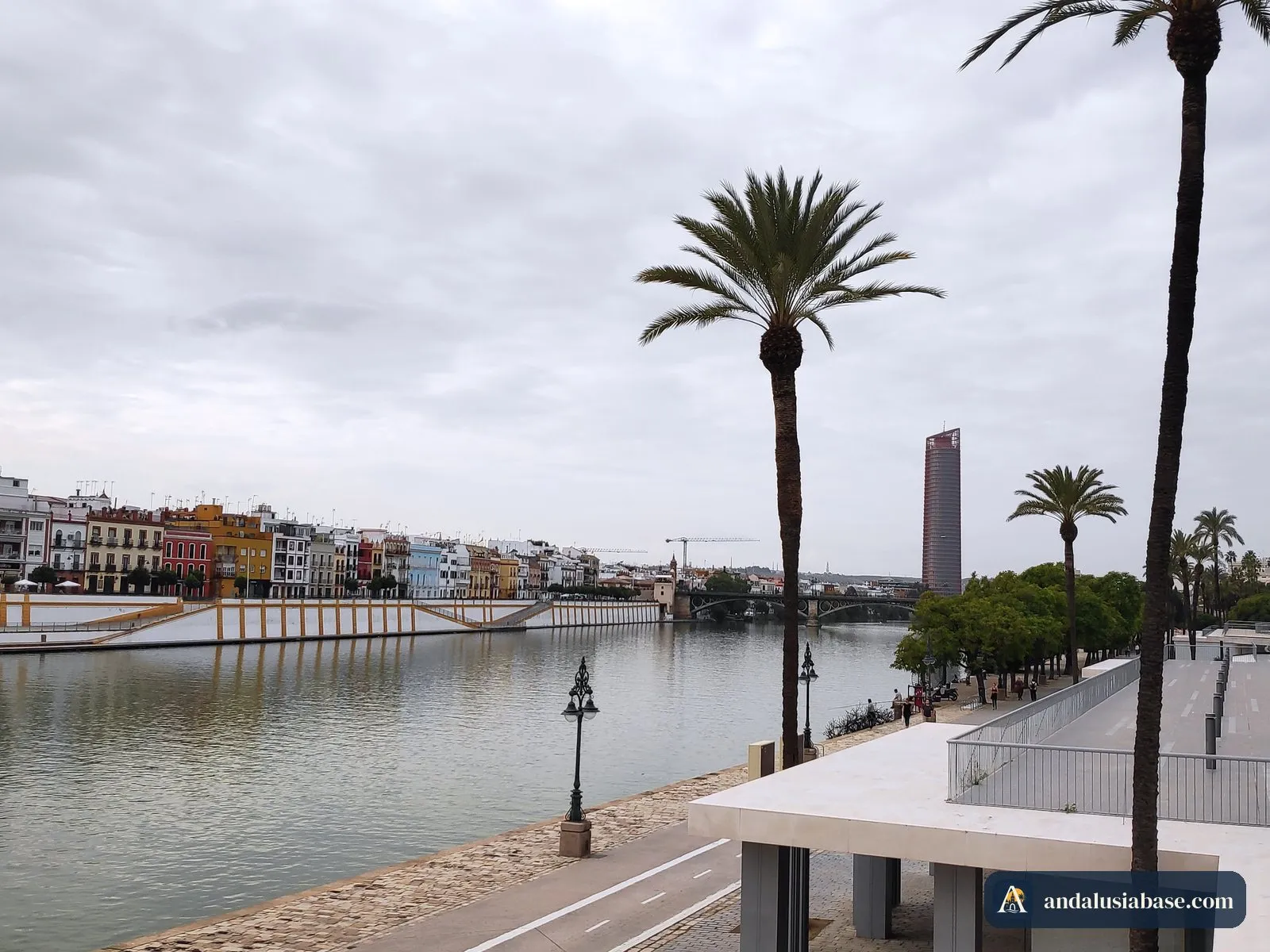
Calle Betis. The riverfront street with painted houses and terraces, facing the Torre del Oro.
-
Iglesia de Santa Ana. Known as the “Cathedral of Triana”, Seville’s oldest parish church, from the 13th century.
-
Ceramics. We’d visit the Centro Cerámica Triana, a museum in an old tile factory, then the shops and workshops around Calle Alfarería, Calle Callao and Calle Antillano Campos.
-
Capilla de los Marineros. Home of the Esperanza de Triana, one of the most loved images of Semana Santa.
The market is open from Monday to Saturday in the morning, according to local guides, and its bars stay open longer. The Centro Cerámica charges a small fee, but sources disagree on its hours, so we’d check before you go.
A half-day route
- Cross the Puente de Isabel II from the old town, late in the morning.
- Visit the Mercado de Triana and the Castillo de San Jorge, next to the bridge.
- Have lunch at the market or on Calle San Jacinto.
- See the ceramics at the Centro Cerámica Triana and around Calle Alfarería.
- Visit the Iglesia de Santa Ana and the Capilla de los Marineros.
- Finish on Calle Betis with a drink and the view of the Torre del Oro.
Prefer a guide? A free walking tour of Triana takes 1.5 to 2 hours, and covers the bridge, the market, the castle and the ceramics.
Where to eat
- Mercado de Triana: tapas bars inside the market, our pick for lunch
- Calle Betis and the riverfront: fried fish and drinks with a view of the old town
- Calle San Jacinto and around: traditional bars away from the river, including Blanca Paloma, a local favourite with traditional and modern tapas
Some famous names locals send visitors to: Las Golondrinas (Calle Antillano Campos), a tiled bar known for its punta de solomillo, and Casa Cuesta (Plaza del Altozano), a traditional restaurant at the Triana end of the bridge. More in where to eat in Seville.
Flamenco in Triana
Triana has a flamenco theatre and bars where locals dance sevillanas late at night, especially around Calle Pureza and Calle Betis. We’d go late, as these bars get going after dinner, and at weekends. See flamenco shows in Seville.
Festivals in Triana
- Velá de Santa Ana (late July): the neighbourhood’s own festival, along the river, with concerts and a greasy pole over the water (la cucaña). It usually runs for about a week around 26 July, the feast of Saint Anne. Dates change, so we’d check the programme.
- Semana Santa: Triana’s brotherhoods cross the bridge into the old town, one of the great sights of the week. See our Semana Santa guide.
- Feria de Abril: the fairground is next door in Los Remedios. See our Feria guide.
Where to stay in the area
We think Triana is great for a local feel and for the Feria, which is next door in Los Remedios. It is a 15–25 minute walk to the main sights.
- Budget: Hotel Monte Triana is a four-star hotel with a pool, near Calle Castilla.
- Mid-range: Hotel Ribera de Triana is on the river, with a small rooftop pool.
- Top: Triana House is a small boutique guesthouse with a lot of character.
See more picks in where to stay in Seville.
FAQ
Is Triana worth visiting?
Yes, we think so. It has a real neighbourhood life, great tapas, ceramics and the best views of the old town from Calle Betis.
Is Triana a good area to stay in Seville?
We’d say yes, if you want a local atmosphere and don’t mind a 15–25 minute walk to the main sights.
How do you get to Triana?
Walk across the Isabel II bridge from Plaza Nueva or the Torre del Oro area, about 10–15 minutes from the cathedral.
What is Triana known for?
Ceramics, flamenco, sailors and its market. It is also known for its strong local identity and the view of the old town from Calle Betis.
How long do you need in Triana?
Half a day for the market, the ceramics and Calle Betis, or an evening for tapas and flamenco.
Is Triana safe at night?
Calle Betis and the streets around the market are busy until late. As in any lively area, we’d watch your bag.