
Some links on this page are affiliate links. If you book through them we may earn a commission, at no extra cost to you.
The short answer
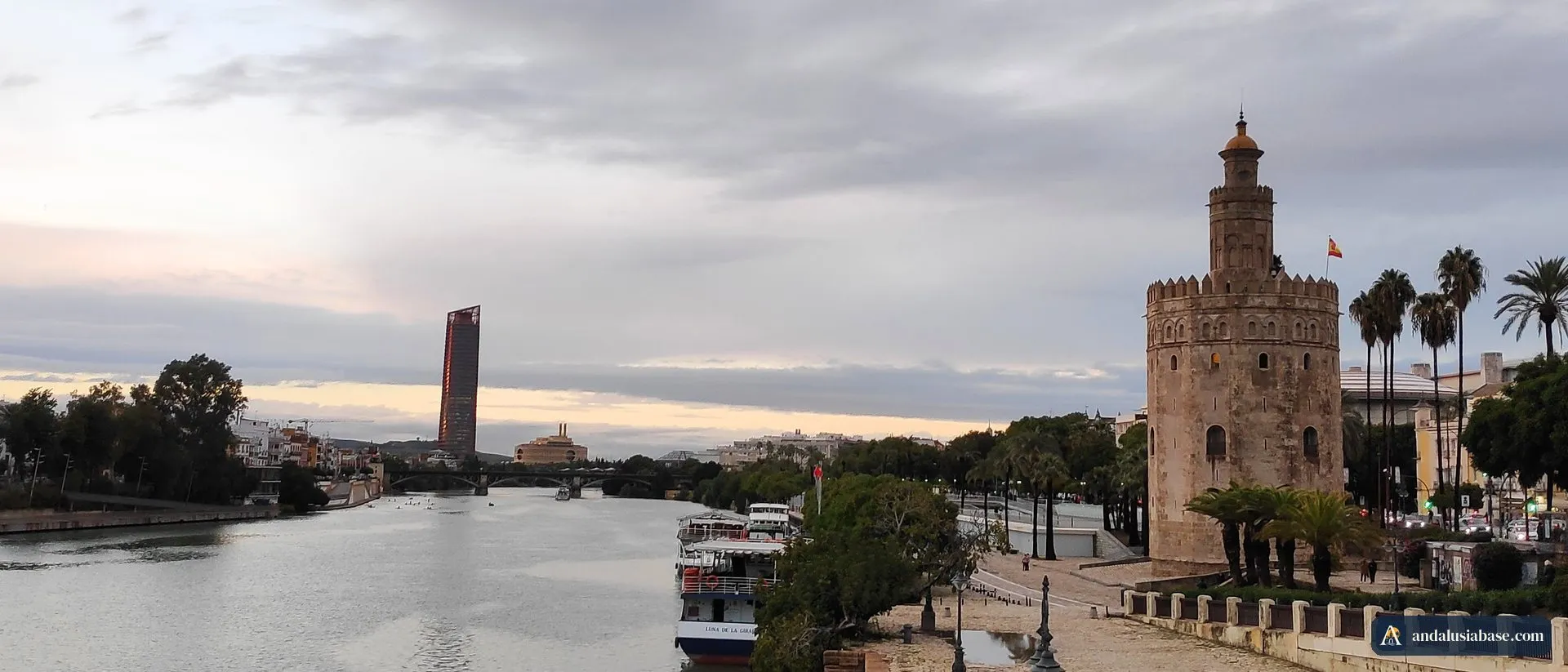
The Torre del Oro (“Tower of Gold”) is a 13th-century Almohad watchtower on the bank of the Guadalquivir, and the symbol of Seville’s river. Inside is a small maritime museum run by the Spanish Navy, with a terrace on top.
- Time needed: 30–45 minutes inside, longer if you add the river walk or a boat trip
- Price: a €3 voluntary contribution (about €1.50 reduced)
- Hours: Monday to Friday about 9:30–19:00, weekends and holidays about 10:30–19:00
- Best time: late afternoon, then stay for sunset photos from across the river
- Where: Paseo de Colón, on the river, a 10-minute walk from the cathedral
It is not a big-ticket sight like the Real Alcázar or the cathedral. We’d go for the building, the view from the top and the river setting, and combine it with a walk or a boat trip.
Practical information
| Opening hours | Monday–Friday about 9:30–19:00, weekends and holidays about 10:30–19:00; last entry about 30 minutes before closing |
| Closed | 1 and 6 January, Good Friday, 1 May, 24, 25 and 31 December |
| Price | €3; about €1.50 for students and retirees. The Navy describes the €3 as a voluntary contribution to the museum’s upkeep |
| Tickets | At the door. There is no need to book |
| Time needed | 30–45 minutes |
| Accessibility | Narrow stairs and no lift. Not suitable for wheelchairs or pushchairs beyond the entrance |
| Address | Paseo de Cristóbal Colón s/n |
Getting there: it is a 10-minute walk from the cathedral along Calle Almirante Lobo or through the Puerta de Jerez. The C4 bus stops beside the tower, and several lines and the Metrocentro tram stop at Puerta de Jerez, a few minutes away. See getting around Seville.
A short history
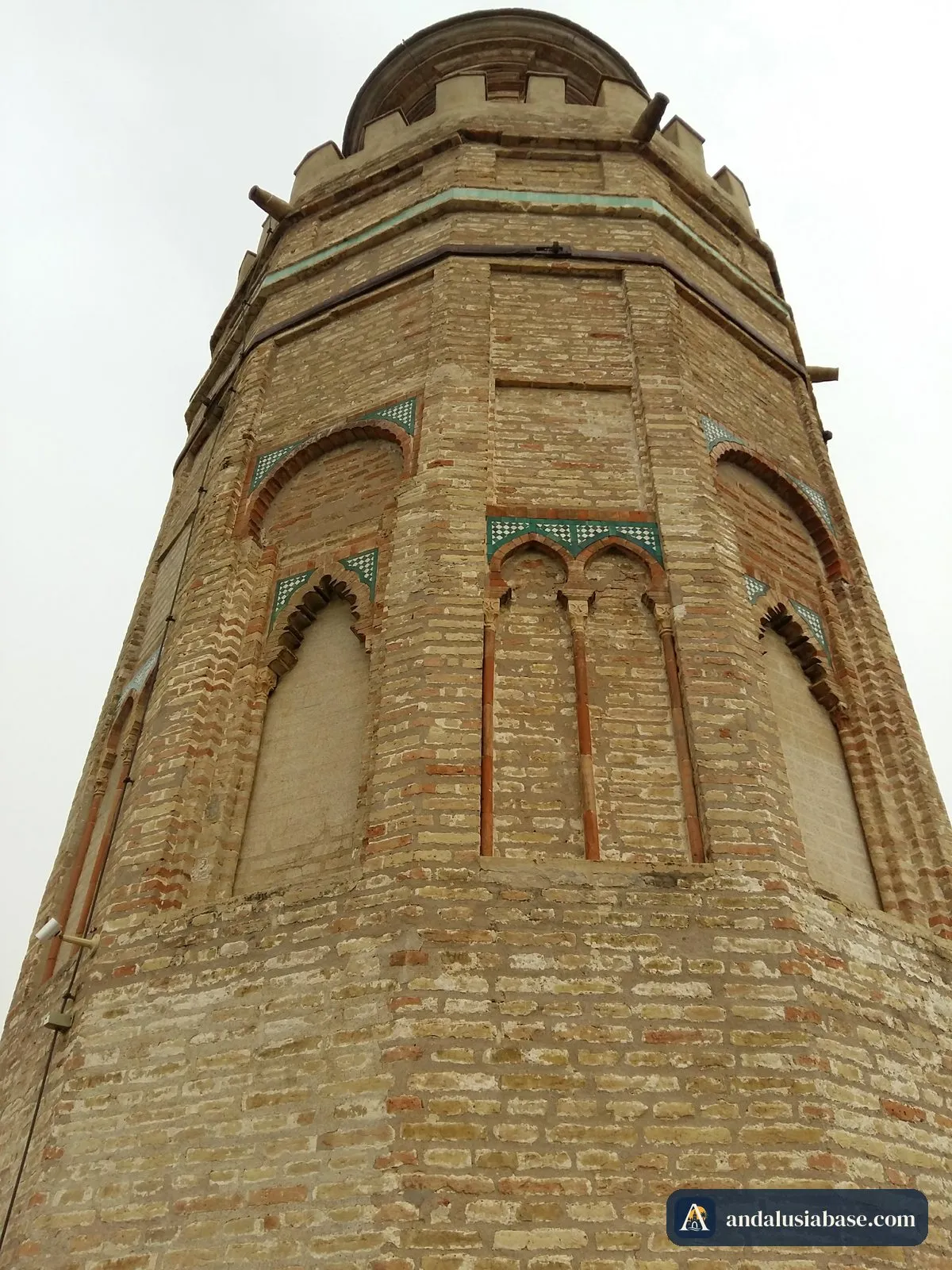
The tower. The Almohads, the North African dynasty that ruled al-Andalus in the 12th and 13th centuries, built it around 1220–1221 under the governor Abu l-Ula. It was an albarrana tower: a tower standing out from the city wall, joined to it by a stretch of wall, to watch and defend the port. The lowest of its three sections is the Almohad original, a twelve-sided (dodecagonal) body. The second level was added later, in the Middle Ages, and the small cylindrical top with its dome dates from 1760, after the Lisbon earthquake of 1755 damaged the tower. Today it stands about 36 metres tall.
The chain and the conquest. A heavy chain was stretched from the tower across the river to the Triana side to stop ships sailing upstream. A wall also linked it to a second tower, the Torre de la Plata, which still stands a street away. In 1248 the Castilian fleet under Ramón de Bonifaz broke through the river defences and cut the city off from Triana, one of the decisive moments of the siege that ended with Ferdinand III taking Seville.
Why “gold”? Nobody knows for certain. The Arabic name is usually said to refer to the golden gleam the tower threw on the water. For a long time the favourite explanation was a covering of gilded tiles. During the 2005 restoration, experts found that the shine more likely came from the finish on the walls, a mixture of lime mortar and pressed straw. Other stories, such as the tower storing the gold and silver from the Americas, are legends: the name is older than those voyages.
Later lives. Over the centuries the tower was a prison, a chapel, a warehouse and offices for the port. The Navy turned it into a museum, which opened in 1944.
The naval museum inside
The museum (officially the Museo Marítimo Torre del Oro) is small: two floors and a terrace.
-
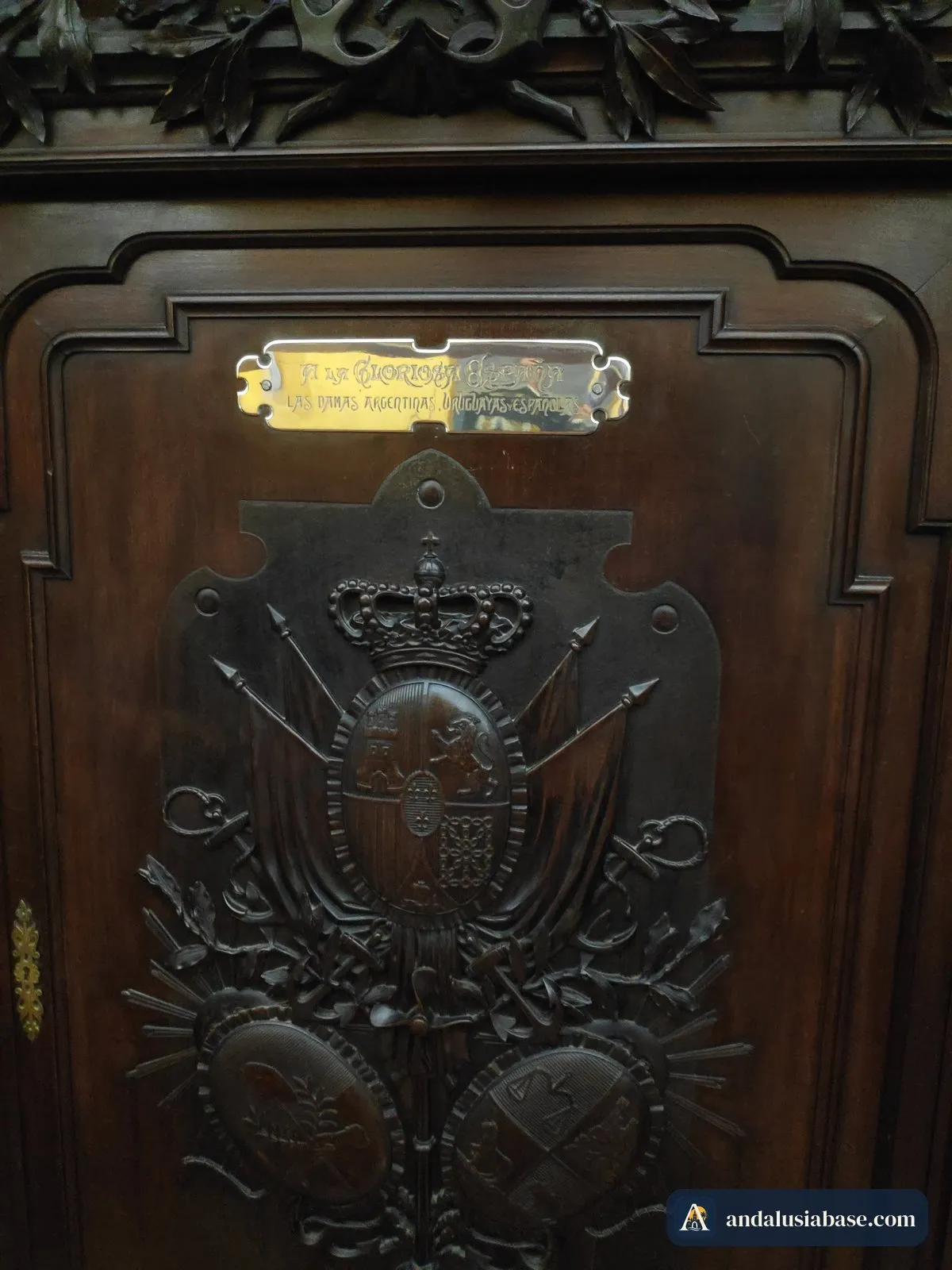
Ground floor. The story of the tower and of Seville’s port, up to the end of the trade monopoly with the Americas, when the Casa de Contratación moved to Cádiz. Look for the model of the Real Fernando, the first steamship built in Spain (1817), and a copy of a 1617 engraving of Seville.
-
First floor. The history of the Spanish Navy, from the medieval fleets of Castile and Aragon to the present, with old nautical charts, navigation instruments and ship models.
-
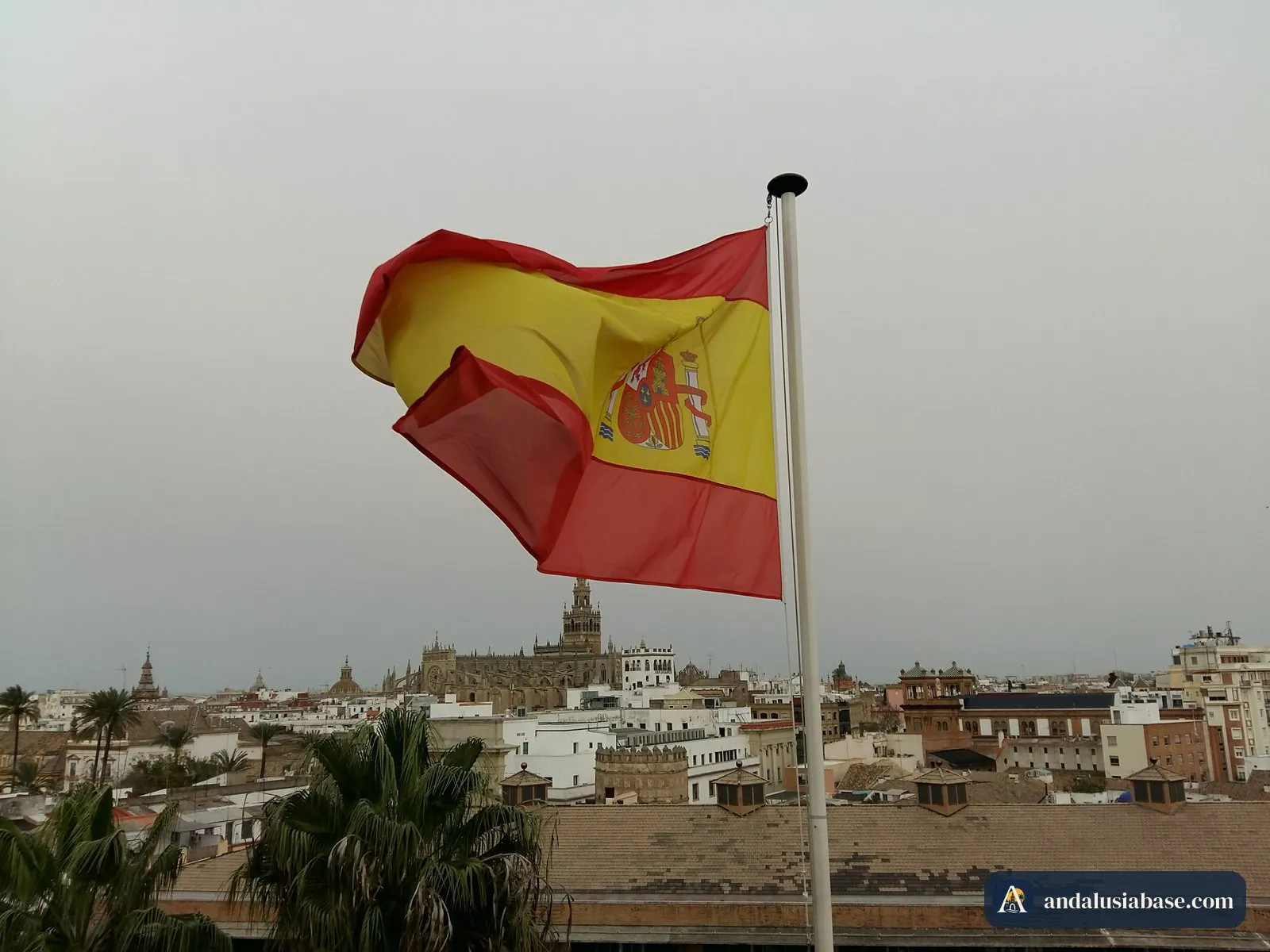
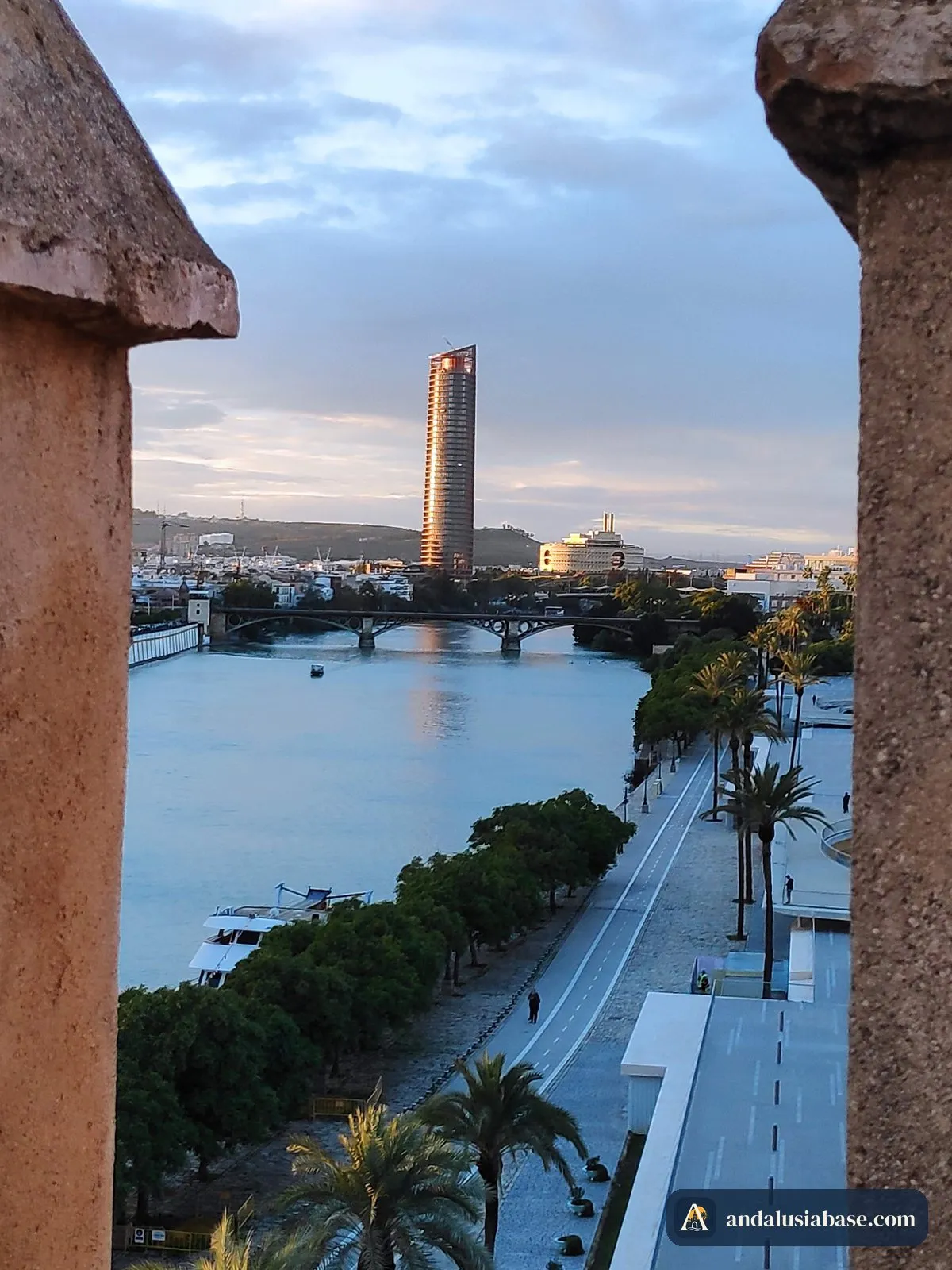
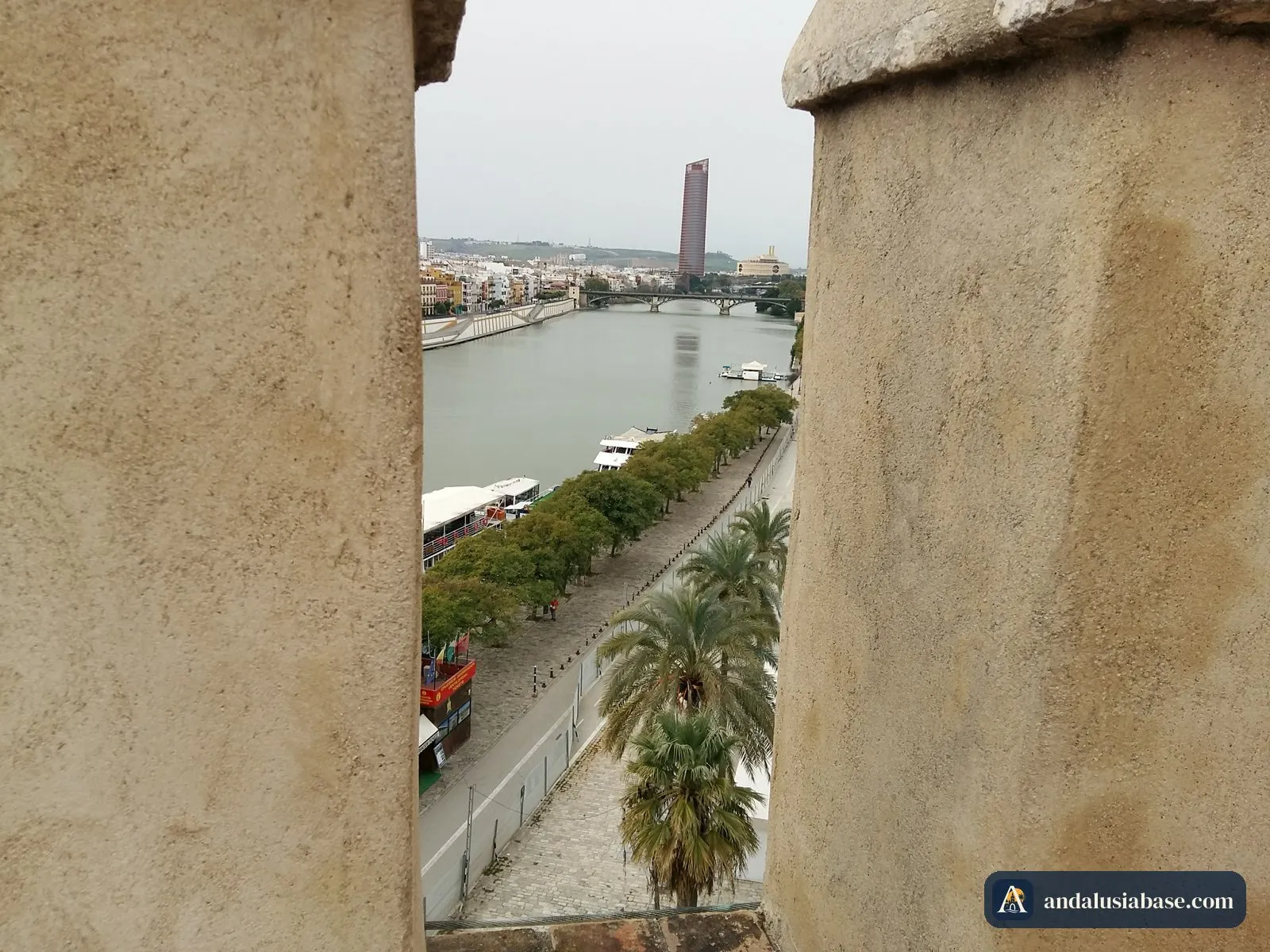
The terrace. A short climb up narrow stairs leads to the top. The view takes in the river, Triana and Calle Betis, the Maestranza bullring and the Giralda. It is not a high viewpoint like the Setas or the Giralda, but we think it is the best view of the river from the old town side.
Labels are mostly in Spanish, with some English. Children who like ships usually enjoy it, and for a €3 contribution it is a cheap stop. See Seville with kids and free things to do in Seville.
The best photos of the Torre del Oro
We think the best pictures of the tower are taken from outside it.
- From Triana. Cross to Calle Betis, on the far bank. The view back over the river to the tower, with the Giralda behind, is the classic one. See Triana.
- From the Puente de San Telmo, the bridge right next to the tower, for a close view with the river in front.
- At sunset and after dark. The late light turns the walls golden, and after sunset the tower is lit up and reflected in the river.
- From a boat. The river cruise passes right under it.
The riverside walk
The Torre del Oro is the start of what we think is the best short walk in Seville. Head north along the Paseo de Colón and the lower riverside path:
- Torre del Oro to the Plaza de Toros de la Maestranza, the 18th-century bullring (guided visits, about €10). About 5 minutes.
- On to the Puente de Triana (Isabel II bridge), the 19th-century iron bridge. About 10 minutes.
- Cross into Triana for the Castillo de San Jorge, the market and tapas on Calle Betis.
The whole walk takes about 20–30 minutes without stops, and it is flat and free. In summer we’d do it early in the morning or after 20:00.
Boat tours from the quay
The sightseeing boats leave from the quay just beside the tower. The one-hour cruise costs about €18–20 and goes upstream past the Maestranza and Triana, then back past the tower towards the Parque de María Luisa. Sunset cruises and kayak tours also run on this stretch of the river. Compare the options on our boat tours in Seville page.
Tips
- We think late afternoon works best: visit the museum, climb to the terrace, then walk or take a boat at sunset.
- Bags: space on the stairs is tight. We’d leave big bags at the hotel.
- Summer: the terrace has no shade. We’d avoid the early afternoon.
Nearby: combine it with
- Torre de la Plata. The octagonal sister tower, on Calle Santander, a couple of minutes away. It can only be seen from outside.
- Hospital de la Caridad. A 17th-century almshouse across the road with a church full of paintings by Murillo and Valdés Leal. About 5 minutes’ walk. Closed for restoration since March 2025.
- Maestranza bullring. 5 minutes north along the river.
- Real Alcázar and the cathedral. About 10 minutes’ walk east. See the Real Alcázar guide.
- Plaza de España. About 15 minutes south through the San Telmo gardens. See Plaza de España.
In a one-day itinerary it fits well between the cathedral and a late afternoon in Triana. For more ideas, see things to do in Seville. To stay close by, El Arenal, the district between the tower and the cathedral, is in our view a good base: see where to stay in Seville.
FAQ
Is the Torre del Oro worth visiting?
Yes, we think so, if you keep your expectations right. The museum is small, but the tower is one of the symbols of Seville, the terrace has a good river view, and it costs a €3 voluntary contribution.
How much does it cost to go inside the Torre del Oro?
A €3 voluntary contribution, with a reduced rate of about €1.50 for students and retirees.
Why is it called the Torre del Oro?
Because of the golden reflection it cast on the river. The 2005 restoration suggested this came from the lime mortar and straw finish on its walls, not from gilded tiles or American gold.
How long does a visit to the Torre del Oro take?
About 30–45 minutes for the museum and the terrace. Add 30 minutes for the river walk to the Puente de Triana, or an hour for a boat trip from the quay next to it.
Can you go to the top of the Torre del Oro?
Yes. The ticket includes a terrace at the top with views of the river, Triana and the Giralda. It is reached by narrow stairs, and there is no lift.