
Some links on this page are affiliate links. If you book through them we may earn a commission, at no extra cost to you.
The short answer
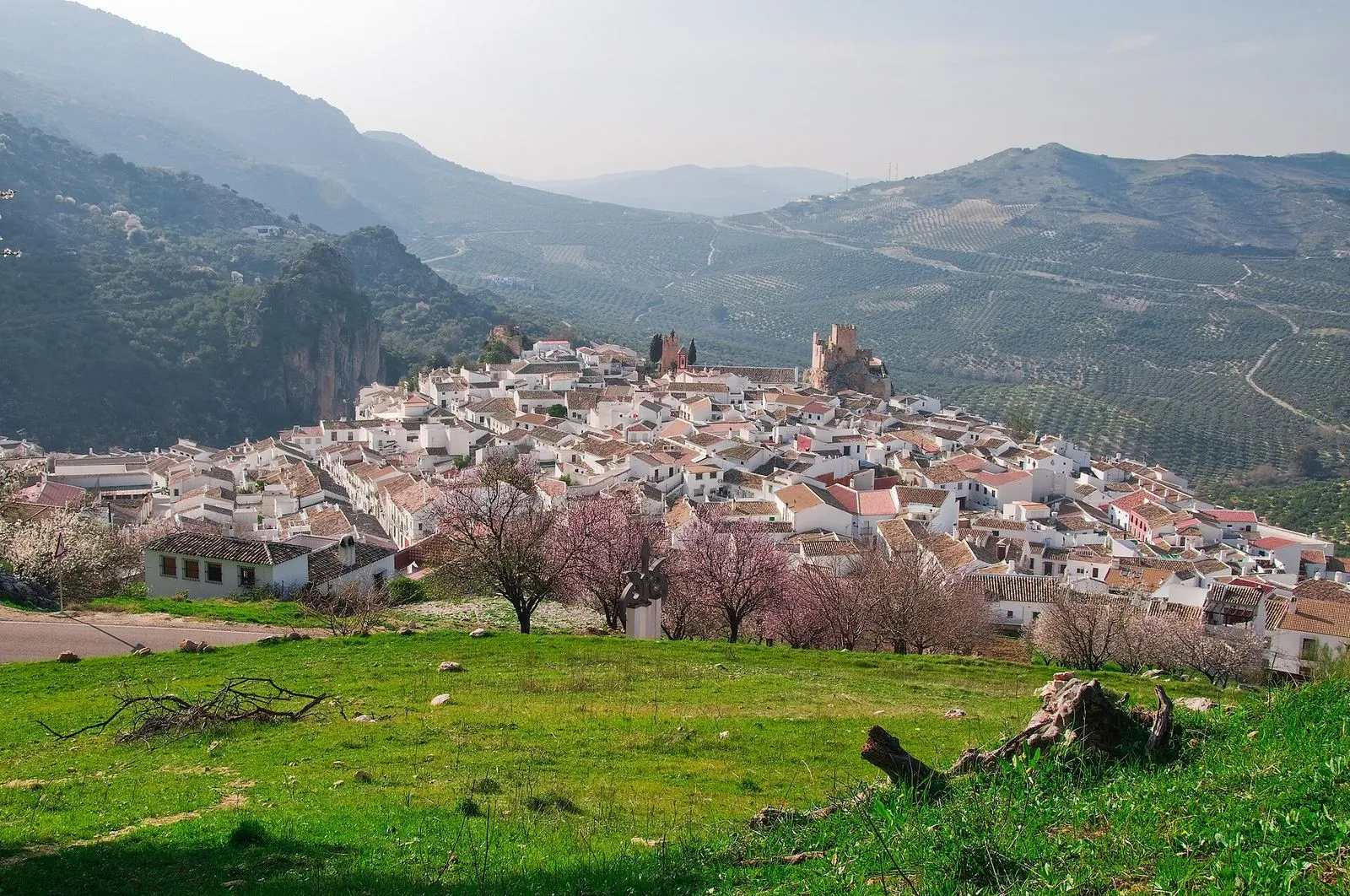
Zuheros is a small white village of about 600 people in the south of Córdoba province, inside the Sierras Subbéticas Natural Park, a UNESCO Global Geopark. It sits on a limestone rock below a Moorish castle, with olive groves stretching away below. It belongs to the Los Pueblos Más Bonitos de España network.
- Is it worth it? Yes, we think so, if you have a car and a day to spare. It is small, but it combines a castle, a cave, a canyon walk and good local food.
- Time needed: half a day for the village and castle. A full day if you add the cave or the Bailón canyon walk.
- Cave: the Cueva de los Murciélagos is by guided visit only and needs a reservation. The adult ticket is about €8.
- From Córdoba: about 1 hour by car. There is no practical public transport for a day trip.
What to see in Zuheros
The castle and the Museo Arqueológico
The Castillo de Zuheros stands on the rock above the village. It has Moorish origins, but most of what you see is a Christian fortress of the 13th and 14th centuries, with the remains of a Renaissance palace attached. It is small, and the point of the visit is the view from the tower over the roofs, the olive groves and the Subbética hills.
Castle tickets are sold at the Museo Arqueológico, near the castle. It holds stone tools, bone tools and pottery found in the Cueva de los Murciélagos, some of them tens of thousands of years old, plus a few Roman pieces. The museum also works as the tourist office. Prices and hours change, so ask there or call 957 69 45 45.
The old town
We think the lanes between the castle and the main square are the best part of the village: whitewashed houses, balconies with flowerpots and views that open suddenly over the valley. You can walk it all in an hour. The tourist office can point you to the smaller local museums.
Cueva de los Murciélagos
The Cueva de los Murciélagos (“bat cave”) is about 4 km from the village, on a hill at close to 1,000 m. It is one of the best-known caves in Andalusia, with rock formations and traces of prehistoric occupation. The guided route is about 415 m long with around 700 steps, going down to roughly 65 m below the entrance.
How the visit works:
- Booking is necessary. Access is limited and there are no free-entry visits. Book through the Zuheros tourist office by phone (957 69 45 45) or email ([email protected]). The phone is staffed about 10:00 to 13:30, from Wednesday to Sunday.
- Price: about €8 for adults and children from 13, about €6.50 for ages 6 to 12, with reduced rates for seniors and some other groups. A combined cultural ticket with three museums also exists.
- Tours: usually one or two tours on weekdays and three at weekends and holidays (about 11:00, 12:30 and 17:30, with the last tour earlier in winter). The cave is closed on most Mondays. Confirm the days and times when you book.
- Tickets are collected at the Ecomuseo, about 200 m before the cave entrance. Arrive at least 15 minutes early or you may lose your place.
- Rules: no photos or video, no food or drink, no smoking and no animals. We’d wear shoes with grip and a layer, as the cave is cooler than outside.
The steps make the cave unsuitable for anyone who cannot manage stairs. Ask the tourist office if someone in your group has mobility needs.
The Bailón canyon
The Río Bailón has cut a deep limestone gorge below Zuheros. The Sendero del Río Bailón is the classic walk: it follows the river through karst scenery with cliffs and birdlife, including griffon vultures, towards Cabra. On the Zuheros side the path starts near the river bridge on the lower road (CO-6203), where you can park. The full route is long (around 15 km), so most visitors walk a shorter section and come back. We’d take water, as there is little shade, and avoid the hottest hours in summer.
The Vía Verde del Aceite
The Vía Verde del Aceite is a greenway on a former railway that links Jaén province with the Córdoba Subbética, passing through Luque and Zuheros towards Doña Mencía and Cabra. The two sections together are about 120 km, and the Córdoba section about 57 km. It is flat or gently graded, and good for walking or cycling. Ask the tourist office about bike hire and the best stretch for a short ride from Zuheros.
Olive oil and local food
This is serious olive-oil country. The Subbética has three protected designations of origin: Baena, Priego de Córdoba and Lucena. Many cooperatives and mills sell oil direct, and some offer visits and tastings, mostly around the harvest from November to January. Zuheros is also known for its local cheese. On menus across the province, look for salmorejo (a thick cold tomato soup), flamenquín and rabo de toro (oxtail stew).
When to go
We think spring and autumn are best: comfortable temperatures for walking, with green countryside in spring and golden light in autumn. Summer is hot, though the cave stays cool. Cave tours and the museum run to limited hours, so we’d avoid Monday and check the days when you book. See the best time to visit Andalusia.
Getting to Zuheros
| From | By car |
|---|---|
| Cabra | about 15–20 minutes |
| Priego de Córdoba | about 35–40 minutes |
| Córdoba | about 1 hour |
| Granada | about 1 h 30–1 h 45 |
| Málaga | about 1 h 30–1 h 45 |
| Seville | about 2 hours |
- By car is the only practical option. The village is on a hillside with narrow lanes, so park at the edge and walk up. Hire a car in Granada or at Málaga airport, or read our car hire guide.
- By public transport, buses from Córdoba to the Subbética villages are infrequent, and a day return is unlikely to work. Check timetables at the Córdoba bus station if you want to try.
- From Córdoba, see our Córdoba city hub for the city’s own sights, such as the Mezquita, before or after the drive.
Nearby
- Priego de Córdoba (about 35–40 minutes): a baroque town with the Fuente del Rey, a fountain with 139 spouts, and the whitewashed Barrio de la Villa, the old Moorish quarter, which ends at the Balcón del Adarve, a viewpoint over the valley. In our view, a natural pairing with Zuheros.
- Cabra (about 15–20 minutes): a larger market town at the foot of the Sierra de Cabra, close to the other end of the Bailón path.
- Iznájar: a white village above a large reservoir, about an hour south, on the way to Granada or Málaga.
- Granada and Málaga: both about 1 h 30 away, so Zuheros works as a stop between Córdoba and either city.
See also the white villages guide and the Andalusia road trip.
Where to stay
Zuheros has a few small hotels and rural guesthouses. We’d suggest a night here: it lets you do the cave or the canyon without driving back the same day.
- Places to stay in Zuheros: compare small hotels and rural houses.Check prices
- For more choice, stay in Córdoba’s old town and drive over. Our guide to where to stay in Córdoba covers the areas.
FAQ
Is Zuheros worth visiting?
Yes, we think so, if you have a car. It is a pretty village with a castle, a cave, a canyon walk and good local food. Allow half a day, or a full day with the cave or a long walk.
How do you visit the Cueva de los Murciélagos?
By guided tour only, with a reservation through the Zuheros tourist office (957 69 45 45 or [email protected]). The adult ticket is about €8. Confirm the current days and times when you book.
How far is Zuheros from Córdoba?
About 1 hour by car. Granada and Málaga are each about 1 h 30 away, and Priego de Córdoba about 35–40 minutes.
Can you visit Zuheros without a car?
It is difficult. Buses to the Subbética villages are infrequent, so a day trip from Córdoba by public transport is unlikely to work. We’d hire a car instead.
What else is near Zuheros?
Priego de Córdoba, with the Fuente del Rey and the Barrio de la Villa, and Cabra are both close. The Vía Verde del Aceite and the Bailón canyon walk are on the doorstep.