Some links on this page are affiliate links. If you book through them we may earn a commission, at no extra cost to you.
Is it worth it? How long?
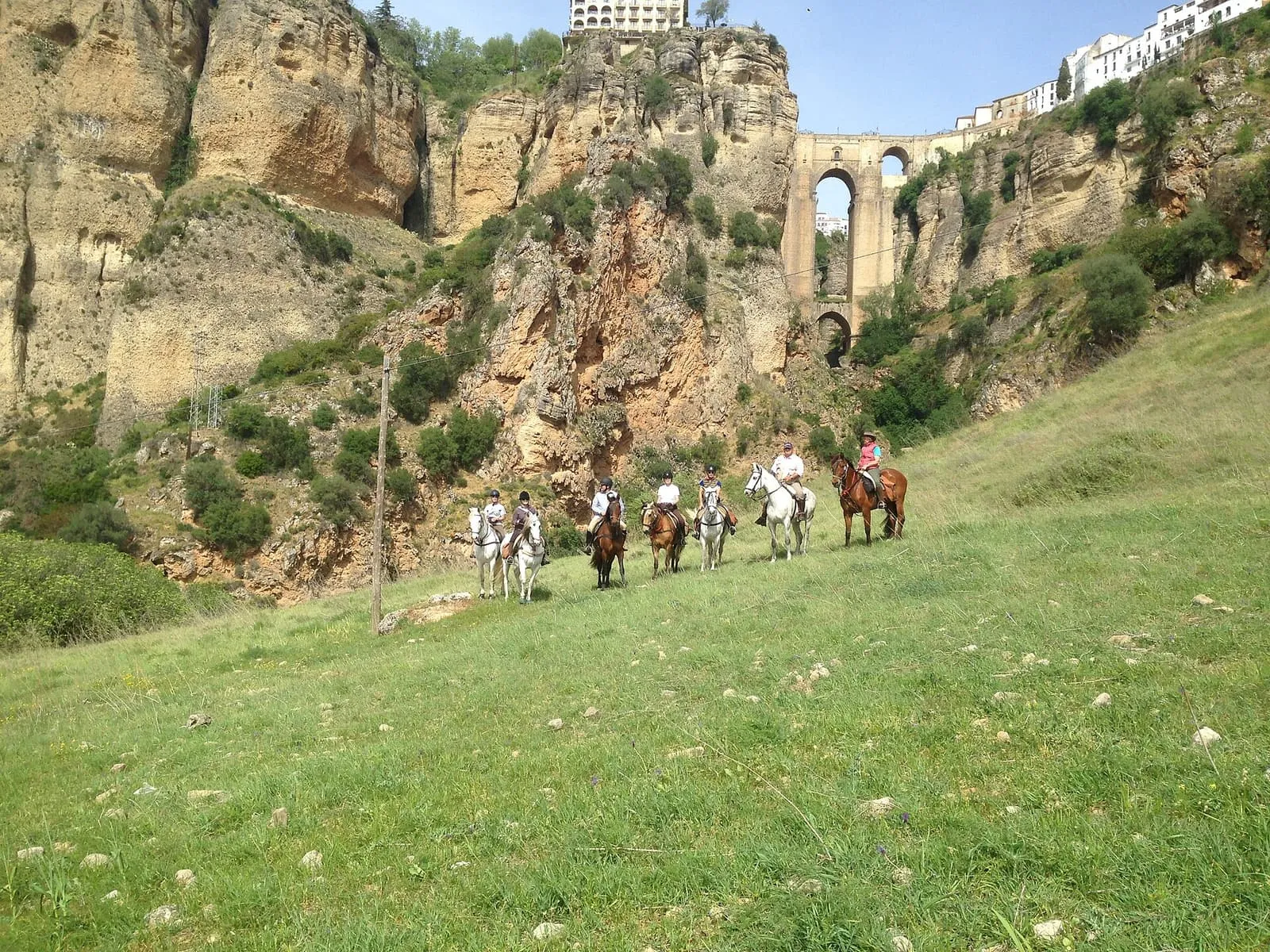
Yes. Ronda is one of the most dramatic towns in Spain, built on both sides of a gorge (El Tajo) about 100 metres deep and joined by the 18th-century Puente Nuevo. It is about 2 hours from Seville, so a day trip works, especially by car or on a tour that also stops in one or two white villages.
- Best option: a car, or a tour from Seville that includes the white villages.
- Time in Ronda: 4–5 hours is enough for the bridge, the viewpoints, the bullring and a walk down into the gorge.
- Better still: stay a night. Ronda is quiet and beautiful once the tour buses have left.
For more on the town itself, see our Ronda guide.
Options: tour vs train vs car
Seville to Ronda: comparison
| Option | Time | Price (approx.) | Notes |
|---|---|---|---|
| Car | 1 h 45–2 h | Fuel + parking | Most flexible; add white villages on the way |
| Bus (Damas) | 2–2 h 30 | €15–25 | Only a few direct buses a day |
| Train | 3 h or more | varies | No direct train; one change on the way. Not recommended |
| Day tour from Seville | 10–12 h in total | varies | Usually adds Setenil, Zahara or Olvera |
By car
Driving is the best way from Seville to Ronda. It is about 130 km, 1 hour 45 minutes to 2 hours, through farmland and then the hills of the Sierra de Cádiz. The route passes close to Zahara de la Sierra and Olvera, so a white village costs you only a short detour. Park in one of the underground car parks near the centre of Ronda; the streets of the old town are narrow and partly restricted.
Pick up a car at the airport or Santa Justa station to avoid driving in central Seville: car hire at Seville airport. See our guide to car hire in Seville for insurance, parking and driving tips.
By bus
Damas runs direct buses from Seville to Ronda, taking about 2 to 2.5 hours. There are only a few a day, so check the timetable and the departure station, and book the return in advance. Ronda’s bus station is in the new town, about 15 minutes’ walk from the Puente Nuevo.
By train
There is no direct train. You change on the way (usually at Antequera) and the trip takes 3 hours or more, so the train only makes sense if you are travelling on to Málaga or Granada rather than returning to Seville the same day.
Guided day tour
A tour is the easiest way to see Ronda and the white villages in one day without driving. Most leave the centre of Seville early in the morning, stop in one or two villages and give you free time in Ronda. Ronda and white villages day trip from Seville.
One-day plan
- 8:00: leave Seville by car or on a tour.
- 10:00: a white village on the way (see below). Allow an hour.
- 11:30: Puente Nuevo. Cross the bridge, look down into the gorge from both sides, and visit the small interpretation centre in the chamber above the central arch.
- Viewpoints: walk along the cliff-top balconies of the Alameda del Tajo and the Paseo de los Ingleses, then cross to the Jardines de Cuenca on the other side for the view of the bridge.
- Plaza de Toros de Ronda. One of the oldest bullrings in Spain (1785), home of the Real Maestranza de Caballería. Visit the ring, the stables and the museum. Allow 45 minutes.
- Lunch near the Plaza del Socorro; try the local rabo de toro (oxtail stew).
- La Ciudad (the old town): the Casa del Rey Moro, whose water mine takes you down a stairway cut into the rock to the bottom of the gorge; the Puente Viejo; and the Baños Árabes, 13th- century Arab baths that are among the best preserved in Spain.
- The view from below. If you have the energy, take the path down to the bottom of the gorge (Camino de los Molinos) for the classic view of the Puente Nuevo from below. It is steep, and takes about an hour there and back.
- 17:00–18:00: drive back to Seville.
White villages on the way
Ronda is the best-known town on the route of the pueblos blancos, the whitewashed hill villages of the Sierra de Cádiz and the Serranía de Ronda. The easiest to add from Seville:
- Setenil de las Bodegas: houses and bars built under huge overhanging rocks, along the streets of the Cuevas del Sol and Cuevas de la Sombra. The most unusual of all.
- Zahara de la Sierra: a village below a Moorish castle tower, above a turquoise reservoir. Right on the way from Seville.
- Olvera: a hilltop castle and a big church above rows of white houses. The start of the Vía Verde de la Sierra, a cycling and walking path on an old railway line.
- Grazalema: a mountain village in the Sierra de Grazalema natural park, reached by the steep Puerto de las Palomas pass from Zahara. Best if you have time for a walk.
With a car, choose one or two; with more, you lose your time in Ronda. See our white villages guide for routes and more villages, such as Arcos de la Frontera and Vejer.
Tickets for the main sight
The Puente Nuevo and the viewpoints are free. The main paid sights, all with tickets at the door:
| Sight | Price (approx.) | Notes |
|---|---|---|
| Plaza de Toros de Ronda | €8–10 | Bullring, stables and museum; audio guide extra |
| Casa del Rey Moro | about €10 | Gardens and the water mine down to the river |
| Baños Árabes | about €4–5 | Arab baths |
| Puente Nuevo interpretation centre | a few euros | Inside the bridge |
You don’t need to book in advance. The bullring is busiest in the middle of the day, when the tours arrive; go first thing or late in the afternoon. In early September, the Feria Goyesca brings a bullfight in 18th-century costume, and the ring closes to visitors on those days.
Stay over instead?
Yes, if you can. Ronda empties in the late afternoon, and the gorge is at its best at sunset and early in the morning. A night also leaves time for the white villages or a winery in the Serranía de Ronda. It works well on a road trip: Ronda is about 1 hour 45 minutes from Málaga, so you can drive Seville–Ronda–Málaga over two days. See our Andalusia road trip.
- Parador de Ronda, next to the Puente Nuevo, on the edge of the gorge.
- Hotels in Ronda.
From Ronda, you can also continue to Málaga or Granada. For other ideas, see all day trips from Seville, the Cádiz day trip and the best time to visit Seville; spring and autumn are the best seasons for Ronda, which is cooler than Seville but can be cold in winter.
FAQ
How do I get from Seville to Ronda?
By car it takes about 1 hour 45 minutes to 2 hours. Damas buses take 2 to 2.5 hours, with a few a day. There is no direct train, so a car or a tour is the easiest way.
Is Ronda worth a day trip from Seville?
Yes, especially if you drive or join a tour that includes a white village. The views from the Puente Nuevo alone are worth the trip, but staying a night is even better.
Can you visit Ronda and the white villages in one day?
Yes: Ronda plus one or two villages, such as Setenil de las Bodegas or Zahara de la Sierra, fits into a day by car or on a tour from Seville.
Is there a train from Seville to Ronda?
Not a direct one. You have to change, usually at Antequera, and the trip takes 3 hours or more. The bus or a car is faster.
How long do you need in Ronda?
Four to five hours for the bridge, the viewpoints, the bullring and the old town. Add two hours to walk down into the gorge or visit a white village.