
Some links on this page are affiliate links. If you book through them we may earn a commission, at no extra cost to you.
Is it worth it? How long?
Yes. Carmona is one of the oldest towns in Andalusia and, in our view, the easiest half-day trip from Seville. It sits on a ridge about 35 km east of the city, 35–40 minutes by bus or car, with Roman gates, a Moorish fortress, Baroque churches, convents that still sell sweets, and a Roman necropolis, free for EU citizens.
- Time needed: half a day for the old town; a full day if you add the necropolis and lunch at the parador.
- Our pick: the Casal bus from San Bernardo in Seville (frequent, cheap) or a car.
- No train: Carmona has no railway station.
- Cost: most sights charge €1–3, and the necropolis is free for EU citizens (€1.50 for everyone else).
It is quieter and smaller than Córdoba or Ronda, so it suits a fourth or fifth day in Seville, or a stop on the way east by car. See all the day trips from Seville to compare.
Seville to Carmona: bus, car or tour
| Option | Time | Price (approx.) | Notes |
|---|---|---|---|
| Bus (Casal, line M-124) | about 40–70 min | about €3 one way | About 30 a day each way on weekdays, fewer at weekends; last bus back 21:00 |
| Car | 30–40 min | Fuel + parking | A-4 motorway towards Córdoba, about 35 km, no tolls |
| Taxi or ride-hailing | about 30–40 min | Metered; ask for an estimate | Fine for one leg; book the return |
| Guided tour | half a day or a full day | varies | Often combined with Écija or Osuna |
| From Córdoba | about 1 h by car, about 1 h 30 by bus | bus from about €11 | A-4, about 110 km; Alsa bus, check current times |
| Train | – | – | No station in Carmona |
By bus
Casal runs line M-124 between Seville and Carmona, as part of the Consorcio de Transportes del Área de Sevilla. Most buses leave from the San Bernardo stop (Avenida Ramón Carande, beside San Bernardo railway and metro station) and also call on Avenida Kansas City, near Santa Justa. A few services, marked LC on Casal’s timetable, leave from inside the Prado de San Sebastián bus station and run direct, so check which stop your bus uses.
Services marked D in the winter timetable are direct and the quickest, roughly 40–50 minutes. Others call at the Aerópolis business park (A) or go round by El Viso del Alcor and Alcalá de Guadaíra (V); the Consorcio’s Aerópolis service is timetabled at about 70 minutes from San Bernardo.
First and last buses, from Casal’s winter 2026–27 timetable (checked on 12 October 2026):
| Day | Seville to Carmona (first / last) | Carmona to Seville (first / last) |
|---|---|---|
| Monday to Friday | 05:30 / 23:00 | 06:00 / 21:00 |
| Saturday | 07:45 / 23:00 | 06:30 / 21:00 |
| Sunday and holidays | 07:30 / 21:30 | 06:30 / 20:30 |
That is about 30 buses each way on weekdays, 10 to 12 on Saturdays and 5 to 7 on Sundays and holidays. Timetables change with the season and around holidays, so check the Consorcio (ctas.es) or Casal before you go.
In Carmona, the bus stops on the Paseo del Estatuto, about 200 metres from the Puerta de Sevilla and the tourist office. From the gate, the Plaza de San Fernando is about ten minutes’ walk up the Calle Prim. The parador is at the far, higher end of the old town, up a steep slope towards the Puerta de Córdoba: take a taxi if you have luggage.
Buy a single ticket from the driver (about €3, from the Consorcio’s fare table), or use a Consorcio transport card, which is cheaper. You do not need to book. San Bernardo and Prado de San Sebastián are both on the Metrocentro tram; see getting around Seville.
We’d plan your return bus. The last bus leaves Carmona at 21:00 (20:30 on Sundays and holidays), and on weekdays that 21:00 service stops at Aerópolis, so it takes longer. On Sundays there are only five buses back. Choose your return time before you start sightseeing and be at the stop 10 minutes early.
By car
From central Seville, take the SE-30 ring road to the A-4 towards Córdoba and Madrid: about 35 km, 30–40 minutes. The A-4 has no tolls here. Leave at the Carmona exit, signposted Carmona and Marchena (exit 504, according to the Pablo de Olavide University’s directions to its Carmona campus).
We wouldn’t try to drive into the old town. Its streets are narrow, and the first stretch inside the Puerta de Sevilla is pedestrian. The town council’s list of car parks includes the Paseo del Estatuto and Puerta de Sevilla car parks, both at the western gate, plus the Alameda Virgen de Gracia, Alameda Alfonso XIII, El Cubete, Santa Ana, León de San Francisco and Cruz Roja car parks. The list does not say which are free or paid, so read the signs. If you stay at the parador, follow the hotel’s directions: the climb is steep and its parking is limited. A car lets you continue to Écija or Osuna (see below). Pick one up at the airport, which is on the way: car hire at Seville airport. More tips in our guide to car hire in Seville.
Guided tour
Half-day and full-day tours from Seville include transport and a guided walk, and some add Écija, Osuna or an olive oil mill. Useful if you don’t want to deal with bus timetables: Carmona tours from Seville.
From Seville airport (SVQ)
By car, Carmona is about 25 km east on the same A-4 (see By car), so a hire car or a taxi is the simplest way. The taxi rank is outside arrivals; ask the driver for an estimate first, or pre-book a transfer (see Seville airport transfers). By bus, there is no direct service: take the EA airport bus to San Bernardo, then the M-124. Allow about two hours with the wait, and check the M-124 timetable before you land.
Taxi or ride-hailing
Carmona is about 35 km from Seville, so a taxi works well for one leg, such as a late arrival or the climb to the parador, but it costs more than the bus both ways. Ask for an estimate before you set off. The hard part is the return: Carmona is small, and the Junta de Andalucía lists its taxi ranks outside the old town, so don’t count on finding a ride-hailing car for the trip back. Book the return with a local taxi, ask your driver to wait, or take the bus.
From other places
- Córdoba: about 110 km on the A-4, around an hour by car. Alsa runs direct buses from Córdoba’s bus station to the Paseo del Estatuto (about 1 h 30, from about €11; check Alsa for current times). There is no direct train. See our Córdoba day trip guide.
- Madrid: about 495 km by road (around 5 hours on the A-4). Most people take the high-speed train to Seville and go on from there; see Madrid to Seville.
- Málaga and the Costa del Sol: Málaga is about 185 km (around 2 h 10 by car); the resorts are further. Without a car, go via Seville; see Málaga to Seville.
- Granada: too far for a comfortable day trip. Go via Seville, or see Granada on another day.
- Cádiz and Jerez: Jerez is about 120 km (around 1 h 15 by car); Cádiz is further. Without a car, go via Seville; see Cádiz.
Getting around once there
The old town is walkable but hilly. The tourist office at the Puerta de Sevilla is entered by a ramp, and the Junta de Andalucía’s 2016 accessibility audit found the steep streets near the Puerta de Córdoba hard for some people with reduced mobility. For a current accessible route, ask the tourist office before you go.
Which option should I choose?
- No car, a day in Carmona: the M-124 bus from San Bernardo; note the last bus before lunch.
- Car, or Écija and Osuna too: drive and park at the Paseo del Estatuto.
- Late arrival, luggage or the parador: taxi, or a pre-booked transfer from the airport.
- Coming from Córdoba: car, or the Alsa bus.
What to see in Carmona
Puerta de Sevilla and its Alcázar
The massive western gate is where every visit starts. It began as a Carthaginian and Roman fortification, and the Moors turned it into a fortress, the Alcázar de la Puerta de Sevilla. It now houses the tourist office; buy a ticket (about €2, free on Mondays) to walk through the rooms and climb to the terraces and the Torre del Oro (the tower, not Seville’s), for what we think is the best view over the rooftops, the church towers and the plain. Pick up a town map here.
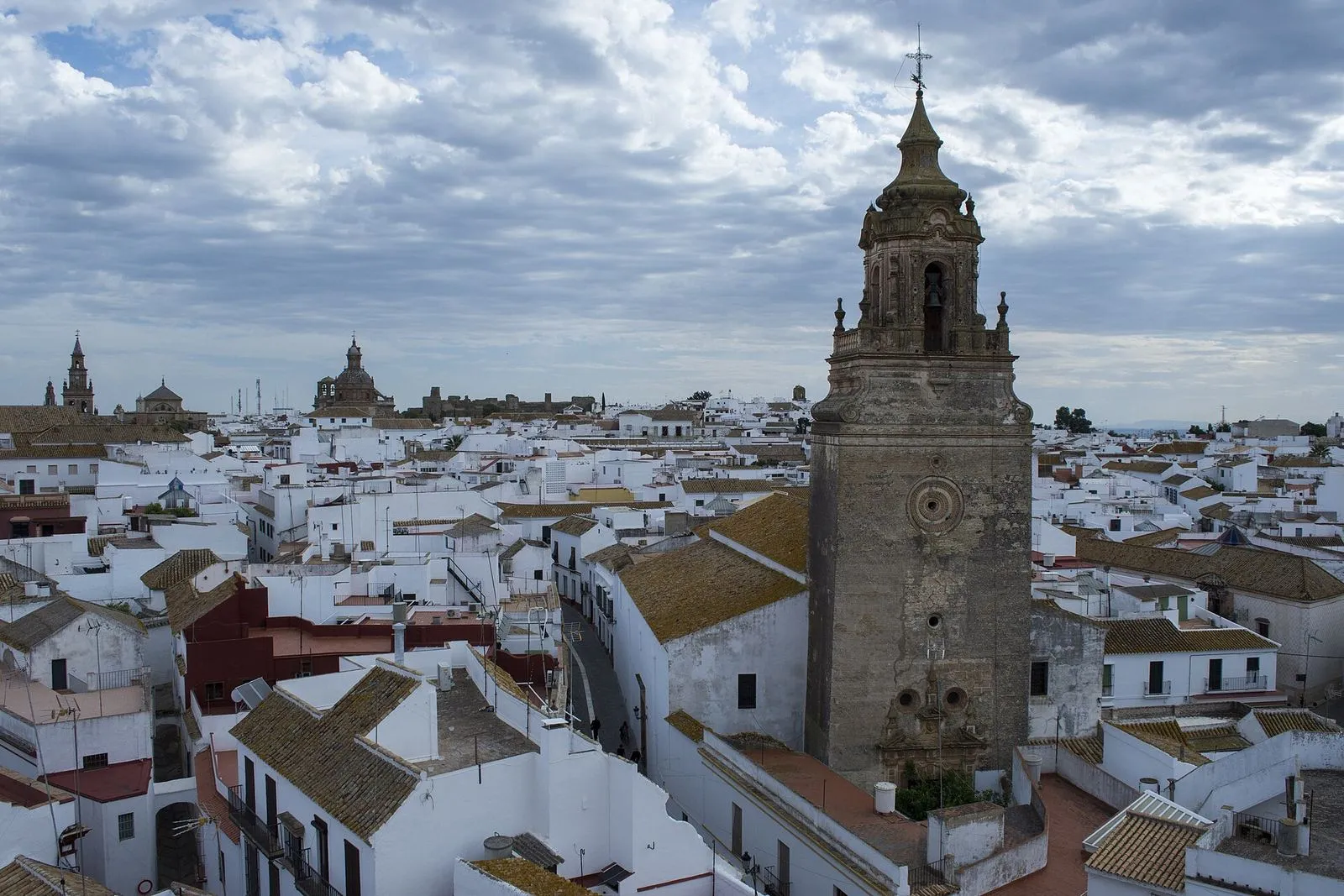
Just outside the gate, the Iglesia de San Pedro has a bell tower nicknamed La Giraldilla because it copies the Giralda of Seville.
Plaza de San Fernando and the old town
Walk up the Calle Prim to the Plaza de San Fernando, the main square, lined with Renaissance and Mudéjar houses. Around it: the Ayuntamiento (town hall), whose courtyard has a Roman mosaic of Medusa (free, weekday mornings), and the old market square, the Plaza de Abastos, a cloister-like arcaded square. The Museo de la Ciudad, in the Palacio del Marqués de las Torres, explains Carmona’s history from prehistory to the Romans (about €2.50, free on Tuesdays).
Iglesia Prioral de Santa María
Carmona’s main church was built from the 15th century on the site of the great mosque, and keeps its Patio de los Naranjos, the mosque’s courtyard of orange trees. Inside: a huge Plateresque altarpiece and a Visigothic calendar carved on a column in the courtyard. About €3; closed on Mondays.
Convents and their sweets
Carmona has several enclosed convents. At the Convento de Santa Clara you can visit the church and cloister (about €3; closed on Tuesdays and Wednesdays) and buy sweets made by the Poor Clare nuns, such as yemas and almond sweets. The Baroque church of the Descalzas (Discalced Carmelites) is in our view one of the finest in town; opening times vary, so ask at the tourist office.
Puerta de Córdoba and the Alcázar del Rey Don Pedro
At the eastern end of the old town, the Puerta de Córdoba is a Roman gate remodelled in the 17th century, looking down over the Vega, the farmland of the Corbones valley. Nearby, on the highest point, the ruins of the Alcázar del Rey Don Pedro, a royal palace of Pedro I (the king who built much of Seville’s Real Alcázar), now hold the Parador de Carmona. Even if you don’t stay, you can usually have a drink or lunch on its terrace, with one of the widest views in Andalusia.
The Roman Necropolis and the amphitheatre
Outside the old town, about 10–15 minutes’ walk west of the Puerta de Sevilla on the Avenida Jorge Bonsor, the Necrópolis Romana is one of the largest Roman cemeteries in Spain, with hundreds of tombs from the 1st and 2nd centuries AD, many cut into the rock. The most famous is the Tumba de Servilia, built like a Roman villa around a colonnaded courtyard. Entry is free for accredited EU citizens and €1.50 for everyone else. It is open Tuesday to Saturday from 9:00 to 18:00 (to 15:00 from 21 June to 20 September, and to 21:00 on Fridays and Saturdays from 1 April to 20 June), on Sundays and holidays from 9:00 to 15:00, and closed on Mondays. Hours change by season, so check the official site before you go. See our Roman Necropolis of Carmona guide for hours and tickets.
Across the road is the Roman amphitheatre, partly excavated. It is usually seen from the outside; going in is possible only on the Junta de Andalucía’s guided visits, on weekend and holiday mornings, booked by phone in groups of up to 8 and not offered from July to September.
Half-day and full-day plan
Half day (morning):
- 9:00–9:30: bus from San Bernardo.
- Alcázar de la Puerta de Sevilla and the view from the terraces. 45 minutes.
- Plaza de San Fernando, the town hall mosaic and the Plaza de Abastos.
- Santa María and its Patio de los Naranjos.
- Puerta de Córdoba and a drink on the parador terrace.
- Lunch, then the bus back to Seville.
Full day: add the Museo de la Ciudad or the Convento de Santa Clara in the morning, have a long lunch, and walk out to the Roman Necropolis in the afternoon (it closes at 18:00 most of the year, at 15:00 from 21 June to 20 September and on Sundays). On a Monday, swap the necropolis for the museum, as it’s closed.
Add Écija or Osuna
With a car, you can combine Carmona with a second town on the same day:
- Écija, about 50 km further east along the A-4 (35–40 minutes): the “city of towers”, full of Baroque bell towers and palaces.
- Osuna, about an hour away: a ducal town with a Renaissance university and a stone bullring that was used as the fighting pit of Meereen in season 5 of Game of Thrones.
What to eat in Carmona
Carmona’s cooking is the country food of the Seville plain:
- Espinacas con garbanzos: spinach and chickpeas with cumin and bread, the local classic.
- Sopa de tomate and other stews with seasonal vegetables such as tagarninas (wild thistles).
- Torta inglesa: puff pastry filled with cabello de ángel (candied squash), the town’s best-known sweet. It is sold in the town’s bakeries.
- Convent sweets from Santa Clara.
For lunch, the bars around the Plaza de San Fernando and the Calle Prim serve tapas; the parador’s restaurant costs more but has the view. See our guide to where to eat in Carmona for named bars and bakeries. For eating in the city, see where to eat in Seville.
When to go
Carmona has the same climate as Seville: very hot from June to September, when it often passes 38–40 °C in the afternoon. In summer, we’d go early, see the town in the morning and be back by lunch. We think spring (March to May) and autumn (October and November) are the best seasons; winter is mild and quiet. See the best time to visit Seville.
Most sights close on Monday (the necropolis and Santa María) or open shorter hours on Sunday afternoons, so we’d go Tuesday to Saturday.
Stay over instead?
Carmona is close enough to Seville that most people go back the same day. We think a night makes sense if you want to see the town quiet in the evening, or if you are driving on to Córdoba the next day.
- Parador de Carmona: in the Alcázar del Rey Don Pedro, with a pool and rooms looking over the plain. Rated about 8.9 on Booking.com. Read more in our Parador de Carmona guide.
If Carmona is your only day out, see our 3-day Seville itinerary for where it fits, and the Seville guide for everything else.
FAQ
How do I get from Seville to Carmona?
Take the Casal bus (line M-124) from the San Bernardo stop: about 40–50 minutes on direct services, with about 30 buses a day on weekdays. By car, it is about 35 km on the A-4, with no tolls. There is no train.
Is Carmona worth visiting?
Yes, we think so, if you have a spare half day in Seville. It has Roman gates and tombs, a Moorish fortress with great views and a quiet old town, without the crowds of Córdoba or Ronda.
What is there to see in Carmona?
The Alcázar de la Puerta de Sevilla, the Plaza de San Fernando, the Prioral de Santa María, the Puerta de Córdoba, the parador’s terrace and the Roman Necropolis (free for EU citizens) are the highlights.
Is the Roman Necropolis of Carmona free?
For accredited EU citizens, yes; everyone else pays €1.50. It is open Tuesday to Saturday until 18:00 (until 15:00 from 21 June to 20 September), on Sundays and holidays until 15:00, and closed on Mondays.
Can you visit Carmona and Écija in one day?
Yes, by car. Écija is about 35–40 minutes further along the A-4, so you can see Carmona in the morning and Écija in the afternoon. By bus, the connections make it difficult.
What time is the last bus from Carmona to Seville?
The last bus leaves the Paseo del Estatuto at 21:00 on weekdays and Saturdays and at 20:30 on Sundays and holidays, according to Casal’s winter 2026–27 timetable (checked on 12 October 2026). Check the current timetable before you go; the 21:00 weekday bus stops at Aerópolis, so it takes longer.
How much is the bus from Seville to Carmona, and do I need to book?
A single ticket costs about €3, and less with a Consorcio transport card. You do not need to book: pay the driver when you board.
Where can I park in Carmona?
We’d park outside the walls, at the Paseo del Estatuto or the Puerta de Sevilla car park, both on the town council’s list, and walk in. The list does not say which car parks are free, so read the signs or ask at the tourist office.