
Some links on this page are affiliate links. If you book through them we may earn a commission, at no extra cost to you.
The short answer
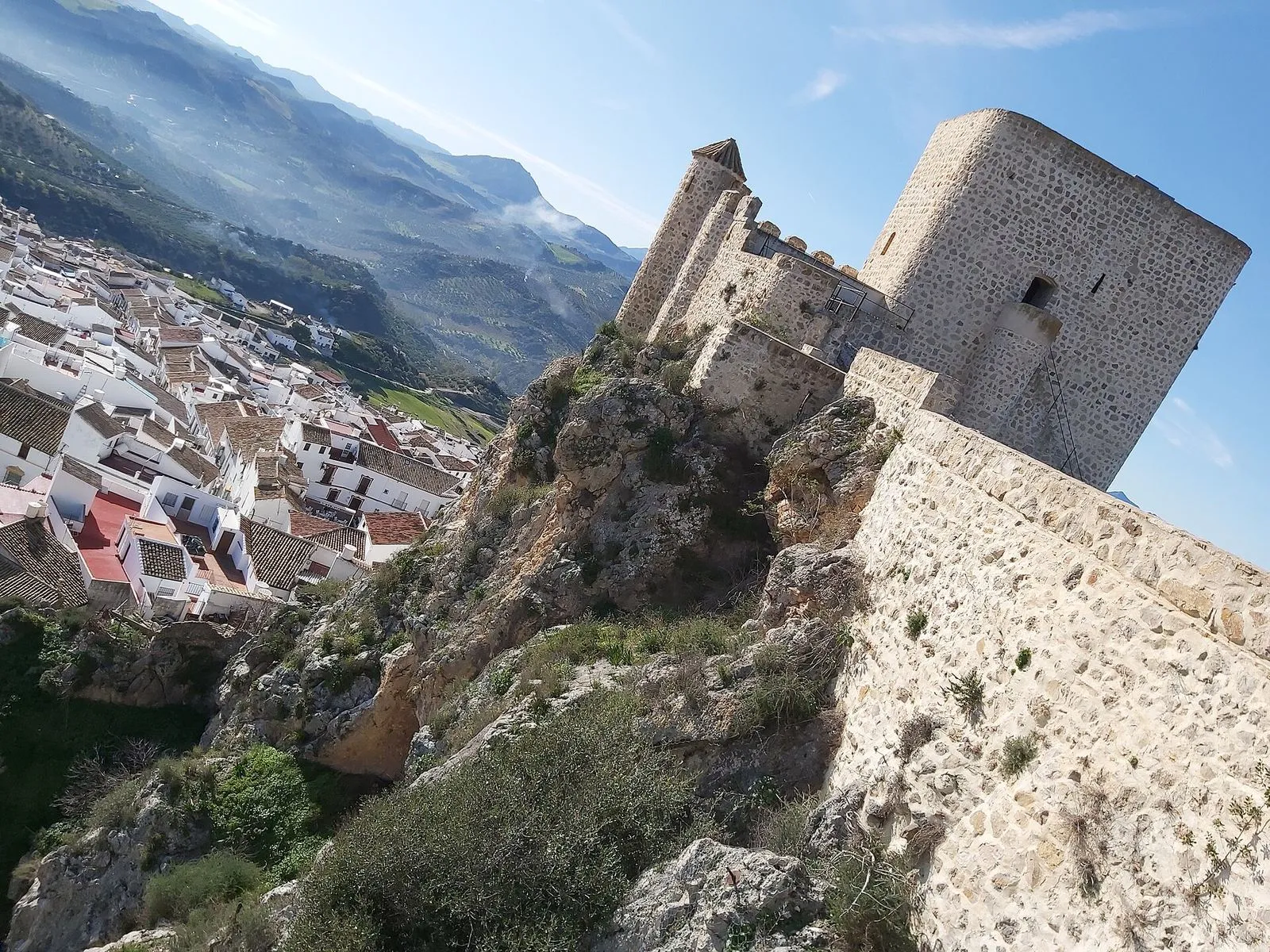
Olvera is a white village of about 7,800 people in the north-east of Cádiz province, on a hill at about 640 m. Its silhouette is one of the best known in Andalusia: rows of white houses climbing to a Moorish castle and a big neoclassical church side by side on the summit, visible from miles away across a sea of olive groves.
- Is it worth it? We think so, as a stop on a white-villages drive, and even more if you want to walk or cycle the Vía Verde de la Sierra, a 36 km greenway on an old railway that starts here.
- Time needed: 2–3 hours for the village, the castle and the church. A full day if you add the Vía Verde.
- Cost: a joint ticket for the castle and the La Cilla museum costs about €2.
- Nearby: Setenil de las Bodegas is about 15 minutes away, Ronda about 40 minutes.
What to see in Olvera
We’d park in the lower town and walk up. The main street climbs to the Plaza de la Iglesia, where the church, the museum and the path to the castle all meet.
The castle
The Castillo de Olvera sits on a rock at the very top of the village. It was built in the late 12th century and became part of the frontier defences of the Nasrid kingdom of Granada, until King Alfonso XI of Castile took Olvera in 1327. Christian builders later remodelled it, so what you see mixes both periods.
The plan is an irregular, stretched triangle that follows the rock. The best-preserved part is the keep (torre del homenaje), with vaulted rooms inside and two cisterns. The climb is short but steep, and the view from the top takes in the church roof below you, the whole village and, on a clear day, Zahara de la Sierra and the Sierra de Grazalema.
Entry is with a joint ticket of about €2 that also covers the museum in La Cilla (below). It is usually open every day from about 10:00, closing earlier in winter than in summer, but the hours have changed before, so check with the tourist office.
La Cilla: La Frontera y los Castillos
At the foot of the castle climb, on the Plaza de la Iglesia, the Casa de la Cilla was built by the Dukes of Osuna, who ruled Olvera, to store the grain and harvest tithes of the district. It was later a jail and a wine press. Today it holds the tourist office and the interpretation centre La Frontera y los Castillos, which explains the 250 years when this area was the border between Castile and Granada and the chain of castles on both sides. There is also a small archaeology display and an information point for the Vía Verde. We’d start here, buy your ticket, then climb to the castle.
Iglesia de Nuestra Señora de la Encarnación
The church next to the castle is the other half of Olvera’s famous skyline. The old Gothic-Mudéjar church on this spot was pulled down in 1822, and the Dukes of Osuna paid for the neoclassical building that replaced it, finished in 1843. Inside it has three naves, a dome over the crossing and Italian marble. Opening hours are irregular outside Mass times.
A local saying sums the village up: Olvera is one street, one church and one castle, but what a street, what a church and what a castle.
The Barrio de la Villa
The lanes around the castle and the church are the Barrio de la Villa, the old quarter that was once enclosed by the castle walls. Short, steep, whitewashed streets with flowerpots and views over the rooftops. We’d walk down through them after the castle rather than retracing your steps.
Santuario de Nuestra Señora de los Remedios
Just outside the village stands the sanctuary of the Virgen de los Remedios, Olvera’s patron. The present church dates from the 17th and 18th centuries, over an older hermitage. It is the destination of the village’s biggest festival (see below) and is usually open in the morning and late afternoon.
The Vía Verde de la Sierra
Olvera is the eastern end of the Vía Verde de la Sierra, one of the best-known greenways in Spain. It follows the bed of the Jerez–Almargen railway, which was built in the 20th century but never saw a train. The 36.5 km path to Puerto Serrano is surfaced, car-free and gently graded, with 30 tunnels and 4 viaducts. It suits walkers, families and cyclists of any level.
- Direction: Olvera is the higher end, so the ride towards Puerto Serrano is mostly gently downhill. Many people ride out and back on a shorter stretch rather than the whole way.
- The Peñón de Zaframagón: about 21 km from Olvera, a limestone crag above the Guadalporcún gorge holds one of the largest griffon vulture colonies in Europe, around 200 breeding pairs. The path crosses the river on the Zaframagón viaduct, about 237 m long.
- Zaframagón interpretation centre: in the old Zaframagón station, with a remote camera on the nests and a small exhibition. It opens mornings only (a little longer at weekends), about €2 in cash.
- Bike hire: at the old Olvera station, on the edge of town, and near Coripe station. You can hire ordinary bikes, child seats, tandems and four-wheeled pedal cars (cuatriciclos). We’d book at weekends and in spring.
- The stations: Olvera station is now a small hostal and restaurant, with railway-carriage apartments next door; Coripe station is a hotel-restaurant; Zaframagón is the visitor centre.
We’d take water and a torch or bike light for the longer tunnels, and avoid the middle of the day in summer: the valley gets very hot. To see where Olvera sits in the region, open our map of Andalusia.
Olive oil
The hills around Olvera are covered in olive trees, and the village’s oil is part of the DO Sierra de Cádiz (protected designation of origin). Olvera has an unusually large number of agricultural cooperatives, and their mills sell oil direct. Some offer guided mill visits and tastings, best during the harvest (roughly November to January); ask at the tourist office.
Lunes de Quasimodo
Olvera’s main festival is the Romería del Lunes de Quasimodo, held on the second Monday after Easter (in 2027, Easter falls on 28 March, so the romería is on 5 April). It goes back to 1715, when the village carried the Virgen de los Remedios in procession to pray for rain during a drought, and the rain came as she returned to the sanctuary. Today the whole village spends the day at the sanctuary, with Mass, horses, music and picnics.
When to go
We think spring (March to early June) and autumn (October and November) are best: green or golden countryside and comfortable temperatures for the Vía Verde. Summer is very hot at midday, so visit the village early and ride in the morning. Winter is quiet and often sunny, with the olive harvest in full swing. See our best time to visit Andalusia.
Getting to Olvera
| From | Car |
|---|---|
| Setenil de las Bodegas | about 15 minutes |
| Pruna | about 20 minutes |
| Zahara de la Sierra | about 25–30 minutes |
| Ronda | about 40 minutes |
| Grazalema | about 45 minutes |
| Seville | about 1 h 30 |
| Málaga | about 1 h 45 |
- By car: by far the easiest way, and the only practical one for combining Olvera with other villages or reaching the Vía Verde stations. Car hire at Seville airport or at Málaga airport; see our car hire guide. Park in the lower town, as the lanes near the castle are narrow and steep.
- By bus: a few buses a day link Olvera with Ronda and with Seville (via Morón), fewer at weekends. Workable for the village alone, not for a white-villages tour.
- On a tour: some day trips from Seville include Olvera with Ronda and other villages: Ronda and white villages from Seville or white villages from Málaga. We’d check the stops before booking. See also our Ronda day trip from Seville.
Nearby
- Setenil de las Bodegas (15 minutes): streets built under the rock. In our view the obvious pair with Olvera.
- Zahara de la Sierra (25–30 minutes): a Moorish tower above a turquoise reservoir.
- Pruna (20 minutes, in Seville province): a quieter village below a hilltop castle.
- Grazalema and Arcos de la Frontera, further west on the white-villages route.
- Ronda (40 minutes): the capital of the area, with far more hotels.
For a full loop, see our white villages guide and the Andalusia road trip.
Where to stay
Olvera works as a day stop, but a night here lets you ride the Vía Verde in the cool of the morning.
- Hotel Tugasa Sierra y Cal: a small hotel in the village, some rooms with balconies facing the castle. Rated 8.8 on Booking.com.
- Casa Vagón Vía Verde de la Sierra: apartments in restored railway carriages next to the old Olvera station, right at the start of the Vía Verde, with a pool. Two bedrooms each, good for families and cyclists. Rated 9.3 on Booking.com.
- More options: places to stay in Olvera, or hotels in Ronda’s old town for more choice.
FAQ
What is there to see in Olvera?
The castle and the Iglesia de la Encarnación on the hilltop, the La Cilla museum, the lanes of the Barrio de la Villa and the Santuario de los Remedios. Outside the village, the Vía Verde de la Sierra and the vultures of the Peñón de Zaframagón.
How long do you need in Olvera?
Two to three hours for the village and the castle. Add half a day or a full day to walk or cycle part of the Vía Verde.
How long is the Vía Verde de la Sierra?
About 36.5 km from Olvera to Puerto Serrano, with 30 tunnels and 4 viaducts. You can hire bikes at the old Olvera station and ride a shorter stretch there and back.
How far is Olvera from Setenil and Ronda?
Setenil de las Bodegas is about 15 minutes by car and Ronda about 40 minutes, so all three fit in one day.
Can you visit Olvera without a car?
Yes, but it takes planning: a few buses a day come from Ronda and Seville. To combine Olvera with other villages or reach the Vía Verde stations, a car or a day tour is much easier.