
Some links on this page are affiliate links. If you book through them we may earn a commission, at no extra cost to you.
The short answer: fastest, cheapest, easiest
Madrid to Seville takes about 2 h 40 by high-speed train, from Madrid Puerta de Atocha to Sevilla Santa Justa. In our view it is the best option by far: city centre to city centre, with many trains a day.
- Fastest and easiest: the high-speed train, about 2 h 40, run by Renfe (AVE and the low-cost Avlo), Iryo and Ouigo. Fares from €9 on Ouigo booked early, and much more at the last minute.
- Cheapest: usually an early-booked Avlo, Ouigo or Iryo train. The bus (about 6 hours) is rarely cheaper by much.
- Flying: about 1 hour in the air, but slower overall once you add the airports. We’d only fly if you are connecting from a long-haul flight.
- Car: about 5.5 hours on the A-4. We’d only drive if you are starting a road trip.
Comparison table (train, bus, car, transfer, flight)
| Option | Time (approx.) | Price (approx.) | Frequency | Book |
|---|---|---|---|---|
| High-speed train (Renfe AVE and Avlo, Iryo, Ouigo) | 2 h 40–3 h 10 | From €9 booked early | Many a day | Omio or the operators |
| Flight | about 1 h in the air; 3 h 30+ door to door | Varies | A few a day | Airline websites |
| Bus (Socibus) | about 6 h | Check the operator | A few a day | Omio |
| Car | about 5 h 30 | Fuel, plus a one-way fee on a hire car | Any time | DiscoverCars |
| Private transfer | about 5 h 30 | Very expensive | Pre-booked | Not worth it on this route |
Step by step
By high-speed train
- Choose an operator. Three companies run high-speed trains between Madrid and Seville: Renfe (AVE and the low-cost Avlo), Iryo and Ouigo. The trains are similar in speed. Renfe has the most departures; Avlo, Iryo and Ouigo are often cheaper when booked early. Compare them on Omio or on each operator’s website.
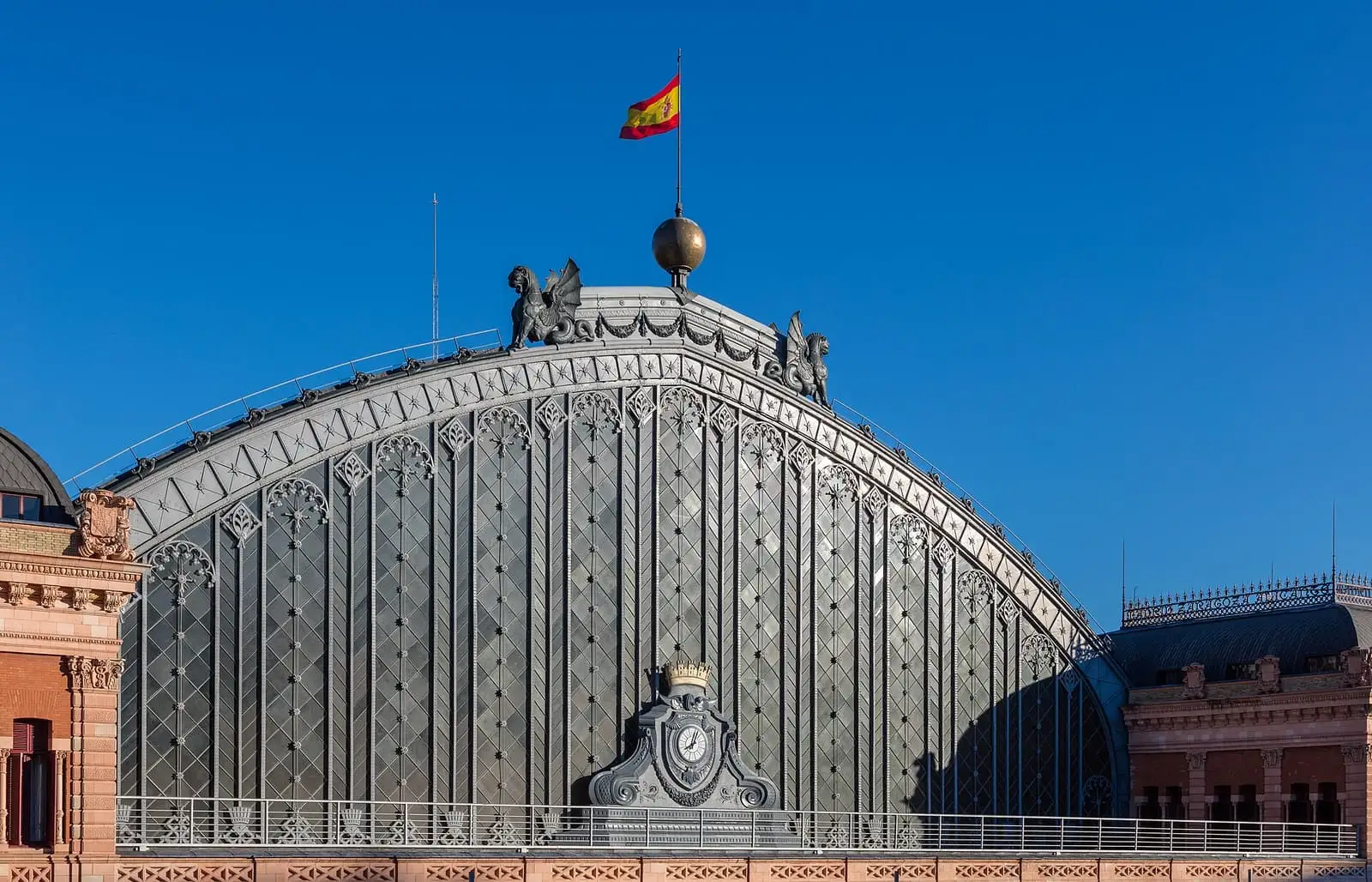
- Check the station. All trains to Seville leave from Madrid Puerta de Atocha, south of the centre.
- Arrive 20–30 minutes early. Bags go through a security scanner before boarding.
- Luggage: the cheapest fares on the low-cost operators may only include a small bag. Check what your fare includes before you pack.
- Direct or with stops: the fastest trains take about 2 h 40. Trains stopping at Ciudad Real, Puertollano and Córdoba take a little longer.
- Arrive at Sevilla Santa Justa. It is 25–30 minutes’ walk to the cathedral, or a short taxi ride.
We recommend booking early. Fares rise as trains fill, especially on Friday and Sunday afternoons, at Easter and during the Feria.
From Madrid airport
We wouldn’t book a connecting flight unless it is on the same ticket as your long-haul flight. The train is usually quicker overall.
- From Terminal 4, C1 Cercanías trains run through Chamartín to Atocha without a change, in about 30 minutes.
- From the other terminals, take the metro or a taxi to Atocha.
Allow at least 1.5 to 2 hours between landing and your train.
By plane
There are direct flights between Madrid and Seville, about 1 hour in the air. With travel to both airports and security, the total trip is at least 3.5 hours, longer than the train. Flying makes sense when you are connecting from an international flight at Madrid on one ticket, because your luggage is checked through. From Seville airport, see Seville airport to the city centre.
By bus
Socibus buses leave from Madrid’s Estación Sur bus station (Méndez Álvaro) and take about 6 hours, with a stop on the way. There are a few departures a day. In Seville they usually arrive at the Plaza de Armas bus station, 15 minutes’ walk from the cathedral. Compare times and fares on Omio.
We think the bus only makes sense if the trains are sold out.
By car
The drive is about 530 km, almost all on the toll-free A-4 motorway via Córdoba. Allow about 5.5 hours without stops, and more with a break. The route crosses the Despeñaperros pass into Andalusia.
- Hire car: a car hired in Madrid and returned in Seville usually costs a one-way fee. Compare on DiscoverCars.
- In Seville: don’t drive into the historic centre, which has camera-controlled access and very little parking. See car hire in Seville.
We think a car is worth it if you plan to stop in Córdoba and continue around Andalusia: see our Andalusia road trip. Otherwise, we’d take the train and hire a car in Seville only for the days you need it.
Both directions
Seville to Madrid works exactly the same way in reverse:
- Train: from Santa Justa to Madrid Puerta de Atocha, about 2 h 40. Getting to Santa Justa from the centre: taxi or a city bus. See getting around Seville.
- Train to Madrid airport: take the high-speed train to Atocha, then Cercanías trains via Chamartín to Terminal 4. Allow plenty of time.
- Bus: from Plaza de Armas to Estación Sur, about 6 hours.
- Car: the A-4 north, about 5.5 hours.
Coming from Valencia? There is a direct train, or you can change at Madrid: see Valencia to Seville. Coming from Barcelona? See Barcelona to Seville. Combining Madrid, Córdoba and Seville? The train stops in Córdoba on the way, under an hour before Seville. See Seville to Córdoba. For all other routes into the city, see how to get to Seville.
FAQ
How long is the train from Madrid to Seville?
About 2 h 40 on the fastest high-speed trains, and up to about 3 h 10 on trains with more stops.
How much is the train from Madrid to Seville?
From €9 when booked early with Ouigo, and much more for last-minute tickets at busy times. Booking a few weeks ahead makes the biggest difference.
Is it better to fly or take the train from Madrid to Seville?
We’d take the train. It goes from city centre to city centre in about 2 h 40, with no airport transfers. We’d fly only if the flight connects with your long-haul flight on one ticket.
Which station does the train from Madrid to Seville leave from?
All trains leave from Madrid Puerta de Atocha and arrive at Sevilla Santa Justa.
How long is the drive from Madrid to Seville?
About 5.5 hours for roughly 530 km, on the A-4 motorway, which has no tolls.