
Some links on this page are affiliate links. If you book through them we may earn a commission, at no extra cost to you.
The short answer
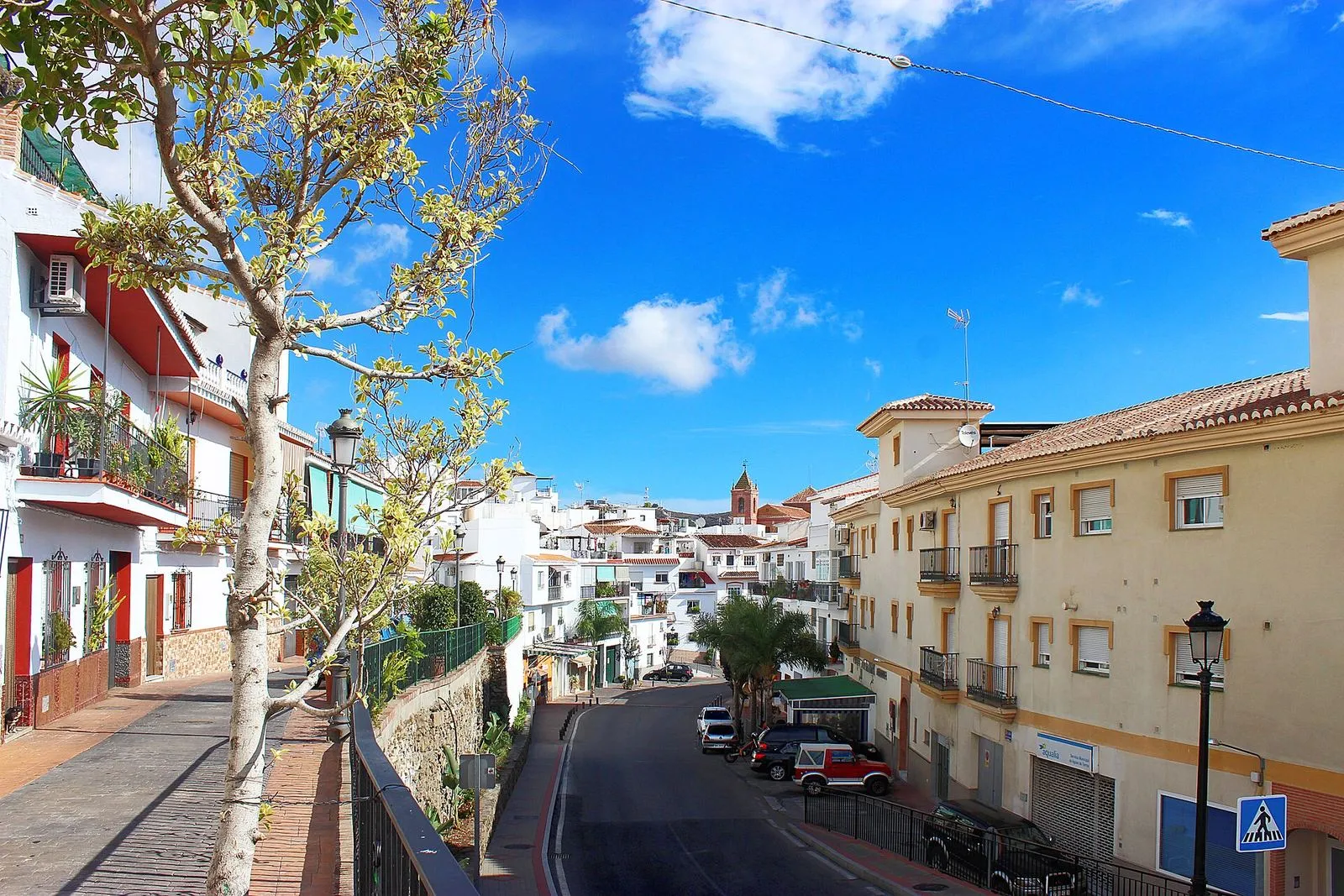
Torrox is one municipality with two very different halves. Torrox Pueblo is the old white village on a hillside about 4 km inland. Torrox Costa is the beach resort on the sea, with a long promenade and a lighthouse. Together they have about 22,500 residents (provisional INE figure for 1 January 2026), and the municipality sits on the eastern Costa del Sol, in the Axarquía, between Vélez-Málaga and Nerja.
- Why go: quieter beaches with three Blue Flags, a flat seafront promenade, mild weather outside summer and a real village behind the resort.
- Best for: families, longer stays and travellers who want a calmer base than the western Costa del Sol, with Nerja and Frigiliana close by.
- Pueblo or Costa? We’d stay in Torrox Costa for the beach and services, and go up to Torrox Pueblo for an hour or two of old streets and lunch.
- Getting there: about 45 minutes to 1 hour by car from Málaga airport, around 1 h 10 by bus from Málaga city.
Torrox Pueblo or Torrox Costa?
| Torrox Pueblo | Torrox Costa | |
|---|---|---|
| Setting | White village on a hillside, about 4 km inland, at roughly 120-145 m | Seafront resort with a flat promenade |
| Feel | Quiet and local, small streets and squares | Holiday town of apartments and bars, with a large international community |
| Main sights | Church of La Encarnación, Torreón Árabe, Ermita de Nuestra Señora de las Nieves | Lighthouse, Roman remains, beaches, promenade |
| Beach | Not on the sea | On the sand |
| Best for | A visit of 1-2 hours | Staying |
If you only have a day, we’d spend most of it at the coast and add the village for lunch or the late afternoon.
Torrox Costa
The lighthouse and the Roman remains
The Faro de Torrox was built in 1864 and is about 23 metres tall. It now holds a small interpretation centre with sea charts, photographs and finds from the area. Next to it are the remains of a Roman settlement, including baths and mosaic floors that you can see through glass panels. Entry is free; opening hours vary, so check at the tourist office before you go.
The promenade
The seafront promenade runs along the beach, flat and good for walking, cycling or a pushchair. Cafés and chiringuitos (beach bars) line it, with the sea on one side and the foothills of the Sierra de Almijara behind the town.
The beaches
Torrox has three beaches with the Blue Flag, the award for water quality and services. Ferrara and El Morche have held it for more than 30 years, and Cenicero-Las Dunas won it for the first time in 2025. Local news reported all three again for 2026. We’d check the flags on the day, as with any Costa del Sol beach.
| Beach | Notes |
|---|---|
| Playa de Ferrara | The main town beach in Torrox Costa, with beach bars and services in season |
| El Morche | On the west side of the resort; has a dog-friendly stretch |
| Cenicero-Las Dunas | The newest Blue Flag beach, usually quieter than Ferrara |
Many maps and apps use “Playa de Torrox” for the town seafront as a whole, so you will see that name too. For comparison, see Málaga’s beaches and the beaches around Nerja.
Torrox Pueblo
The old village is a short, steep wander. Allow one to two hours.
- Iglesia de Nuestra Señora de la Encarnación: the parish church, built in the 16th century and reformed in the 17th, with a Baroque structure and Mudéjar wooden ceilings.
- Ermita-Convento de Nuestra Señora de las Nieves: a 16th-century Mudéjar-style chapel that holds the images of the Virgin of the Snows and San Roque, the patron saints of Torrox.
- Torreón Árabe: one of the square towers of the medieval defences, dating from around the 12th century.
- Lunch: the local dishes are migas (fried semolina with garlic), ensalada arriera and roast kid (chivo).
Día de las Migas
On the Sunday before Christmas the town hosts the Día de las Migas, a food festival with music and street stalls. The town hall hands out around 40,000 portions of migas with local wine, and the event is recognised as a Fiesta de Singularidad Turística Provincial. It brings large crowds, so we’d go early or avoid the village that day if you want quiet. The feria in October is the other main party.
“The best climate in Europe”: what is true
Torrox uses “El mejor clima de Europa” as its slogan, and you will see it on hotel and property sites. What can be said safely:
- It is a slogan, not an official ranking. We found no World Health Organization or other official body naming Torrox the best climate in Europe, despite what some websites say.
- The source is a company study. The town hall backs it with a 2008 comparison by the weather company MeteoGroup, using data from 2001 to 2007. According to press reports, it compared Torrox with 21 Mediterranean coastal places and found an annual average of about 18 °C, with only around 11 degrees between the warmest and coolest months. Torrox came out first, ahead of Marbella and Valletta.
- The reasons are plausible: the Sierra de Almijara shelters the coast from cold northern winds, and the sea softens both heat and cold.
- What it does not mean: it measures mild, even temperatures, not the hottest or sunniest place. Summer afternoons are hot, and “best” depends on what you like.
For month-by-month conditions, see the best time to visit Andalusia and the Costa del Sol weather guide.
Getting there
| From | By car | By bus |
|---|---|---|
| Málaga airport | about 45-60 min, A-7 east | no direct line; go into Málaga first |
| Málaga city | about 50 min | Alsa, around 1 h 10 |
| Nerja | about 15 min | regional buses along the coast |
| Frigiliana | about 25 min | via Nerja |
- By car: take the A-7 east and leave at Torrox. Torrox Pueblo is a short drive up from the coast. A car is useful if you want Nerja, Frigiliana and the other villages of the Axarquía. Car hire at Málaga airport; see also our Málaga airport car hire guide.
- By bus: Alsa runs buses from Málaga to Torrox Costa: Málaga to Torrox by bus. There is no train on this coast.
- On the spot: Torrox Costa is walkable. The village is easier by car or taxi.
Where to stay
Torrox Costa has apartments, aparthotels and some hotels; Torrox Pueblo has small guesthouses and rural stays. We have not picked individual hotels for this page, so use the area searches and check recent guest ratings.
- Hotels and apartments in Torrox Costa: best for the beach and the promenade.
- Stays in Torrox Pueblo: quieter, with views, but you need a car.
- Nearby alternative: Nerja has more restaurants and nightlife and is about 15 minutes away. See also where to base yourself in Andalusia.
Nerja and Frigiliana nearby
Torrox is a good base for the eastern end of the Costa del Sol.
- Nerja: the Balcón de Europa, the caves and the cliffs around Maro.
- Frigiliana: a white village with a Moorish quarter, about 25 minutes away.
- Málaga: about an hour away, for a day in the city. See day trips from Málaga.
FAQ
Is Torrox worth visiting?
We think so, if you want a quiet beach stay with a village nearby. It has three Blue Flag beaches and is an easy base for Nerja and Frigiliana.
What is the difference between Torrox Pueblo and Torrox Costa?
Torrox Pueblo is the old white village about 4 km inland. Torrox Costa is the beach resort on the coast, with the promenade, the lighthouse and most hotels and apartments.
Does Torrox really have the best climate in Europe?
It is the town’s slogan. It rests on a 2008 MeteoGroup comparison of Mediterranean coastal places using data from 2001 to 2007, which reportedly found mild, even temperatures of about 18 °C a year. It is not an official ranking, and we found no WHO designation.
How far is Torrox from Málaga airport?
About 45 minutes to 1 hour by car along the A-7. There is no direct public transport from the airport, so most visitors hire a car or take a transfer.
Which is the best beach in Torrox?
Playa de Ferrara is the main beach, with services, and Cenicero-Las Dunas is usually quieter. El Morche has a dog-friendly stretch. All three have the Blue Flag.