
Some links on this page are affiliate links. If you book through them we may earn a commission, at no extra cost to you.
The short answer
Sanlúcar de Barrameda is a town of about 70,000 people at the mouth of the Guadalquivir, in Cádiz province, where the river meets the Atlantic across from the Doñana National Park. It is the only place where manzanilla is made, and Spaniards come here above all to eat: prawns, fried fish and tortillitas de camarones with a cold glass of manzanilla.
- Why go: a bodega visit, lunch on the riverfront at Bajo de Guía, the boat into Doñana, and the old upper town with its castle and palaces.
- Time needed: one full day covers a bodega, lunch and the Doñana boat. We’d stay a night to enjoy the evenings on the Plaza del Cabildo and at Bajo de Guía.
- Cost: bodega tours about €15–20, the Real Fernando boat from about €30, the Castillo de Santiago about €9.50.
- Getting there: about 30 minutes by car from Jerez and about 1 h 15–1 h 30 from Seville. There is no train; buses run from Jerez, Cádiz and Seville.
Prices at a glance
| Sight | Price (approx.) | Time needed | Book ahead? |
|---|---|---|---|
| Bodega tour and tasting | €15–20 | 1 h 30 | Yes, especially in English |
| Real Fernando boat into Doñana | From about €30 | 2 h 30–2 h 45 | Yes |
| Castillo de Santiago | about €9.50 (reduced €6) | 1 hour | No |
| Palacio de los Guzmanes | about €11 | 1 hour | Check the days |
| Nuestra Señora de la O | free | 20 minutes | No |
Manzanilla: why only here
Manzanilla is a pale, bone-dry sherry made like a fino and aged under a layer of yeast called flor. What makes it different is where it ages. Sanlúcar sits between the river estuary and the sea, and its cool, damp air keeps the flor thick and alive all year. The result is a lighter, fresher wine with a salty, almost sea-breeze finish. For a primer on the other sherry styles, see our Jerez guide.
We’d order it very cold, with anything from the sea.
Bodegas you can visit
- Barbadillo: the town’s best-known house, founded in 1821, in the upper town next to the castle. Its Museo de la Manzanilla is free. Tours with a tasting cost about €20 (1 h 30), in English at 11:00 from Tuesday to Saturday. Book on the official website.
- Hidalgo La Gitana: a family bodega founded in 1792, maker of the La Gitana manzanilla. Daily visits end with a tasting of four wines, in Spanish or English; there are also evening visits. Book on the bodega’s website.
- Delgado Zuleta: founded in 1744 and known for its La Goya manzanilla. The basic “Copa en mano” visit with four wines costs about €15. Book in advance.
Sherry is about 15% alcohol, so don’t drive straight after a tasting. To see Jerez’s bodegas as well, book one of the sherry bodega tours in Jerez.
Bajo de Guía: prawns on the riverfront
Bajo de Guía is the old fishermen’s quarter on the riverbank, about 15 minutes’ walk from the centre. Its row of seafood restaurants faces the water and the pine woods of Doñana on the far bank, and at sunset we think it is one of the best places to eat in Andalusia.
The local speciality is the langostino de Sanlúcar, a prawn cooked simply in salted water. Also try fried fish (pescaíto frito), acedías (small sole), urta and rice dishes. Casa Bigote is the most famous name, with a tapas bar and a restaurant. For a cheaper evening, the tapas bars around the Plaza del Cabildo in the centre are, we think, just as good: Casa Balbino is known for its tortillitas de camarones, crisp shrimp fritters.
The boat into Doñana
The Real Fernando sails from the jetty at Bajo de Guía up the Guadalquivir along the edge of the Doñana National Park, one of Europe’s great wetlands. The boat lands at La Plancha, an old settlement of reed huts inside the park, for a guided walk of about an hour through pine woods and marsh. The whole trip takes about 2 h 30–2 h 45, depending on the tides, with commentary in Spanish and English.
- Price: from about €30 for the river trip; the boat and 4x4 combination is about €50. Confirm the price with the operator.
- Departures: usually at 10:00, plus an afternoon trip (16:00 or 17:00) from March to October.
- Booking: essential. Book directly with the operator, Visitas Doñana, by phone or on its website.
- Longer option: a combined boat and 4x4 trip crosses to the park’s dunes, beaches and marshes, for about €50.
We’d bring binoculars and insect repellent in warm months; we think spring and autumn are best for birds. Prefer a tour with transport from Seville or Cádiz? See Doñana boat trips from Sanlúcar. For the Huelva side of the park, El Rocío and 4x4 tours, see our Huelva guide.
A small passenger ferry (barcaza) also crosses the river from Bajo de Guía to the Doñana bank, without a fixed timetable, when there are enough passengers. There is no road on the other side: you can walk on the beach, but not drive on into Huelva. From Sanlúcar to Matalascañas you have to go round via Seville, 2 h 30 or more.
The August horse races on the beach
The Carreras de Caballos de Sanlúcar, held since 1845, are among the oldest horse races in Spain and a Fiesta of International Tourist Interest. Thoroughbreds race along the sand at low tide, on the beaches between the town and Bajo de Guía, in two cycles of three days each in August. The dates follow the tides, so they change every year: in 2026 they were 8–10 and 21–23 August. The 2027 dates are usually announced early in the year.
Watching from the beach is free; races run in the late afternoon and evening, as the tide goes out. Look out for the children’s betting booths, little stalls built from boxes where local kids take pocket-money bets.
The old town
Sanlúcar has two halves: the Barrio Bajo, the lower town around the Plaza del Cabildo and the bustling Calle Ancha, and the Barrio Alto, the upper town on the old cliff. We’d climb between them on the Cuesta de Belén.
- Palacio de Orleans-Borbón: a Neo-Mudéjar summer palace built in the 19th century for the Dukes of Montpensier, now the town hall. Its gardens are the highlight; access to the interior is limited, so ask at the tourist office.
- Nuestra Señora de la O: the main parish church, from the 14th century, with a carved Gothic-Mudéjar doorway and a 16th-century Mudéjar wooden ceiling. Free, but open only in limited morning hours.
- Palacio de los Guzmanes (Medina Sidonia): the palace of the Dukes of Medina Sidonia, who ruled the town for centuries, next to the church, with one of Spain’s great private archives. Guided visits (about €11) run on some mornings a week.
- Castillo de Santiago: a 15th-century castle of the Guzmán family, with a keep, audio guide and views over the town and the Barbadillo bodegas, about €9.50.
Columbus, Magellan and Elcano
Sanlúcar’s river mouth made it the gateway to the Americas for ships sailing from Seville. Columbus left from here on his third voyage in 1498. On 20 September 1519, the fleet of Ferdinand Magellan sailed from Sanlúcar to find a western route to the Spice Islands. Magellan died in the Philippines, and only one ship, the Victoria under Juan Sebastián Elcano, came back to Sanlúcar, on 6 September 1522, after the first voyage around the world.
Beaches
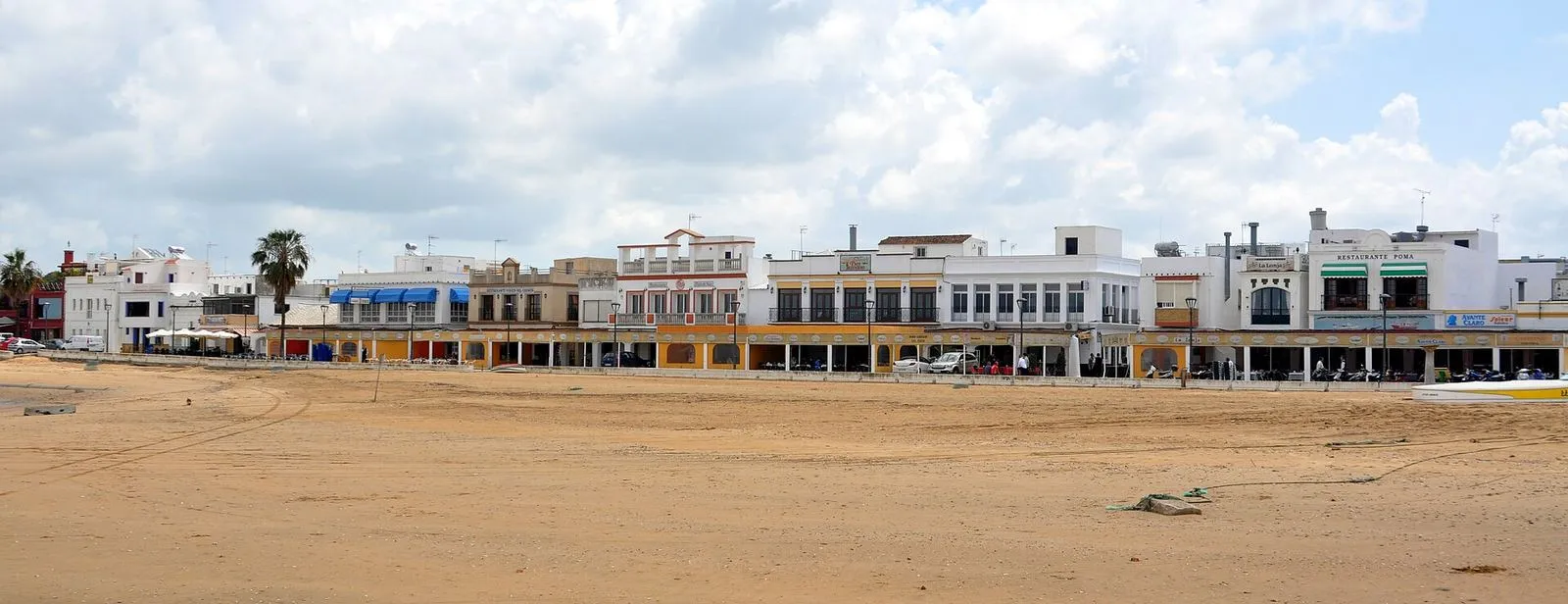
Sanlúcar’s beaches are river beaches at the mouth of the estuary, with calm, brownish water rather than open Atlantic surf. La Calzada is the main town beach, wide and flat, where the horse races run. Towards Chipiona, La Jara is quieter, with a rockier shore. For proper Atlantic beaches, Chipiona is 15 minutes away, or see our Costa de la Luz guide.
When to go
We think spring and early autumn are best: warm days, good birdwatching and space at the restaurants. The Feria de la Manzanilla, the town’s fair, is held in late May or early June: 25–30 May in 2027. August brings the horse races and big Spanish summer crowds, so we’d book hotels well ahead. Winter is quiet and mild.
Getting to Sanlúcar
| From | Car | Bus |
|---|---|---|
| Jerez (and Jerez airport) | about 30 minutes | about 45–50 minutes |
| Cádiz | about 45 minutes | about 1 hour, via El Puerto |
| Seville | about 1 h 15–1 h 30 | Los Amarillos, about 1 h 30–2 h |
| Chipiona | about 15 minutes | several a day, about 20–30 minutes |
- By plane: Jerez airport is the closest, about 30 minutes away by car. Seville airport has many more flights and is about 1 h 15 away. Hire a car at Jerez airport; our car hire guide covers insurance and tolls.
- By bus: Los Amarillos runs buses from Seville, and the Bahía de Cádiz consortium lines from Jerez bus station and from Cádiz and El Puerto. There is no train: take the train to Jerez and change to the bus.
- From Seville: Sanlúcar is an easy addition to a Cádiz day trip from Seville by car; see all day trips from Seville.
- By car: we’d park outside the centre, for example near La Calzada, as the old streets are narrow. Sanlúcar fits well into an Andalusia road trip.
Where to stay
We’d stay in the centre, near the Plaza del Cabildo, or by Bajo de Guía for the river and the restaurants.
- Albariza Hotel Boutique: a small four-star hotel on Calle Bolsa, close to the Plaza del Cabildo and the bodegas. Rated 9.4 on Booking.com.
- Hotel Barrameda: a simple, well-run hotel right on the Plaza del Cabildo, with a terrace. Rated 9.2.
- Hotel Macià Doñana: a larger hotel with an outdoor pool, a few minutes’ walk from Bajo de Guía and the Doñana boat. Rated 8.9.
- More options: hotels in Sanlúcar de Barrameda.
For a city base instead, see our Cádiz guide or stay in Jerez, 30 minutes away.
FAQ
Is Sanlúcar de Barrameda worth visiting?
We think so, especially for food and wine. A bodega visit, lunch at Bajo de Guía and the boat into Doñana make a full, varied day, and the town is much less visited by foreign tourists than Cádiz or Jerez.
What is the difference between manzanilla and fino?
Both are dry sherries aged under flor. Manzanilla can only be aged in Sanlúcar, where the sea air keeps the flor thicker, so it is lighter and slightly salty. Fino is aged in Jerez or El Puerto.
How long is the boat trip to Doñana from Sanlúcar?
The Real Fernando trip takes about 2 h 30–2 h 45, including a guided walk of about an hour in the park. Book ahead with the operator; it costs from about €30.
When are the Sanlúcar horse races?
In August, in two cycles of three days, timed to the low tides. The dates change every year and are published by the Real Sociedad de Carreras de Caballos de Sanlúcar. Watching from the beach is free.
Can you visit Sanlúcar without a car?
Yes. Buses run from Jerez, Cádiz and Seville, and the centre, the bodegas and Bajo de Guía are all within walking distance. A car is useful only for combining Sanlúcar with Chipiona or Jerez in one day.