
Some links on this page are affiliate links. If you book through them we may earn a commission, at no extra cost to you.
The short answer
Jaén is the northernmost province of Andalusia, between Granada, Córdoba and the plains of La Mancha. It is one huge sea of olive trees, rolling to the horizon, and it is the least visited of the eight provinces. That is the appeal: two Renaissance towns that are a UNESCO World Heritage Site, a cathedral that set the model for many in Latin America, Moorish castles on every other hill, and the biggest protected natural area in Spain.
- Top sights: Úbeda and Baeza (UNESCO since 2003), the Sierra de Cazorla natural park, Jaén cathedral and castle, olive-oil mills and tastings.
- Time needed: one day for Úbeda and Baeza; two to three days to add Cazorla or Jaén city.
- Getting around: we’d say you really need a car. Buses link the towns but not the mountains.
- Combine it with: Granada (about 1 hour to Jaén, 1 h 30–1 h 45 to Úbeda) and Córdoba (about 1 h 20 to Jaén). It fits well between the two on a road trip.
What to see in Jaén province
| Sight | Where | Price (approx.) | Time needed |
|---|---|---|---|
| Sacra Capilla del Salvador | Úbeda | €7 with audio guide | 45 minutes |
| Santa María de los Reales Alcázares | Úbeda | €5 | 30–45 minutes |
| Sinagoga del Agua | Úbeda | €6 (guided, 30 min) | 30 minutes |
| Baeza cathedral and tower | Baeza | €7 | 45 minutes–1 h |
| Jaén cathedral | Jaén | €10 | about 1 h |
| Arab baths (Palacio de Villardompardo) | Jaén | free | 45 minutes |
| Castillo de Santa Catalina | Jaén | €3.50 | 1 h |
| Castillo de la Yedra museum | Cazorla | free for EU citizens, €1.50 others | 45 minutes |
| Río Borosa and Cerrada de Elías walk | Sierra de Cazorla | free (paid car park) | 2–3 h to the gorge and back |
Úbeda
For a fuller guide to both towns, see Úbeda and Baeza.
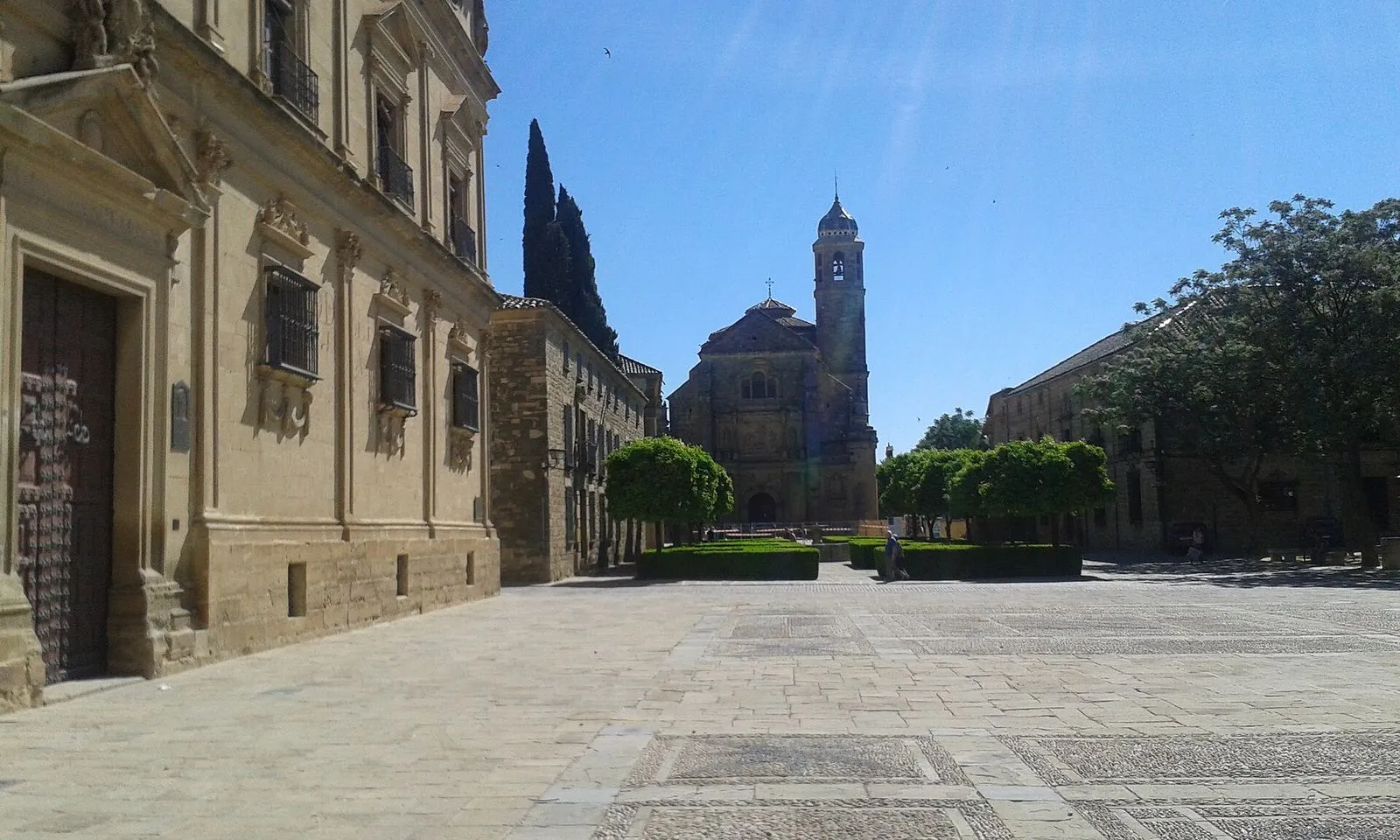
Úbeda is the larger of the two Renaissance towns and the one we’d see first. In the 16th century it was the home of Francisco de los Cobos, secretary to Emperor Charles V, and his nephew Juan Vázquez de Molina. With their money, the architect Andrés de Vandelvira turned the upper town into one of the finest Renaissance ensembles in Spain. It was listed by UNESCO with Baeza in 2003.
What to see in Úbeda
- Plaza Vázquez de Molina: the heart of the old town, a long square lined with palaces and churches. In our view one of the most harmonious Renaissance squares in Spain.
- Sacra Capilla del Salvador: the Cobos family’s funerary chapel, designed by Diego de Siloé and built by Vandelvira, with a richly carved façade and a gilded high altar. It is privately owned (by the Medinaceli foundation) and costs about €7 with audio guide. There is a free half hour on weekday mornings (9:30–10:00).
- Palacio de las Cadenas: Vandelvira’s palace for Vázquez de Molina, now the town hall. You can usually walk into the courtyard for free on weekdays.
- Santa María de los Reales Alcázares: built on the site of the main mosque, with a Gothic cloister and chapels closed by carved iron screens. About €5.
- Sinagoga del Agua: a medieval house with a cellar, a ritual bath and a well, found during building works in 2007 and presented as a synagogue. Short guided visits run at set times, about €6.
- Hospital de Santiago: Vandelvira’s last great work, on the edge of the new town, often called “the Escorial of Andalusia”. It was closed for works in 2026, so check before you go.
- The pottery quarter: around Calle Valencia, outside the old walls, a few family workshops still make the green-glazed pottery Úbeda is known for. The Paco Tito pottery museum is free.
- Miradores de San Lorenzo: the walk along the southern walls, with views over the olive groves to the Sierra Mágina and the Sierra de Cazorla.
How long: a full day, or half a day for the main square and the Salvador. Where to park: the underground car park on Plaza de Andalucía is at the top of the old town, next to the tourist office. There are also free open-air car parks at Plaza de Santa Clara and Calle Santo Domingo. The old town’s lanes are narrow, so don’t drive into them.
Baeza
Baeza is 10 minutes (about 9 km) west of Úbeda, smaller and quieter, with its monuments packed around a few squares on the edge of an escarpment. It was one of the first towns taken from the Moors in the upper Guadalquivir, in 1227, and later a bishopric and university town.
- Plaza del Pópulo: a small square with the Fuente de los Leones, the Plateresque Casa del Pópulo (the tourist office) and two old town gates, the Puerta de Jaén and the Arco de Villalar.
- The cathedral: on Plaza de Santa María, a Gothic and Renaissance building on the site of the old mosque, remodelled by Vandelvira. The ticket (about €7, audio guide included) includes the tower, with the best view in town. A combined ticket with Jaén cathedral costs about €14.
- Palacio de Jabalquinto: the most photographed façade in Baeza, late Gothic, covered in carved pinnacles and coats of arms. It is now a seat of the International University of Andalusia, and the Renaissance courtyard and staircase are usually open on weekday mornings.
- The old university and Antonio Machado: next door, the Antigua Universidad has a fine courtyard and the classroom where the poet Antonio Machado taught French from 1912 to 1919. Many of his best-known poems about the Jaén countryside were written here.
- Paseo de las Murallas: a short walk along the town walls, looking south over an ocean of olive trees to the mountains. We’d go at sunset.
How long: half a day. Where to park: there are free car parks on the edge of the centre (Calle Jurado, the old bus station area, Avenida de Jaén), all within a 5–10 minute walk of the cathedral.
Úbeda or Baeza? See both: they are 10 minutes apart. If you have one night, we’d stay in Úbeda, which has more restaurants and hotels. We think Baeza is the prettier walk in the evening light. Without a car, a day trip from Granada to Úbeda and Baeza is the easiest way to see both.
Jaén city
The provincial capital is a working city under a castle-topped hill, not a tourist town, but it has three sights worth a stop on the way between Granada and Úbeda.
- Jaén cathedral: a huge Renaissance cathedral largely designed by Vandelvira, built over more than two centuries. Its plan influenced cathedrals in Mexico and Peru. The ticket (about €10) includes the choir, the sacristy, the upper galleries and the museum. The cathedral keeps the Santo Rostro (Holy Face), a cloth said to have been used to wipe the face of Christ. It is shown to the faithful on Friday mornings.
- Arab baths: under the Palacio de Villardompardo are 11th-century baths, among the largest you can visit in Spain, with horseshoe arches and star-shaped skylights. The building also has a museum of folk art. Free, closed on Mondays.
- Castillo de Santa Catalina: the castle on the hill above the city, rebuilt after the Christian conquest of 1246, with an interpretation centre and a big white cross on the ridge. The views over the city and the olive groves are huge. Entry about €3.50, free on Wednesday afternoons if you book online. Next door, the Parador de Jaén is built in the style of a medieval fortress.
We’d drive up to the castle (the climb on foot is long and steep) and walk the old centre between the cathedral and the baths.
Sierras de Cazorla, Segura y Las Villas
In the east of the province, the Sierras de Cazorla, Segura y Las Villas Natural Park covers more than 2,000 km² of limestone mountains, pine forests, gorges and reservoirs. It is the largest protected area in Spain and a UNESCO Biosphere Reserve. The Guadalquivir rises here, at the Cañada de las Fuentes, before flowing through Córdoba and Seville to the Atlantic. The Sierra Nevada is higher; this park is wilder and greener.
Cazorla village
For the full guide to the town and the park, see Cazorla and the Sierra de Cazorla.
Cazorla is the gateway to the park: a white town under a wall of rock, with steep lanes and several squares. What to see:
- Castillo de la Yedra: a castle above the town with a keep you can climb and the museum of folk arts and customs of the upper Guadalquivir. Free for EU citizens, about €1.50 for others, closed on Mondays.
- Ruinas de Santa María: the shell of a large 16th-century church, attributed to Vandelvira, built on a vault over the river Cerezuelo. It was never finished and was later damaged by floods and war. The ruins are free; a short guided visit (about €2) takes you under the church into the river tunnel.
- Plaza de Santa María and the Mirador del Camino del Castillo: the classic view of La Yedra against the Peña de los Halcones.
Parking in the centre is difficult. We’d use the free public car park on the edge of the old town and walk (about 10 minutes to Santa María).
Inside the park
- Río Borosa walk: the most popular route in the park. It starts near the Torre del Vinagre visitor centre, on the road north of Arroyo Frío, and follows a clear river to the Cerrada de Elías, a narrow gorge crossed on wooden walkways. The gorge is about 4 km in: 2–3 hours there and back, easy. Fit walkers can continue past waterfalls and tunnels to the Laguna de Valdeazores (about 22 km return, a full day).
- Source of the Guadalquivir: at the Cañada de las Fuentes, reached by forest roads past the Puente de las Herrerías, south of the park’s main road. In summer the spring can be almost dry.
- Tranco reservoir: a long lake in the middle of the park, with viewpoints and a few small beaches. The road along it continues north to Segura.
- Segura de la Sierra: a hilltop village with a restored castle, a Moorish bath and a square bullring, one of the most striking villages in Jaén.
- Wildlife: Spanish ibex, mouflon, red and fallow deer, wild boar and big colonies of griffon vultures. Bearded vultures have been reintroduced here. Dusk is the best time to see deer by the roads, and in September and October you can hear the red deer rut.
Distances in the park are longer than they look: allow about 45 minutes from Cazorla to Torre del Vinagre and 1 h 30 to Segura de la Sierra. In summer, fire-risk rules can close some tracks.
Olive oil tourism
Jaén produces more olive oil than any other province in Spain, and much of the landscape you drive through is olive groves. Oleoturismo (olive oil tourism) is how the province sells itself: mill visits, tastings, and walks through centuries-old groves.
- Harvest (November to January): the best time to visit a working mill, when the olives are pressed and the new, green, peppery oil (aceite nuevo) is on sale.
- In Úbeda: the Centro de Interpretación Olivar y Aceite has a small museum and tasting workshops, and the Oleounión cooperative offers mill visits with a tasting. Book ahead.
- Mills around the province: many family estates open for visits by appointment, especially in the Sierra de Cazorla and the Sierra Mágina. The tourist offices of Úbeda, Baeza and Cazorla keep lists.
Olive oil makes a good present to take home: look for extra virgin oil from the Sierra de Cazorla, Sierra de Segura or Sierra Mágina designations of origin.
Other places worth a detour
- Baños de la Encina: a village near Bailén with a 10th-century caliphal castle, Burgalimar, one of the best-preserved Moorish castles in Spain, with 14 towers. An easy stop just off the A-4 from Madrid.
- Alcalá la Real: on the road between Granada and Córdoba, crowned by the Fortaleza de la Mota, a walled hilltop citadel with a ruined abbey church. Worth an hour or two if you drive between the two cities.
- Sabiote: a small walled village near Úbeda, with Renaissance houses and a castle.
A 3-day route
- Day 1: Jaén to Úbeda. Coming from Granada, stop in Jaén for the cathedral, the Arab baths and the castle. Drive on to Úbeda (about 45 minutes) and see Plaza Vázquez de Molina at dusk. Sleep in Úbeda.
- Day 2: Úbeda and Baeza. Morning in Úbeda (the Salvador, Santa María, the pottery quarter), afternoon in Baeza (cathedral tower, Jabalquinto, the walls at sunset). Sleep in Úbeda or Baeza.
- Day 3: Cazorla. Drive to Cazorla (about 45 minutes), walk the Río Borosa to the Cerrada de Elías, and see La Yedra and Santa María in the late afternoon. Sleep in Cazorla, or add a fourth day for Segura de la Sierra and the Tranco.
With only one day, we’d do Úbeda and Baeza. From Córdoba, you can start with Baños de la Encina or Alcalá la Real instead of Jaén.
When to go
We think spring (April to June) and autumn (October to November) are the best times: mild, green in spring, with the deer rut and the start of the olive harvest in autumn. Summer is very hot in Jaén, Úbeda and Baeza (often 38 °C or more in July and August), though the mountains of Cazorla are cooler. Winter is cold for Andalusia, with frost and sometimes snow in the sierras, but it is harvest season and the towns are quiet. Úbeda and Baeza’s Easter processions are well known in Spain. See our best time to visit Andalusia.
Getting to Jaén province
| From | By car | By bus |
|---|---|---|
| Granada | about 1 h to Jaén, 1 h 30–1 h 45 to Úbeda | Jaén about 1 h (many a day); Úbeda about 1 h 45 (a few a day) |
| Córdoba | about 1 h 20 to Jaén, 1 h 45 to Úbeda | Jaén about 1 h 30–2 h |
| Málaga | about 2 h to Jaén | about 3 h to Jaén |
| Madrid | about 3 h 30 to Úbeda or Jaén | about 4–5 h |
- By car: the easiest way, and the only practical way into the Sierra de Cazorla. Pick one up in Granada: car hire in Granada, or see our car hire guide.
- By bus: Alsa runs frequent buses from Granada to Jaén and fewer to Úbeda and Baeza, which are linked by local buses. Compare times: Granada to Jaén by bus and Granada to Úbeda by bus. Cazorla has a few buses a day from Jaén and Úbeda, but nothing into the park.
- By train: Jaén has a station, but services are few and slow. The Córdoba–Jaén line was replaced by buses in 2026 during engineering works expected to last until about the end of 2027. The Linares-Baeza station is about 15 km from Baeza, with no easy link to the towns.
From Granada, Úbeda and Baeza make a long day trip (see day trips from Granada); we’d stay at least one night.
Where to stay
| Base | Best for |
|---|---|
| Úbeda | the Renaissance towns, restaurants, a first night |
| Baeza | a quieter night, close to Úbeda |
| Cazorla | the natural park and walks |
| Jaén | a stop between Granada and Úbeda |
- Úbeda: the Parador de Úbeda (about 8.8 on Booking.com) is in a 16th-century palace on Plaza Vázquez de Molina itself. Palacio de la Rambla (about 9.5) is a small hotel in a 16th-century palace with a courtyard, a few minutes’ walk from the main square. More options: hotels in Úbeda.
- Baeza: Hotel Palacio de los Salcedo (about 9.2) is a restored palace in the centre. Hotel Puerta de la Luna (about 8.9) is a 17th-century house by the cathedral with a small pool. More options: hotels in Baeza.
- Cazorla: Hotel Guadalquivir (about 9.4) is a simple, central hotel in the village. To sleep inside the park, Coto del Valle de Cazorla (about 9.2) is in the forest near Arroyo Frío, close to the Río Borosa. More options: hotels in Cazorla.
- Jaén: the Parador de Jaén (about 8.9) stands next to the castle on top of the hill, with the best view in the province.
We suggest two nights in Úbeda or Baeza and one or two in Cazorla. For the bigger picture, see the best places in Andalusia, our Granada guide and our Córdoba guide.
FAQ
Is Jaén worth visiting?
We think so, especially if you have already seen Seville, Granada and Córdoba. Úbeda and Baeza are among the finest Renaissance towns in Spain, and the Sierra de Cazorla is the best mountain park in Andalusia, with a fraction of the visitors.
What is there to see in Úbeda?
Plaza Vázquez de Molina with the Sacra Capilla del Salvador, the Palacio de las Cadenas and Santa María, the Sinagoga del Agua, the Hospital de Santiago and the pottery workshops on Calle Valencia. Allow a full day, or half a day for the highlights.
Can you visit Úbeda and Baeza in one day?
Yes. They are only 10 minutes apart by car. See Úbeda in the morning and Baeza in the afternoon, and stay for sunset on Baeza’s town walls.
How do you get to the Sierra de Cazorla without a car?
Buses reach Cazorla village from Jaén and Úbeda, but there is no regular bus into the park. Without a car, stay in Cazorla and join a guided walk or 4x4 tour with a local company.
What is the best time to visit Jaén for olive oil?
November to January, during the harvest, when the mills are working and the new oil is on sale. We’d book mill visits ahead, as many are by appointment only.