
Some links on this page are affiliate links. If you book through them we may earn a commission, at no extra cost to you.
The short answer
Úbeda and Baeza are two small Renaissance towns about 10 km apart on a plateau in the middle of Jaén province, surrounded by olive groves. Together they have been a UNESCO World Heritage Site since 2003, listed for the way 16th-century Italian ideas were applied to two Spanish towns.
- Is it worth it? We think so, if you like quiet stone towns, Renaissance architecture and unhurried tapas. There is little else like them in Andalusia, and they see far fewer visitors than Granada or Córdoba.
- Time needed: one long day covers the highlights of both. We think two days (one night) is better.
- Which first? Úbeda is bigger, with more to see and more places to eat. Baeza is smaller and calmer, and good at sunset.
- Getting there: best by car. Without one, take the bus to Úbeda, then a short local bus to Baeza.
They are the Renaissance stop in the Jaén province guide, which also covers Jaén city and the Sierra de Cazorla.
Úbeda
Úbeda’s upper town is the work of the 16th-century architect Andrés de Vandelvira, who built for the local nobility, among them Francisco de los Cobos, secretary to Emperor Charles V.
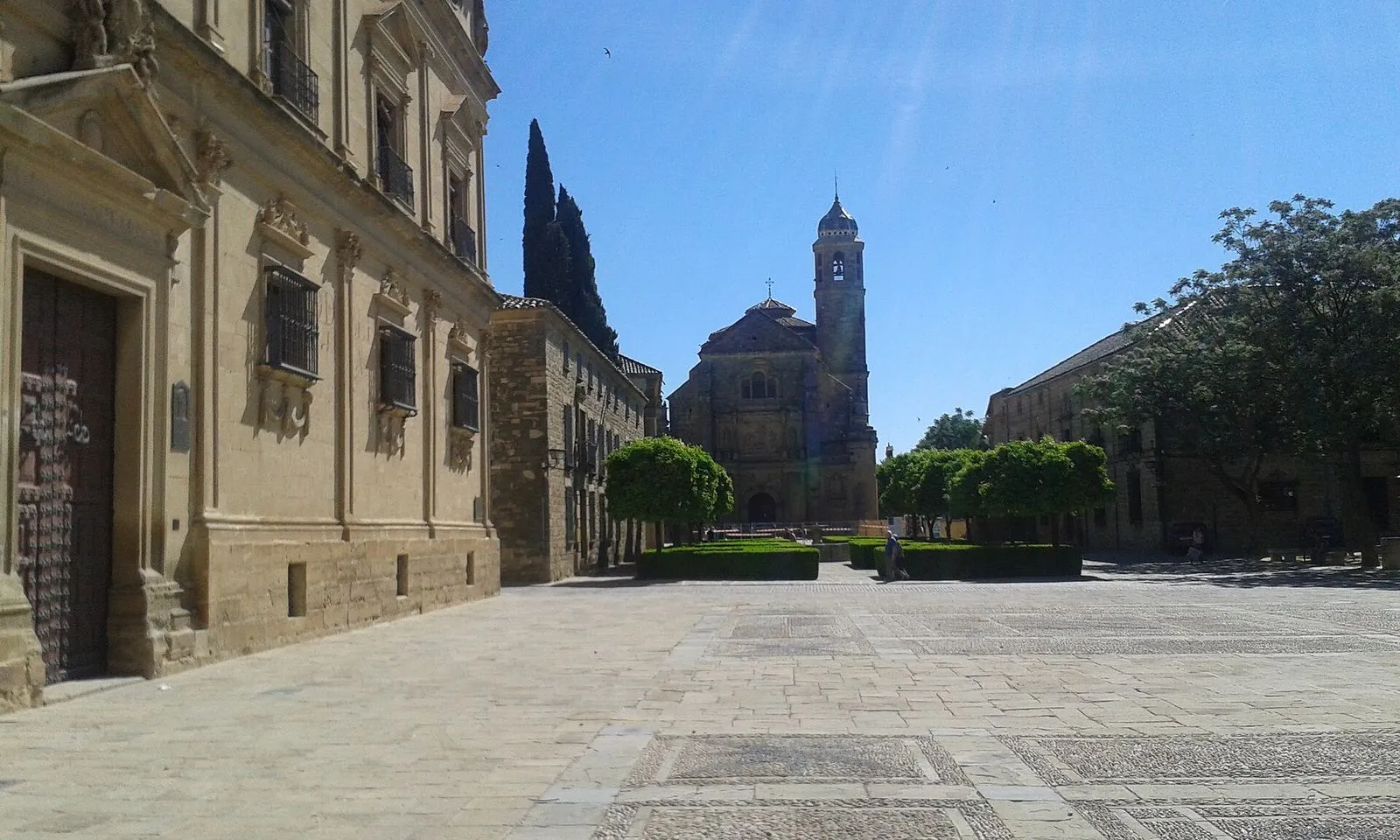
Plaza Vázquez de Molina
The monumental square at the heart of the old town, lined with palaces and churches. We’d park at the edge and walk in.
- Sacra Capilla del Salvador: the Cobos family chapel, designed by Diego de Siloé and finished by Vandelvira, with a carved façade and a gilded altarpiece. It is privately owned by the Medinaceli foundation. Entry is about €7, audio guide included. Hours are roughly 9:30-14:30 and 16:30-20:00 (shorter days in winter; Sundays start at 12:00). The tourist office lists a free individual slot on weekday mornings, 9:30-10:00.
- Basílica de Santa María de los Reales Alcázares: a mix of Gothic, Mudéjar and Renaissance work, built on the town’s old mosque. About €5, with audio guide. It is closed to visitors during services.
- Palacio de las Cadenas: Vandelvira’s palace for Juan Vázquez de Molina, now the town hall. Look at the façade from the square; the courtyard is normally open on weekday mornings.
- Parador de Úbeda: a 16th-century palace on the square, now a hotel. You can have a coffee in its courtyard.
Elsewhere in the old town
- Hospital de Santiago: Vandelvira’s late work on the edge of the new town (1562-1575). The tourist office listed it as closed for works in May 2026, so check before you walk over.
- Sinagoga del Agua: a medieval house with a ritual bath, found during building work and shown on guided visits of 30 to 35 minutes, about €6, on a fixed daily timetable from 10:30.
- Iglesia de San Pablo: a Gothic and Renaissance church on Plaza 1º de Mayo, about €3. A combined ticket with Santa María costs about €7.
- Museo San Juan de la Cruz: about €4, closed Wednesdays. The poet and saint died in Úbeda in 1591.
- Barrio alfarero (pottery quarter): on and around Calle Valencia, outside the walls. A few family workshops still make the local pottery, and the Paco Tito museum is free.
- Miradores de San Lorenzo: a walk along the southern edge, looking out over olive groves to the mountains.
Baeza
Baeza was taken from the Moors in 1227 and later became a university and cathedral town, which explains its density of noble houses and churches. It is walkable in two or three hours.
- Plaza del Pópulo: a small square with the Fuente de los Leones, the Plateresque Casa del Pópulo (now the tourist office, on Plaza del Pópulo) and the Puerta de Jaén and Arco de Villalar gates.
- Cathedral (Plaza de Santa María): built over a mosque and rebuilt after a collapse in 1567, with Vandelvira among the architects. Entry is €7 (€6 for over 65s, €5 for ages 13 to 25, free under 13). It includes an audio guide, the bell tower and a short virtual-reality film. Hours are roughly 10:00-14:30 and 16:00-19:00 Monday to Saturday in winter, and shorter on Sundays. The tower closes 20 minutes before the cathedral.
- Palacio de Jabalquinto: the best-known façade in town, late Gothic, covered in carved ornament. It belongs to the International University of Andalusia, so it is mainly seen from the street, with the courtyard sometimes open on weekdays.
- Antigua Universidad: founded in 1538, with a courtyard and the classroom where the poet Antonio Machado taught from 1912. It is free to visit, reportedly 10:00-14:00 and 16:00-19:00.
- Paseo de las Murallas: a short walk where the walls once ran, with views south across the olive groves. We’d go near sunset.
One day or two?
One day (by car): start in Úbeda at about 10:00. Do the Sacra Capilla and Santa María, wander the old town and have lunch with tapas. Drive 10 minutes to Baeza for 15:30, climb the cathedral tower, see Jabalquinto and the old university, then walk the Paseo de las Murallas at sunset. Opening hours are the main constraint, because many churches close from 14:30 to 16:30.
Two days: spend the first day in Úbeda (add the Sinagoga del Agua, San Pablo and the pottery quarter), and a slower second morning in Baeza. Add the olive oil centre in Úbeda, or head for Cazorla and its natural park in the afternoon.
Tapas and olive oil
In both towns, bars bring a free tapa with each drink; Baeza’s tourist office says every bar does. Local dishes to look for are ochíos (paprika bread rolls, often with morcilla), pipirrana (a cold salad of tomato, pepper and onion), andrajos (a hearty stew often served as a tapa) and hornazo. For something sweet, try pestiños or virolos, from the convents.
Jaén is the biggest olive-oil province in Spain, and the groves around the two towns are part of the picture. Be careful with claims you may read online: the Andalusian olive landscape was proposed to UNESCO, but the candidacy was withdrawn in 2024 after opposition from growers in Jaén, so it is not a World Heritage Site. The Úbeda and Baeza listing is for the Renaissance towns.
To learn about oil:
- Centro de Interpretación Olivar y Aceite (Úbeda): about €3.50, closed Mondays, with a tasting workshop (about €14.50, booked ahead).
- Oleounión cooperative (Úbeda): a small museum for about €2, and a mill visit with tasting for about €15 on booking.
- The best time for working mills is the harvest, November to January.
Distances and getting there
| From | Car | Bus |
|---|---|---|
| Úbeda to Baeza | about 10 km, 10–15 min | Alsa, about 10 min, frequent, daily |
| Jaén | about 55 km, 45 min | Alsa, about 1 h |
| Granada | about 135–145 km, 1 h 30–1 h 45 | Alsa, about 1 h 45, many a day |
| Córdoba | about 170–185 km, 1 h 45–2 h | no direct service checked; change in Jaén |
| Cazorla | about 45 km, 45 min | a few buses a day |
- By car: the easiest way, and the only practical way to fit both towns in a day from Granada or Córdoba. Car hire in Granada is the usual start; see our car hire guide. Park outside the old centres and walk.
- By bus: Alsa runs from Granada’s bus station to Úbeda’s station, and a local line links Úbeda and Baeza from about 6:45 to 20:30. Compare Granada to Úbeda buses. We’d check the last bus back before you commit to a day trip.
- By train: the nearest station, Linares-Baeza, is about 15 km from Baeza with no easy link, so buses are simpler.
- Day trip from Granada: it works, but it is long. A guided Úbeda and Baeza day trip from Granada removes the driving. See day trips from Granada.
Where to stay
We’d stay in Úbeda for the choice of restaurants, or in Baeza for a quieter evening. Both are less than 15 minutes apart.
- Úbeda: Palacio de la Rambla, a small palace hotel with a courtyard, rated about 9.5 on Booking. The Parador de Úbeda, rated about 8.5, is on Plaza Vázquez de Molina itself. More: hotels in Úbeda.
- Baeza: Hotel Cetina Palacio de los Salcedo, a restored palace in the centre, rated about 9.1. More: hotels in Baeza.
When to go
We think spring (April to June) and autumn (October and November) are best. July and August are very hot on the plateau, often above 38 °C, so we’d go early and in the evening. Winter is cold and quiet. See the best time to visit Andalusia.
Plan the rest of the trip
Úbeda and Baeza fit well on an Andalusia road trip between Granada and Córdoba, with Cazorla a short drive away. Find them on our map of Andalusia and in the best places to visit in Andalusia.
FAQ
Can you visit Úbeda and Baeza in one day?
Yes. They are about 10 km apart, so a day by car gives you Úbeda in the morning and Baeza in the afternoon. Many churches close from about 14:30 to 16:30, so plan lunch for then.
How far apart are Úbeda and Baeza?
About 10 km, a drive or bus ride of 10 to 15 minutes. Alsa runs frequent buses between the two town bus stations.
Which is better, Úbeda or Baeza?
Úbeda has more monuments, restaurants and hotels. Baeza is smaller, quieter and easy to walk, with the cathedral tower and the old university. Most visitors enjoy both.
Why are Úbeda and Baeza a UNESCO World Heritage Site?
They were listed in 2003 as outstanding examples of Renaissance urban planning and architecture in Spain, which spread Italian ideas to Latin America. Vandelvira’s buildings are central to both.
How do you get from Granada to Úbeda and Baeza?
By car, about 1 h 30 to 1 h 45 on the A-44 and A-316. By bus, Alsa takes about 1 h 45 to Úbeda, then a short local bus to Baeza.