
Some links on this page are affiliate links. If you book through them we may earn a commission, at no extra cost to you.
The short answer
Granada has hot, dry summers and cold, sunny winters: about 13 °C by day in January, with nights close to 0 °C, and 34–35 °C in July and August. The city sits at about 700 m, so it is cooler than Seville or Málaga all year, and the gap between day and night is large.
- Best time to visit: in our view, April to early June and mid-September to October, with days of 21–29 °C and cool evenings
- Hottest: July and August, around 35 °C in the afternoon but 16 °C at night
- Coldest: December to February, 13–15 °C at midday and frost on clear nights
- Snow: almost every winter on the Sierra Nevada, rarely in the city itself
- Wettest months: November and December, about 7 rain days each
- Busiest: Semana Santa (21–28 March 2027), the Corpus Christi fair (late May 2027) and the Alhambra’s high season from Easter to October
Granada weather month by month
Climate by month
Choose a city. Bars run from the average low to the average high.
| Month | High | Low | Rain days | Sunshine (h) |
|---|---|---|---|---|
| Jan | 13 °C | 0 °C | 6 | 165 |
| Feb | 15 °C | 2 °C | 6 | 172 |
| Mar | 19 °C | 4 °C | 5 | 225 |
| Apr | 21 °C | 6 °C | 6 | 231 |
| May | 25 °C | 9 °C | 4 | 293 |
| Jun | 31 °C | 14 °C | 2 | 336 |
| Jul | 35 °C | 16 °C | 0 | 373 |
| Aug | 34 °C | 16 °C | 1 | 344 |
| Sep | 29 °C | 13 °C | 3 | 262 |
| Oct | 23 °C | 9 °C | 5 | 215 |
| Nov | 17 °C | 4 °C | 7 | 170 |
| Dec | 13 °C | 2 °C | 7 | 149 |
Source: AEMET, monthly averages 1991–2020 (Cádiz sunshine 1981–2010). Sea: seatemperature.info, 10-year average.
| Month | Avg. high / low | Sunshine (hours) | Rain days |
|---|---|---|---|
| January | 13 / 0 °C | 165 | 6 |
| February | 15 / 2 °C | 172 | 6 |
| March | 19 / 4 °C | 225 | 5 |
| April | 21 / 6 °C | 231 | 6 |
| May | 25 / 9 °C | 293 | 4 |
| June | 31 / 14 °C | 336 | 2 |
| July | 35 / 16 °C | 373 | 0 |
| August | 34 / 16 °C | 344 | 1 |
| September | 29 / 13 °C | 262 | 3 |
| October | 23 / 9 °C | 215 | 5 |
| November | 17 / 4 °C | 170 | 7 |
| December | 13 / 2 °C | 149 | 7 |
Averages from AEMET for the Granada airport station (1991–2020), in the plain west of the city. Single days can be much hotter or colder.
Why Granada feels different. It is an inland city at the foot of the Sierra Nevada, with no sea to soften the temperature. The air is dry, so clear nights cool fast: in July it can be 35 °C at 4 pm and 16 °C before dawn, and in January a sunny 13 °C afternoon follows a frosty morning. We’d pack for both ends of the day. Heatwaves can push summer afternoons past 40 °C for a few days.
January
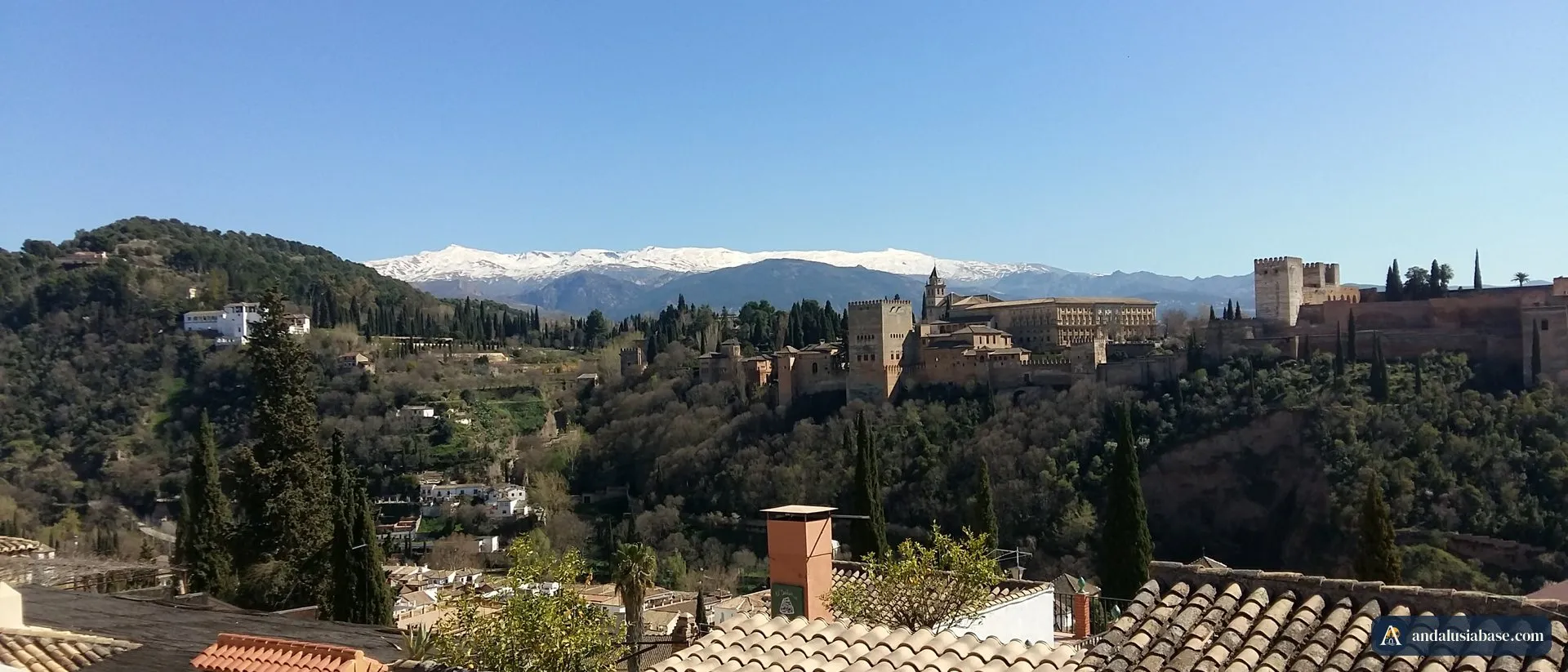
The coldest month: 13 °C at midday and about 0 °C at night, so frost is common. Skies are often clear (about 165 hours of sun), and the snow-covered Sierra Nevada behind the Alhambra is at its most photogenic. On 2 January, the Día de la Toma marks the Christian conquest of Granada in 1492. It is a local holiday, with a civic procession in the centre, and the Alhambra opens the Torre de la Vela so visitors can ring its bell (free invitations are released from late December). The Three Kings parade is on the evening of 5 January. After that, hotels are quiet and cheap.
February
Still cold at night (2 °C) but a little milder by day (15 °C), with around six rain days. The ski season is in full swing an hour away, and almond trees start to flower in the valleys. A good month for the Alhambra with thin crowds, followed by a hammam and a long tapas evening.
March
Spring starts: 19 / 4 °C and about 225 hours of sun. In 2027, Semana Santa runs from 21 to 28 March. Granada’s processions are smaller than Seville’s but have a unique setting: along the Carrera del Darro below the Alhambra, and up through the Albaicín, with the Cristo de los Gitanos climbing to the Sacromonte abbey by bonfire light on Holy Wednesday night. Hotels fill that week, and the Alhambra sells out early. The clocks go forward on 28 March 2027.
April
One of the best months for sightseeing, at 21 / 6 °C, though it is also one of the rainier (about six rain days). The Generalife gardens are green and in bloom, and the Alhambra moves to its summer hours on 1 April. Evenings are still cool, so bring a jacket.
May
Warm and bright (25 / 9 °C, about 293 hours of sun) and, in our view, the best month of the year. On 3 May, the Día de la Cruz fills squares and patios in the Albaicín and Realejo with crosses made of flowers, plus music and food stalls. The Corpus Christi fair, Granada’s big annual fiesta, follows: in 2027 it is expected from 22 to 30 May, with the Tarasca parade on Wednesday 26 May and the procession on Corpus Thursday, 27 May.
June
Summer arrives: 31 / 14 °C and almost no rain. The International Festival of Music and Dance brings classical music, ballet and flamenco to the Palace of Charles V, the Generalife and other historic venues from mid-June to mid-July (11 June to 12 July in 2026; the 2027 programme is announced in spring). Nights are still pleasantly cool.
July
The hottest and sunniest month, with 35 / 16 °C, no rain days and about 373 hours of sun. Midday is hard work on the Alhambra’s open terraces and the Albaicín’s steep lanes. We’d go early, take a siesta and come out again after 8 pm, when the city cools down fast. The festival continues into July.
August
Almost as hot (34 / 16 °C). Many locals leave for the coast, and some bars and restaurants close for part of the month, while the Alhambra stays busy with visitors. If you want the sea, the beaches of the Costa Tropical are about an hour’s drive south.
September
Still summery at 29 / 13 °C, with the first storms of autumn usually late in the month. Once the Spanish holidays end, we think the second half of September is one of the best times to visit: warm days, cool nights and long evenings.
October
Pleasant and golden: 23 / 9 °C, about 215 hours of sun and five rain days. Autumn colour starts in the Alpujarras and the Genil valley. The Alhambra switches to winter hours on 15 October, and the clocks go back on the last Sunday of the month, so days feel short.
November
Cool and less settled, at 17 / 4 °C with about seven rain days, among the wettest months. Prices drop and the Alhambra is easier to book. The Granada Jazz Festival is usually held in November. The first snow often falls on the Sierra Nevada, and the ski season usually opens in late November or early December.
December
The darkest month (about 149 hours of sun), with 13 / 2 °C and about seven rain days. The centre has Christmas lights and nativity scenes, and the Sierra Nevada is white. Snow in the city itself is rare, a day or two in some winters, but frosty mornings are normal. The Alhambra closes on 25 December and 1 January.
The Alhambra by season
The Alhambra is mostly outdoors: gardens, terraces, walls and a 3–5 km walk, so the weather matters more than for most monuments.
| Season | Day opening (official) | Night visits | Tip |
|---|---|---|---|
| 1 April to 14 October | 8:30 to 20:00 | Tuesday to Saturday, 22:00 to 23:30 | Book the first slots or late afternoon; avoid 12:00–17:00 in July and August |
| 15 October to 31 March | 8:30 to 18:00 | Friday and Saturday, 20:00 to 21:30 | Midday is the warmest time; bring a coat for early slots |
We recommend a summer night visit to the Nasrid Palaces in July and August: it is the coolest way to see them. In winter, the palaces are quieter and tickets are easier to find, though the Generalife gardens are bare. Whatever the season, book early: see Alhambra tickets.
Snow and the Sierra Nevada
The Sierra Nevada ski resort at Pradollano is about 45 minutes to an hour from the city. The season usually runs from late November or early December to late April. You can ski in the morning and be back for an evening at the Alhambra. Outside the ski season, the mountains are for hiking, and the Alpujarras villages on the southern slopes are green in spring and golden in autumn. Without a car, a Sierra Nevada day trip from Granada or an Alpujarras day trip handles the mountain roads. More ideas: day trips from Granada.
When is the best time to visit Granada?
- Sightseeing and city breaks: April, May, late September and October. Comfortable for the things to do in Granada, which mean a lot of walking uphill.
- Fewer crowds and lower prices: November to February, outside Christmas and ski weekends. Cold nights, but sunny days and easier Alhambra tickets.
- Skiing: December to March, when snow cover is most reliable.
- Festivals: Semana Santa, the Día de la Cruz and Corpus Christi in May, the music festival in June and July.
- Summer: possible if you sightsee early and late. Or combine the city with the beach on the Costa Tropical.
- Hiking: May, June, September and October in the Sierra Nevada and the Alpujarras.
For the rest of the region, see the best time to visit Andalusia; for the coast, Málaga weather by month.
Where to stay by season
In winter, we’d choose a hotel with good heating: older houses in the Albaicín can be chilly, and the lanes are steep and icy after rare snow. The centre is flat and close to everything: compare hotels in the city centre. In summer, air conditioning is essential, and a room with a terrace for the cool evenings is worth paying for. Our guide to where to stay in Granada compares the areas.
What to pack
- December to February: a warm coat, a jumper, a hat and gloves for the mornings, and warm clothes for indoors. Layers work best, as middays in the sun feel much warmer.
- March to May and October to November: layers again: t-shirts for the afternoon and a jacket for the evenings, plus a light rain jacket.
- June to September: light clothes, a sun hat, sun cream and a refillable water bottle for the Alhambra, plus a light layer for late evenings.
- All year: comfortable shoes with grip for the cobbles and slopes of the Albaicín and the Alhambra.
FAQ
Does it snow in Granada city?
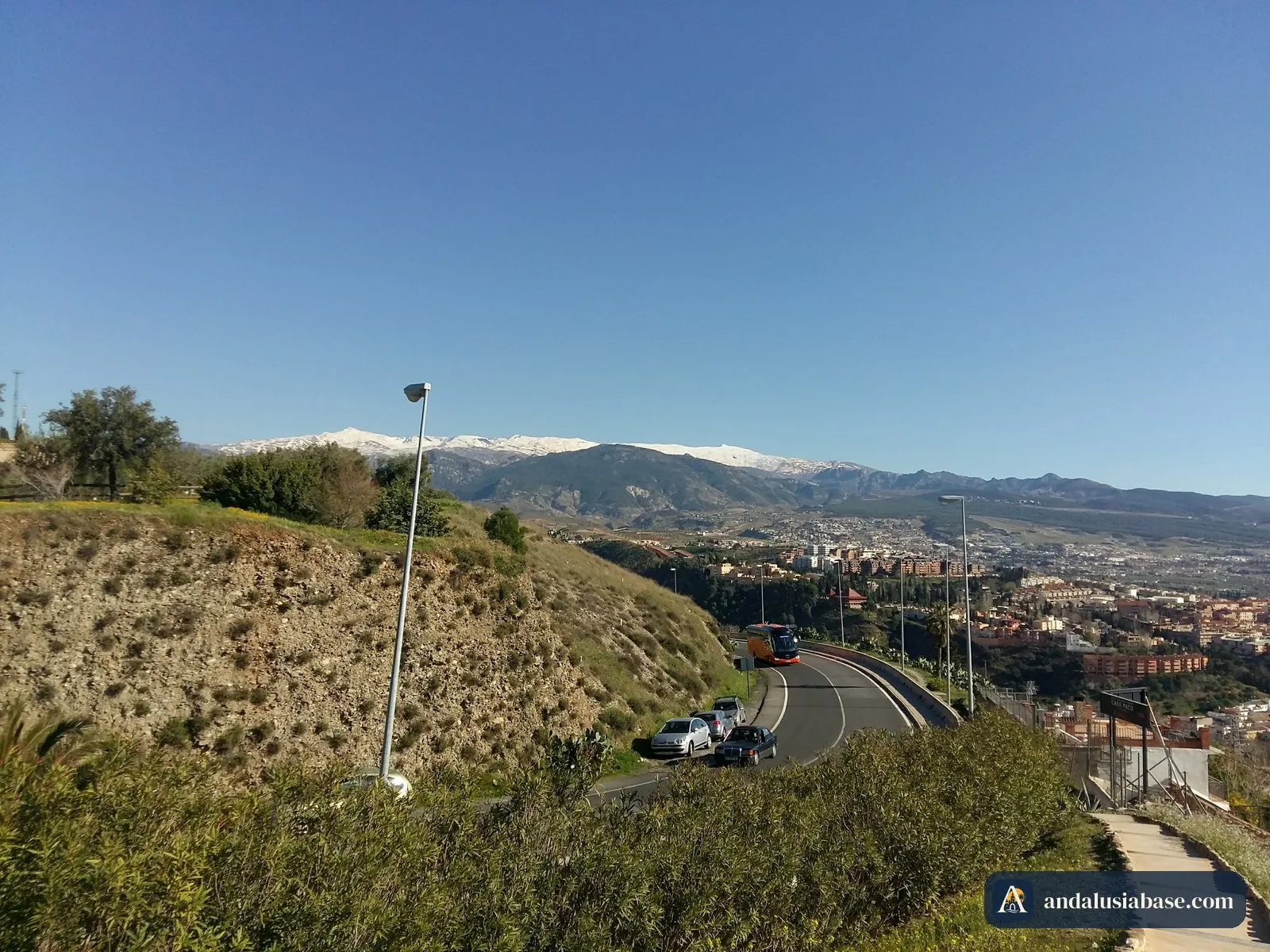
Rarely. Snow settles in the city only once in a while, usually for a day or two between late December and February. The Sierra Nevada, in view of the city, is snow-capped most years from around December to spring.
How cold is Granada in winter?
Cold at night and mild by day: about 13–15 °C at midday from December to February, and 0–2 °C at night, with frequent frost. It is sunny more often than not.
How hot is Granada in summer?
In July and August the average high is 34–35 °C, and heatwaves can pass 40 °C. The dry air means nights cool to about 16 °C, much cooler than in Seville.
What is the weather like in Granada in March and April?
Spring-like: 19 °C in March and 21 °C in April by day, but only 4–6 °C at night, with five or six rain days a month. Bring layers and a jacket.
What is the best month to visit Granada?
We’d say May, for warm days (about 25 °C), cool nights, flowers and the Día de la Cruz. October is a close second, with about 23 °C and fewer crowds after the summer.